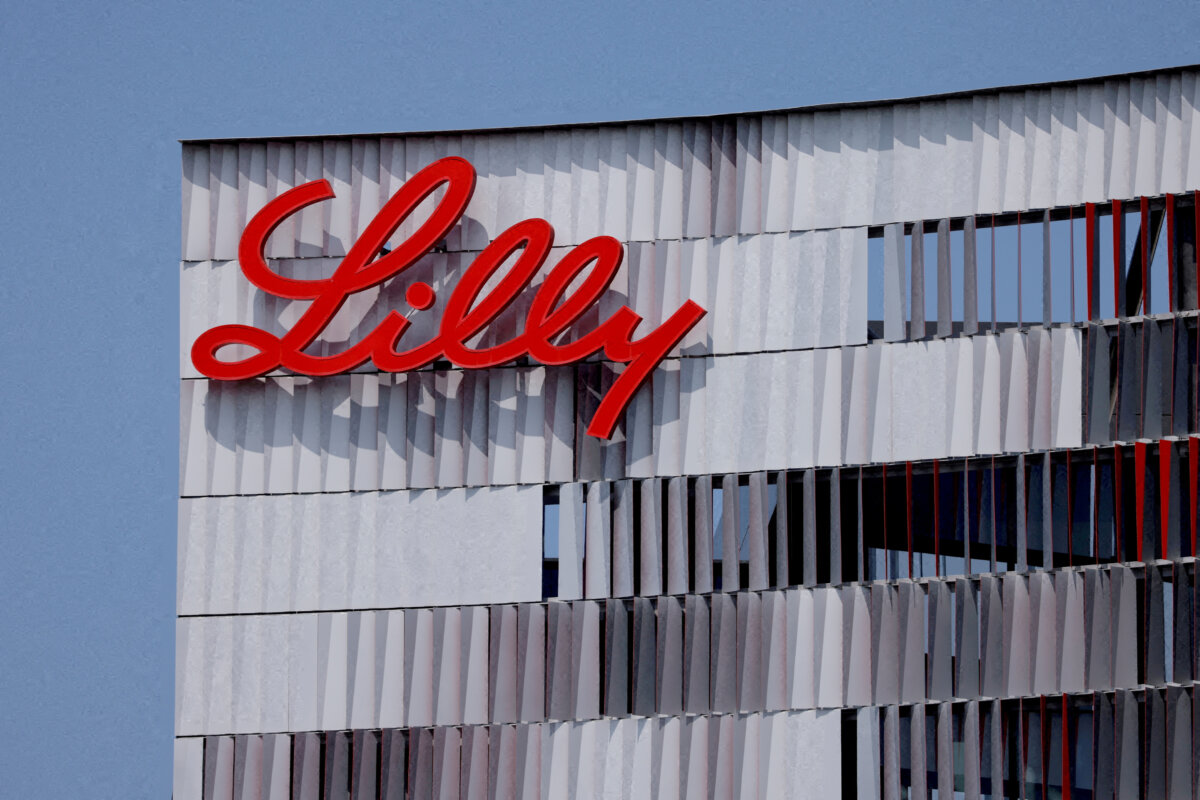

INDIANAPOLIS—The nation’s largest pharmaceutical company and biggest hospitals are headed for a showdown over federally mandated drug discounts on June 8.
That’s the deadline set by Eli Lilly for the hospitals to provide claims data, not including personal information, to demonstrate that they are not double-dipping on federal discounts and rebates. Lilly will end the discounts for hospitals that do not comply by the deadline.
The company announced the policy change on Jan. 15. Many large hospitals have so far refused to comply, saying the policy poses an administrative burden.
At stake is more than $40 billion per year in product discounts that have funded the consolidation of hospitals, physician practices, and other healthcare providers into massive healthcare conglomerates.
340B Discounts
In 1992, Congress created a program that would force pharmaceutical companies to support safety-net medical providers.
The program, called 340B after the section of the law in which it appears, makes drug companies sell their products at about 50 percent off to eligible providers.
Those include rural referral centers, community health clinics, and hospitals that serve a disproportionate share of Medicaid patients.
After the Affordable Care Act expanded access to Medicaid in 2010, many more hospitals met the threshold for participation. That extends to any entity they own, such as a freestanding physician practice, clinic, or surgery center.
The program exploded in volume, going from about $7 billion to more than $81 billion in 14 years.
Most of that growth was driven by large hospital systems.
No Double-Dipping
Federal law prohibits double-dipping on drug discounts. Any manufacturer that provides a 340B discounted price does not have to pay a Medicaid drug rebate to the same provider for the same drug.
The law leaves it up to the buyer to ensure that doesn’t happen.
Drug makers also pay rebates to pharmacy benefit managers, who control access to the insurance and pharmacy markets.
“That means they’re sometimes losing money on their products. They’re actually paying to give them away,” Brad Hart of Forest Park Pharmacy, a discount pharmacy based in Fort Worth, Texas, said on social media.
Eli Lilly alleges that some providers are getting both the 340B discount and a Medicare drug rebate for the same purchase, among other things.
The company discovered this after reviewing claim-level data, which certain pharmacies have been required to provide since 2021, according to the policy announcement.
The company’s new policy requires claims data from all providers receiving the 340B discount.
“Lilly is collecting claims data to stop the rampant fraud, waste, and abuse in the 340B program that is harming employers, state and federal governments, and patients,” a company spokesperson told The Epoch Times by email.
However, the company has not provided specific data confirming that widespread duplication of discounts and rebates is occurring or that it is intentional fraud.
Most of the medical service providers who get the 340B discount have complied with the request for claims data, according to a June 1 letter from the company to the federal government.
“But some large hospitals have coordinated a boycott, fighting transparency at all costs,” the company spokesperson said.
Pushback
The American Hospital Association wrote to the Department of Health and Human Services, calling the requirement to provide claims data “onerous” and asking for the government to block it.
“At best, Lilly’s new requirements will be prohibitively costly for 340B hospitals,” the group wrote. “At worst, they will be unworkable. Either way, they will prevent hospitals from obtaining the 340B discounts they are owed by statute.”
The hospital group also noted that Lilly provided no specific data to validate the assertion of widespread duplication of discounts.
In the June 1 letter, Lilly dismissed those and other objections as mere pretexts for noncompliance and said its policy is perfectly legal.
“Two federal courts of appeals have confirmed that a manufacturer may impose conditions of this kind, and [the agency] itself has held for more than three decades that a manufacturer may ‘request standard information’ as a condition of the 340B offer,” the letter stated.
Lilly has informed an undisclosed number of hospitals that it will not offer 340B discounts after June 8 if they don’t comply. The company said it intends to repeat the process with other noncompliant providers in the coming weeks.
Implications
Discounts on Lilly products offered to the holdout hospitals totaled millions of dollars over the past four months alone, according to the company. The value of annual discounts could be in the billions of dollars if other pharmaceutical companies adopt a similar policy.
Hospitals say the 340B discounts are vital for reaching underserved populations and provide value to their communities.
Hospitals don’t have to report how much money they make on the sale of drugs acquired through the 340B program. However, the University of California health system said it generated at least $1.3 billion in net income from the sale of drugs acquired through the program in 2024, in a report to the Board of Regents Health Services Committee.
The Epoch Times requested comment from CommonSpirit Health, Advocate Health, and Ascension, three of the nation’s largest hospital systems participating in the 340B program, as rated by Becker’s Hospital Review. No responses were received.
 Friends Read Free
Copy
Facebook
Tweet
Friends Read Free
Copy
Facebook
Tweet