
Environmental Protection Agency Administrator Lee Zeldin announced on June 11 that the Trump administration will seek to relax “Clean Power Plant” greenhouse gas and mercury emission regulations imposed under the Biden and Obama administrations.
“Today is a historic day at the EPA,” he said during a 55-minute press conference at the agency’s Washington offices. “Today, EPA is taking an important step, reclaiming sanity and sound policy, illustrating that we can both protect the environment and grow the economy.”
Zeldin said the agency will begin the rule-making process to revise the Greenhouse Gas (GHG) rule and amendments strengthening the Mercury and Air Toxics Standards (MATS) rule by December.
“All of this is a proposal, we’ll go through a process and the decision will be made at the end of the process,” he said.
He also emphasized that revised rules will not allow power plants to go beyond their current emission level.
“This action is only a proposal. The public will have the opportunity to comment and provide input on the proposed rule. If finalized, no power plant will be allowed to emit more than they do today or as much as they did one or two years ago,” he said.
“Let me repeat that. If finalized, no power plant will be allowed to emit more than they do today or as much as they did one or two years ago.”
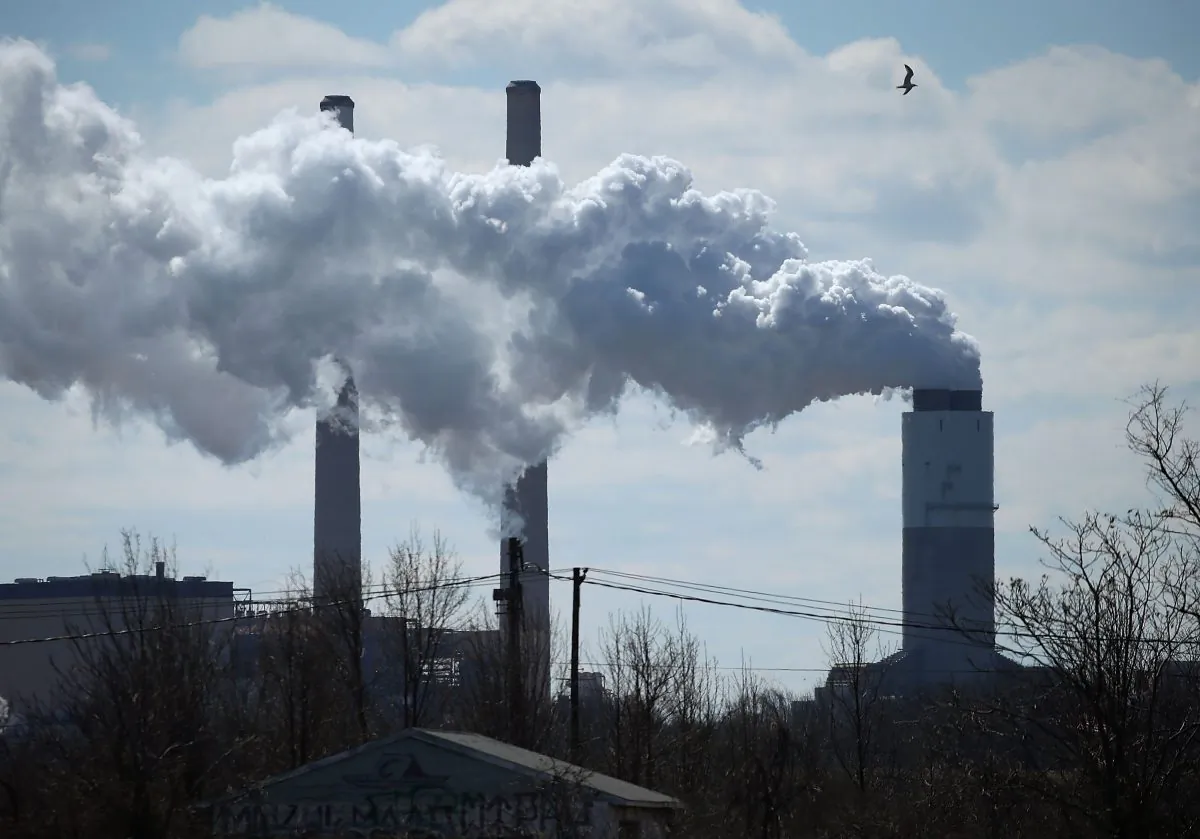
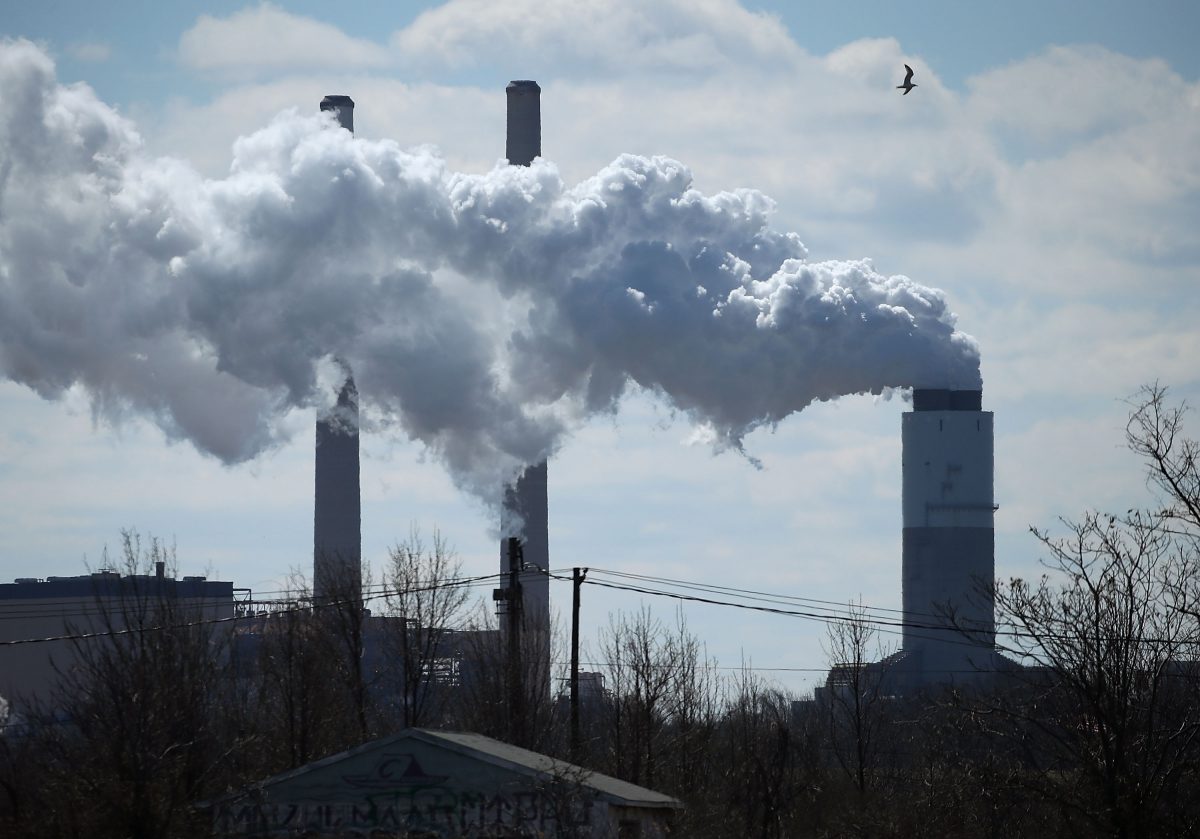
The GHG rule and MATS amendments included within it were imposed by the Biden administration in April 2024. The MATS amendments have not been implemented yet. The rules target the nation’s coal-fired power plants and the $28 billion coal industry that supplies them.
Under the greenhouse gas rule, power plants were required to “capture” 40 percent of their emissions by 2032 and 90 percent by 2039. Power plants set to close by 2032 were exempt.
Meeting these standards cost coal- and gas-fired plants “more than $1 billion a year,” Zeldin said, and more than $20 billion by 2040.
“In 2023 and 2024,” he said, “rules were enacted seeking to suffocate our economy in order to protect the environment, seeking to make all sorts of industries, including coal and more, disappear, regulate them out of existence.”
Coal-fired power plants would be most affected. According to a 2024 Energy Information Administration report, 173 of the nation’s 390 coal-fired units across 33 states were set to retire by 2030.
Another 55 units had announced closure dates between 2031 and 2040 across 17 states, the report said. Of the 211 remaining coal-fired plants, “fewer than 200 large-scale coal-fired units … remain without announced retirement dates, and 118 of those are at least 40 years old.”
Coal-fired electricity has been in decline for decades from a peak of generating 50 percent of the nation’s electricity in 2005, to 14 percent in 2024.
Zeldin’s remarks were followed by supportive comments by Sen. Kevin Cramer (R-N.D.); House Energy and Commerce Committee Chair Brett Guthrie (R-Ky.); Reps. Troy Balderson (R-Ohio), Carol Miller (R-W.Va.), Dan Meuser (R-Pa.), Ron Bresnahan (R-Pa.), Michael Rulli (R-Ohio), and Riley Moore (R-W.Va.); and Navajo Nation President Buu Nygren.
“[The rules] actually are very nonsensical to our grid,” Miller said. “You know, coal is a reliable baseload energy, and at a time when electricity and demand is rising … you shouldn’t be punishing coal operators. You should be welcoming them.”
 Friends Read Free
Copy
Facebook
Tweet
Friends Read Free
Copy
Facebook
Tweet