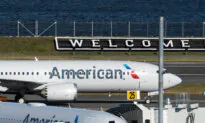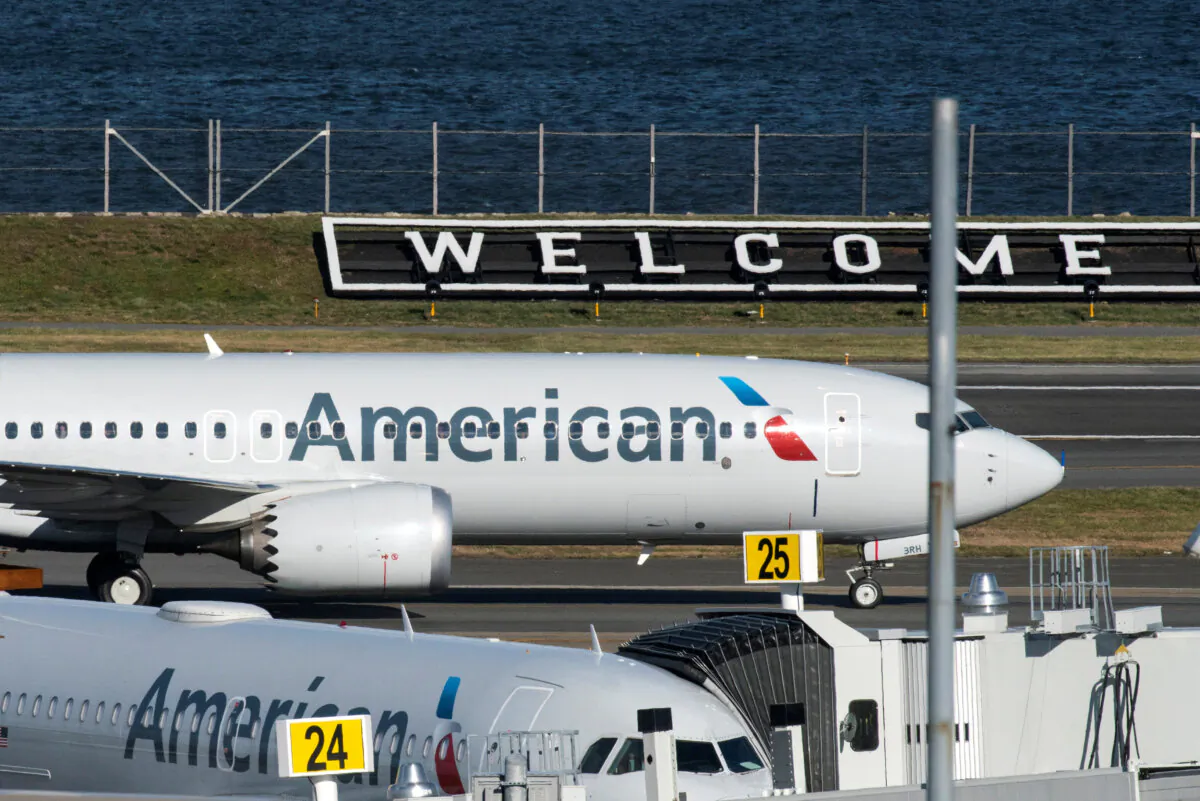

The Federal Aviation Administration (FAA) agreed on July 23 to extend its waiver of slot usage at congested airports in the New York City area through to the end of the summer 2026 scheduling season as it seeks to reduce delays amid “high demand and staffing challenges.”
Under minimum flight requirements, airlines must use their takeoff and landing slots at congested airports at least 80 percent of the time, or risk losing them.
The agency said in a statement that the waiver allows airlines to fly 10 percent fewer flights without being penalized, which in turn provides them with “more operational flexibility.”
The extension applies to New York’s John F. Kennedy International Airport (JFK) and LaGuardia Airport (LGA), the FAA said.
According to the FAA, approximately 75 percent of all delays registered in the National Airspace System were attributed to flights arriving, departing, or traversing the NY Metropolitan area airspace in 2007.
While the agency says on-time performance in the NY Metropolitan area airspace has improved, the New York area airports remain among the most delayed airports in the country.
The announcement comes as airports nationwide are facing a persistent shortage of air traffic controllers and increasingly crowded skies.
A report by the National Academies of Sciences, Engineering, and Medicine, published in June, found the FAA only hired two-thirds of the air traffic controllers required by its staffing models from fiscal years 2013 to 2023.
By fiscal year 2024, nearly a third of air traffic control facilities had fallen 10 percent below model standards, and around 22 percent had fallen below 15 percent, the report found.
The report said the staffing shortfall was, in part, due to hiring constraints from two government shutdowns and the COVID-19 pandemic, resulting in hiring freezes, training reductions, and other disruptions.
“Additional hiring and further innovation in hiring and training are needed to overcome the lingering effects of these events and to appropriately staff all 313 facilities,” the report concluded.
In May, Transportation Secretary Sean Duffy unveiled a package of actions aimed at tackling air traffic controller shortages. The actions include providing financial incentives to graduates and new hires, speeding up the hiring process, and increasing the number of instructors.
The FAA said in its latest statement that bolstering its controller workforce remains a “top priority” and that it is taking a “multi-pronged approach to recruit new controllers, improve training success rates, reduce overall training times, and provide incentives to our workforce.”
It added that it is on track to hire 2,000 controllers this year.
“The FAA is receptive to carriers’ requests for slot usage flexibility and the agency expects that airlines will use this opportunity to operate larger aircraft, transporting more passengers,” the FAA said.
“This, in turn, will require sufficient ground crews to service the larger aircraft and ensure passengers are fully informed about any possible disruptions. ”
The FAA is also extending flexibility for impacted flights operating between Ronald Reagan Washington National Airport (DCA) and New York airports.
 Friends Read Free
Copy
Facebook
Tweet
Friends Read Free
Copy
Facebook
Tweet