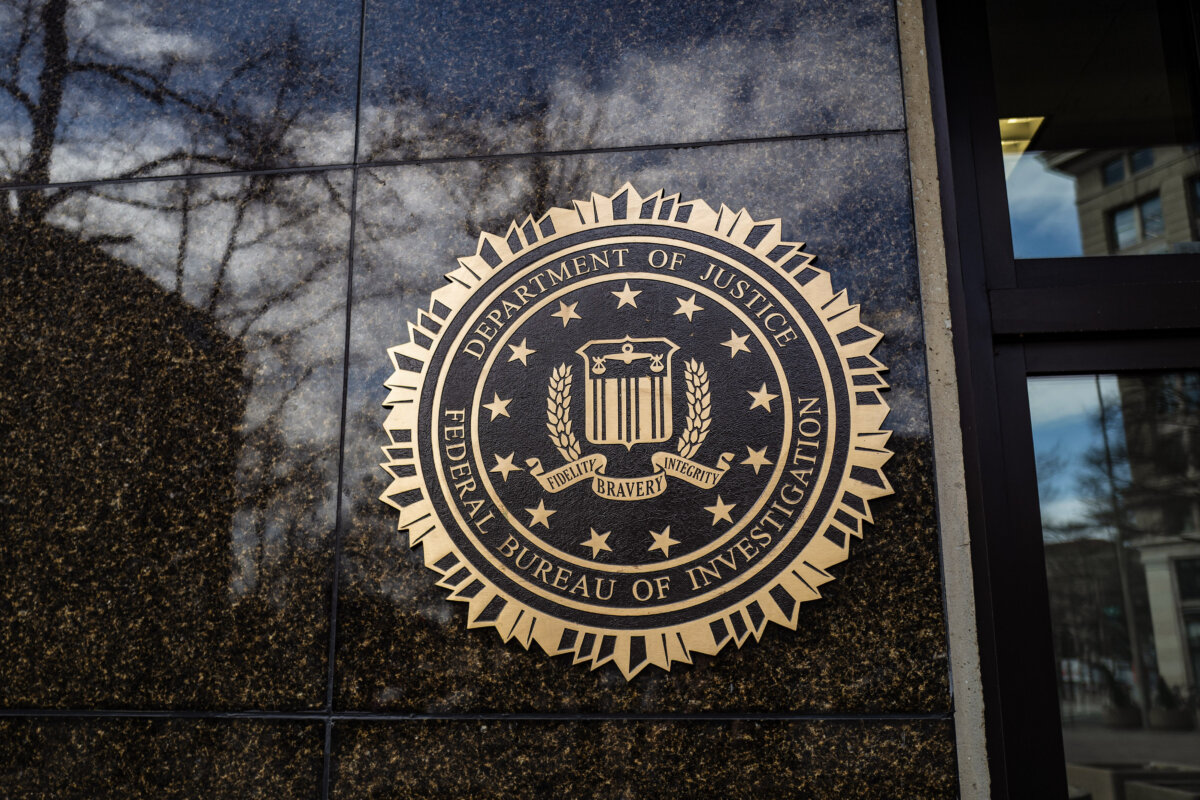

Malicious actors are seeking to illegally access the social media and other personal accounts of underage children and adults in order to steal explicit content, according to the Federal Bureau of Investigation (FBI).
The threat actors share the content in various forums or post it for sale in criminal marketplaces, the FBI said in an Aug. 10 public service announcement alert.
In some cases, personally identifiable information such as names, phone numbers, social media usernames, and emails is posted alongside the explicit content. This exposes these victims to re-victimization, including sextortion and harassment.
The FBI detailed three tactics used by these malicious actors to illegally access victims’ accounts. The first involves high-volume password and PIN attempts on targeted accounts.
The second method involves impersonating social media customer service. In this tactic, the criminals send text messages to targets, claiming their social media account is being locked up or disabled unless they provide a verification code.
The malicious actors then request a password reset for the social media account. When the verification code is shared, the threat actor can use it to reset the target’s account password and gain access.
A third tactic involves phishing, where domains and email accounts mimicking social media customer support are set up. Targets are notified about so-called new logins to their accounts via official-looking emails. The emails contain a malicious embedded link, asking targets to change their password. If the individual clicks on the link, the criminal gains access to their account.
Earlier this year, an online predator pleaded guilty to carrying out sexual exploitation crimes, according to a Feb. 27 statement from the Department of Justice (DOJ).
The person hacked into the accounts of teens and young adults to steal their intimate and sexually suggestive images for the purpose of extortion, U.S. Attorney Theodore S. Hertzberg said in the statement.
In one incident, the criminal contacted a 20-year-old woman through an Instagram account that purportedly belonged to her male high school friend and sought her assistance in recovering his Snapchat account. The woman sent a code, which allowed the criminal to access her Snapchat account and steal private nude images and videos.
In another case, a 32-year-old man was sentenced to 10 years in prison in February after posing as tech support to obtain and distribute child sexual content, according to a Feb. 6 DOJ statement.
The person posed as a Snapchat tech support agent and would trigger a password reset message on the targets’ accounts. He would then ask them to provide a six-digit code. When the information is shared, it’d be used to steal images stored in their accounts. Much of the stolen media would be spread on the internet, leading to extortion and harassment of victims.
In its latest alert, the FBI asked people to avoid storing sensitive images or videos on social media platforms or other sites.
“Use caution if you receive a temporary password, PIN reset, or access code you did not request. Do not share login information with anyone, even if the requestor claims to be associated with a platform or service with which you have an account,” the agency warned.
Lawmakers are taking action to protect children from sexual exploitation crimes.
In December, Rep. Laurel M. Lee (R-Fla.) introduced the James T. Woods Act. One of the measures is the Stop Sextortion Act, which criminalizes any threats to distribute child sexual abuse material that intimidates, extorts, coerces, or causes substantial emotional distress to victims.
James T. Woods Act has been passed by the House of Representatives and is currently in the Senate.
 Friends Read Free
Copy
Facebook
Tweet
Friends Read Free
Copy
Facebook
Tweet