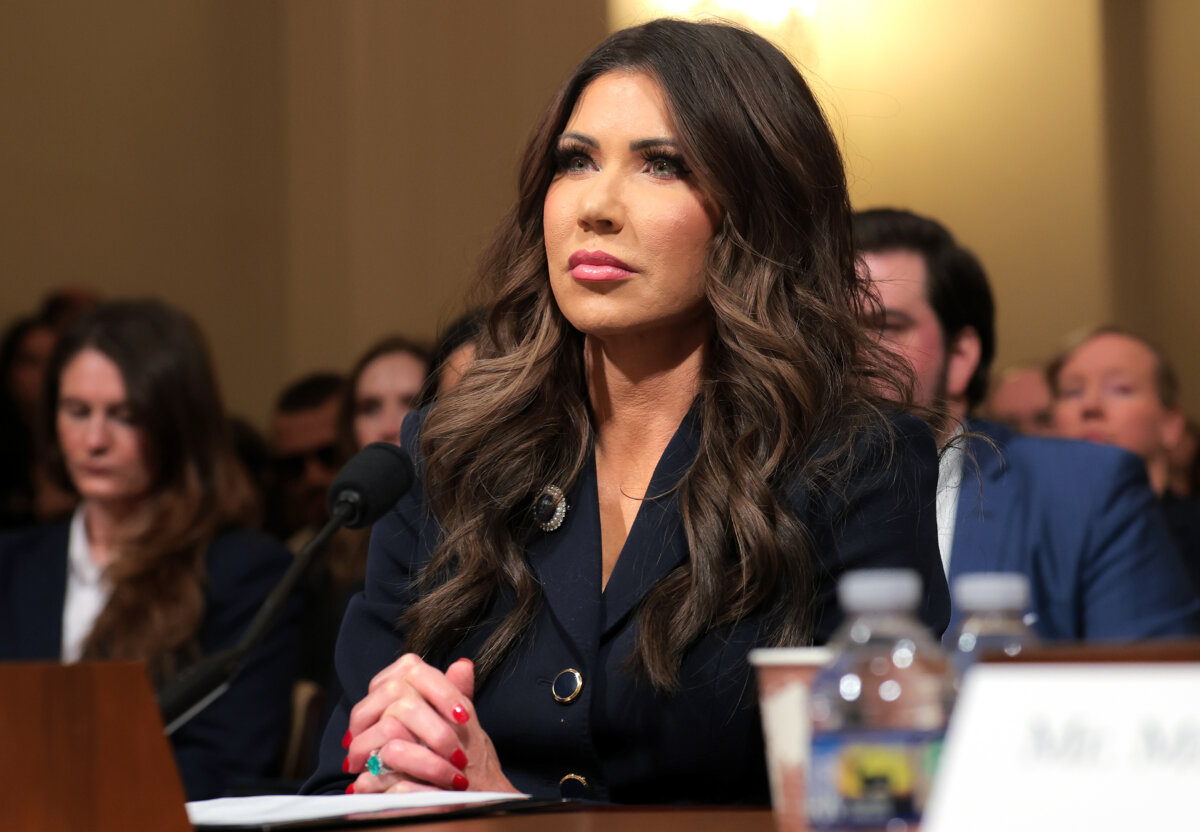

A federal judge on Wednesday ruled that the Trump administration cannot end deportation protections for thousands of nationals from Honduras, Nepal, and Nicaragua.
The Department of Homeland Security (DHS) confirmed that the end of temporary protected status (TPS) for Nicaragua would occur in September, Honduras also in September, and Nepal in August.
TPS provides deportation relief and work permits to people already in the United States if their home countries experience a natural disaster, armed conflict, or other extraordinary event. Under the program, DHS Secretary Kristi Noem has the authority to grant, extend, or terminate TPS designations for specific countries.
In a 52-page order on Dec. 31, Judge Trina Thompson of the U.S. District Court for the Northern District of California cited public statements made by President Donald Trump and Noem on illegal immigrants that she said “reflect a stereotyping of the immigrants protected under the TPS program as criminal invaders and perpetuate the discriminatory belief that certain immigrant populations will replace the white population.”
In the ruling, Thompson sided with the National TPS Alliance, a group representing people enrolled under the program, in saying that the TPS terminations were motivated by a “racial- and national-origin-based animus.”
The program covers some 72,000 Hondurans, 13,000 Nepalese, and 4,000 Nicaraguans, according to Homeland Security estimates.
The Trump administration has sought to end most TPS designations as part of a larger effort to restrict immigration into the United States. In TPS termination notices, the administration has said that allowing nationals from those respective countries goes against U.S. interests, and that reviews have shown some countries that were under TPS no longer meet its requirements.
Under the Biden administration, TPS was expanded to cover hundreds of thousands of people who came to the United States from Ukraine, Afghanistan, Venezuela, Haiti, and several other countries. This year, Noem’s department has moved to end temporary protections to foreign nationals from countries including Syria, Venezuela, Haiti, Cuba, and Nicaragua.
Noem and the Trump administration have said that terminating TPS for certain countries is necessary after the Biden administration used the program “to flood our country with hundreds of thousands of foreign nationals.”
The U.S. Supreme Court in October allowed the Trump administration to proceed with ending TPS for some 300,000 Venezuelans.
“The American people should not have had to go to the Supreme Court twice to see justice done,” said DHS Assistant Secretary Tricia McLaughlin in response to the ruling at the time. “Temporary Protected Status was always supposed to be just that: Temporary. Yet, previous administrations abused, exploited, and mangled TPS into a de facto amnesty program.”
Since the high court ruling, some lower courts have continued to rule against other terminations. In the most recent example, a federal judge in Boston on Tuesday blocked a move to end deportation protections for hundreds of nationals from South Sudan.
So far, Noem has ended TPS for Afghanistan, Burma, Cameroon, Ethiopia, Haiti, Honduras, Nepal, Nicaragua, South Sudan, Syria, and Venezuela, and issued orders for nationals of those countries to self-deport, according to DHS.
Reuters contributed to this report.
 Friends Read Free
Copy
Facebook
Tweet
Friends Read Free
Copy
Facebook
Tweet