
A federal judge in Virginia on Friday temporarily blocked the Department of Justice (DOJ) from initiating plans to create a $1.776 billion “anti-weaponization” fund that would compensate what the Trump administration says are people who were unfairly targeted by the government in investigations.
In a two-page order, U.S. District Judge Leonie Brinkema wrote that the DOJ is precluded from taking action on the “creation or operation of the Anti-Weaponization Fund, which includes the transferring of money to the Fund; the consideration of any claims submitted to the Fund; and the disbursing of any funds from the Fund.”
The judge also said that the order is designed to “ensure that no funds are irreversibly disbursed from the Anti-Weaponization Fund.”
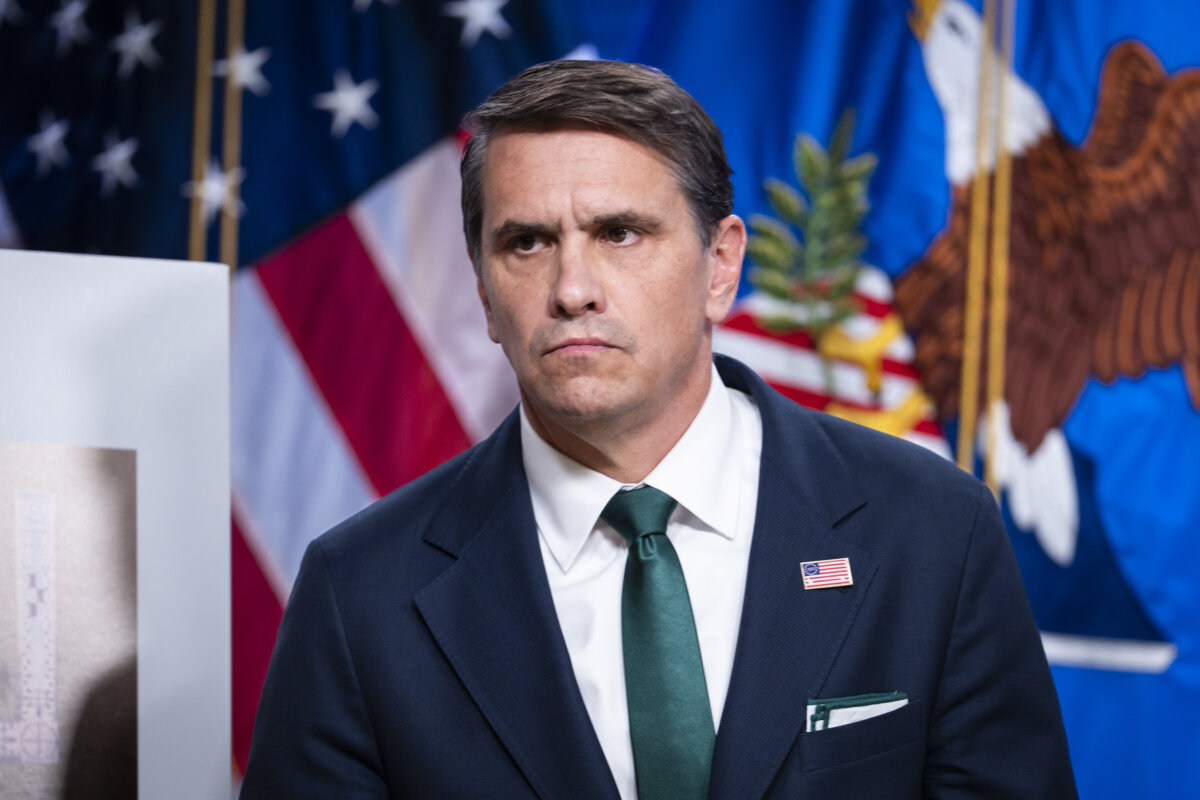
The fund was announced on May 18 by acting Attorney General Todd Blanche, in response to a decision made by President Donald Trump to agree to drop a lawsuit against the IRS related to the release of Trump’s tax documents.
Trump also agreed to withdraw two claims related to the FBI’s search of his Mar-a-Lago residence in Florida in August 2022, as well as the law enforcement bureau’s investigation into whether his 2016 campaign colluded with the Russian government.
Days after the fund was created, a former Trump administration official, Michael Caputo, sent a letter to Blanche requesting compensation under the fund over what he said were unfair prosecutions against him and his family that resulted in personal and financial losses.
In Friday’s order, Brinkema scheduled a hearing on June 12 for arguments over whether the court should further extend the pause on the creation of the fund.
Her order was in response to a lawsuit filed by former federal prosecutor Andrew Floyd, who had prosecuted people who were allegedly involved in the breach at the U.S. Capitol on Jan. 6, 2021, as well as a California professor, Johnathan Caravello, who was arrested while he demonstrated against a federal immigration raid. A nonprofit organization also joined the challenge against creation of the fund.
In their lawsuit, filed on May 22, the plaintiffs alleged that the creation of the fund would be the result of “a collusive agreement between the President and his own administration” and “has no congressional authorization, no basis in law, and no accountability.”
“Plaintiffs include individuals and entities that were targeted by the Trump-Vance administration as ideological or political opponents,” the lawsuit read. “One was arrested for exercising his First Amendment right to protest, while another, a career prosecutor with over a decade of experience, was fired for no discernible reason other than he prosecuted January 6 rioters.”
When it was announced, the DOJ said the fund would allow for “a systematic process to hear and redress claims of others who suffered weaponization and lawfare,” and a five-member board would be appointed by Blanche to determine who could receive compensation. One member would be chosen in consultation with leaders in Congress, it added.
Democratic lawmakers have largely been critical of the fund, while some Republicans pushed back against its creation.
Sen. Rand Paul (R-Ky.) last week told The Hill that he has questions about the settlement between Trump and the federal government.
“I think it’s unprecedented for someone to be on the both sides of a legal decision, where you make a plea bargain with yourself, essentially,” Paul told the outlet.
In response to the criticism, Trump wrote in a Truth Social post that he “gave up a lot of money” as part of the settlement to create the new program.
“Instead, I am helping others, who were so badly abused” by the previous presidential administration, the president added.
The White House did not immediately respond to an Epoch Times request for comment on Friday.
Correction: A previous version of this article misstated the value of the Anti-Weaponization Fund. The Epoch Times regrets the error.
 Friends Read Free
Copy
Facebook
Tweet
Friends Read Free
Copy
Facebook
Tweet