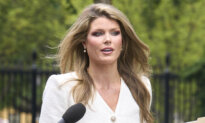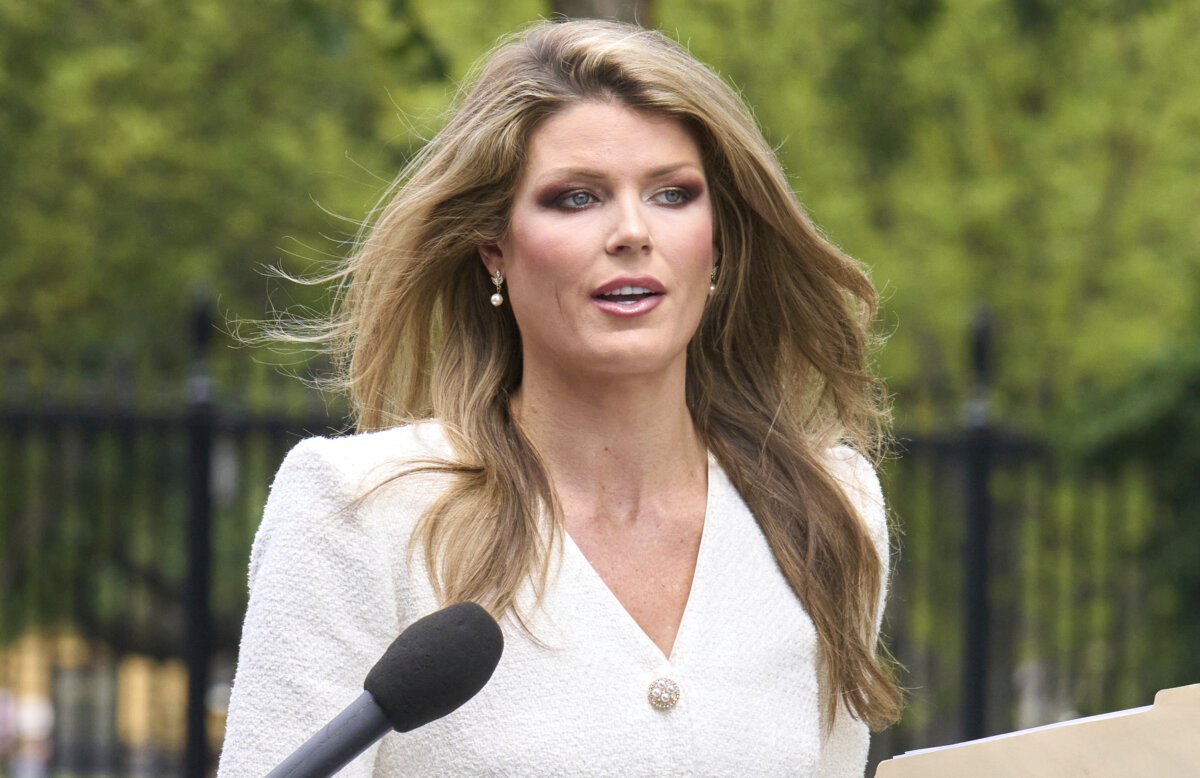


Lindsey Halligan, who has served as acting U.S. attorney for the district of Eastern Virginia, is leaving the post after the Senate failed to confirm her nomination by President Donald Trump.
“During her 120-day tenure as Interim United States Attorney for the Eastern District of Virginia, Lindsey Halligan served with the utmost distinction and an unwavering commitment to the rule of law,” Attorney General Pam Bondi wrote in a statement, citing Halligan’s work to prosecute “violent criminal illegal aliens, murderers, and child abusers” during her time in the role.
Bondi condemned Democrats’ refusal to confirm her nomination.
She attributed the situation to the refusal of Sens. Mark Warner (D-Va.) and Tim Kaine (D-Va.) to approve Halligan’s nomination under the Senate’s “blue slip” process, which allows senators to unilaterally block certain nominees for their home state.
Bondi said the process was “weaponized” to block Halligan’s confirmation.
“The circumstances that led to this outcome are deeply misguided. We are living in a time when a democratically elected President’s ability to staff key law enforcement positions faces serious obstacles,” she wrote.
Bondi gave no indication that the administration intends to challenge the court’s right to fill the vacancy besides vowing that the Department of Justice would “continue to seek review of decisions like this that hinder our ability to keep the American people safe.”
Under the law, federal judges are permitted to appoint interim U.S. attorneys when the position is vacant until the Senate confirms a presidential nominee.
In line with that law, federal judges in the Eastern District of Virginia are seeking applicants to replace Lindsey Halligan, President Donald Trump’s handpicked choice, as the district’s top federal prosecutor.
M. Hannah Lauck, the district’s chief judge, issued an order on Jan. 20 stating that because Halligan’s 120-day appointment formally ends on that date, the U.S. attorney position in the district “will be vacant.”
Since the Senate has not confirmed Halligan, Lauck said in the order, federal judges in the district now have authority under federal law to appoint someone to serve as U.S. attorney on an interim basis.
The court system asked qualified attorneys interested in serving as an interim U.S. attorney to apply. The deadline for application is Feb. 10.
The move marks the latest development in a months-long standoff between the Trump administration and the federal judges over who is legally entitled to serve as the district’s top federal prosecutor.
Halligan’s predecessor, Erik Siebert, was appointed in January 2025 and later resigned after declining to pursue indictments against former FBI Director James B. Comey. His resignation cleared the way for Halligan’s interim appointment.
In September, Trump formally installed Halligan, who quickly indicted Comey and New York Attorney General Letitia James. Comey was charged with lying to Congress and obstructing a congressional proceeding in connection with a 2020 hearing about his investigations into alleged Russian election interference and former Democratic presidential candidate Hillary Clinton’s use of a private email server. James was charged with mortgage fraud tied to her 2020 purchase of a home in Norfolk, Virginia.
Both cases were dismissed without prejudice in November 2025, when Judge James Currie of the Eastern District of Virginia ruled that Halligan “had no lawful authority” to bring the indictments. In both rulings, Currie focused on the legality of her appointment, concluding that Trump and Bondi had not followed the governing statutes in selecting her as U.S. attorney.
The DOJ has appealed both dismissals to the U.S. Court of Appeals for the Fourth Circuit.
In a Jan. 13 filing, Bondi, Halligan, and Deputy Attorney General Todd Blanche responded to a different judge in the district who questioned whether Halligan could continue to call herself a U.S. attorney after Currie’s November 2025 rulings.
Halligan’s use of the title, they argued, “is correct and consistent with the Department of Justice’s internal guidance, and at minimum reflects a contested legal position that the United States is entitled to maintain notwithstanding a single district judge’s contrary view.”
The judge, David Novak, disagreed. On Jan. 20, he ordered Halligan to stop using the U.S. attorney title from all future legal filings, saying she has “no legal basis” to hold the position and that “any such representation going forward can only be described as a false statement made in direct defiance of valid court orders.”
The U.S. Attorney’s Office for the Eastern District of Virginia did not immediately respond to a request for comment. A DOJ spokesperson told The Epoch Times that the president retains the authority to remove any U.S. attorney the court might appoint, if he deems it necessary.
Federal law allows the judges of a district that lacks a Senate-confirmed U.S. attorney to select a temporary replacement, and the court’s actions on Jan. 20 suggest it intends to exercise that power.
The outcome of the dispute could have implications beyond Virginia. The Trump administration has taken steps to install its preferred candidates to U.S. attorney positions in Nevada, California, New York, and New Jersey, making the legal fight in the Eastern District a potential test case for those appointments as well.
 Friends Read Free
Copy
Facebook
Tweet
Friends Read Free
Copy
Facebook
Tweet