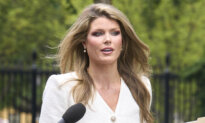
Lindsey Halligan, the top prosecutor appointed by President Donald Trump in the Eastern District of Virginia, told a federal judge Tuesday she can persist in calling herself the acting U.S. attorney for the Eastern District of Virginia following a different judge’s ruling that she had been unlawfully installed to the post.
Her defense came in court filings in response to U.S. District Judge David Novak’s order last week, which ordered her to explain why her representations in court papers do not represent a “false or misleading statement,” which he suggested could result in disciplinary measures.
“The Court’s thinly veiled threat to use attorney discipline to cudgel the Executive Branch into conforming its legal position in all criminal prosecutions to the views of a single district judge is a gross abuse of power and an affront to the separation of powers,” the 11-page filing states. “The bottom line is that Ms. Halligan has not ‘misrepresented’ anything and the Court is flat wrong to suggest that any change to the Government’s signature block is warranted in this or any other case.”
Novak, a federal judge, ordered last week Halligan to justify her continued use of the title “U.S. attorney” in court filings. The directive comes after a November 2025 ruling that ruled her appointment unlawful. Novak granted Halligan seven days to submit an explanation.
She was tasked with explaining why the court should not remove her title from indictments and address “why her identification does not constitute a false or misleading statement.”
Novak, who has previously served as a former criminal chief in the same U.S. attorney’s office and a 2019 Trump nominee, acted on his own initiative after noting Halligan’s use of the title in a signed indictment.
Halligan, who was previously an insurance lawyer and White House aide, was selected by Trump to oversee directives targeting perceived political adversaries, such as former FBI Director James Comey and New York Attorney General Letitia James.
Her predecessor resigned after declining to pursue indictments against them, leading to Halligan’s appointment on an interim basis.
In November, U.S. District Judge Cameron McGowan Currie of the District of South Carolina dismissed charges against Comey and James, determining Halligan’s appointment violated federal law.
Currie declared that “all actions” stemming from the appointment were “unlawful exercises of executive power and are hereby set aside.” This decision invalidated the indictments. Halligan had brought them just ahead of the statute of limitations expiration in September 2025.
The Justice Department nonetheless advised prosecutors in the Alexandria, Virginia-based office to continue using Halligan’s U.S. attorney designation in filings based on an opinion from the Office of Legal Counsel, which some judges spoke out about in the media.
Attorney General Pam Bondi and Deputy Attorney General Todd Blanche rebuffed the criticism in a joint statement on X, alleging that the judges were “engaging in an unconscionable campaign of bias and hostility.”
Novak’s order appears in at least two criminal proceedings, including indictments from late last year.
Halligan’s cases were dismissed solely on appointment grounds, rather than the merit of the cases. Comey’s lawyers had also requested dismissal on vindictive prosecution claims, while James requested an injunction against Halligan’s public service.
Additionally, a separate judicial order requested the DOJ release grand jury materials to Comey’s attorneys and return seized data from a Comey confidant. The court retained copies. These developments suggest persistent legal skirmishes surrounding Halligan’s tenure.
 Friends Read Free
Copy
Facebook
Tweet
Friends Read Free
Copy
Facebook
Tweet