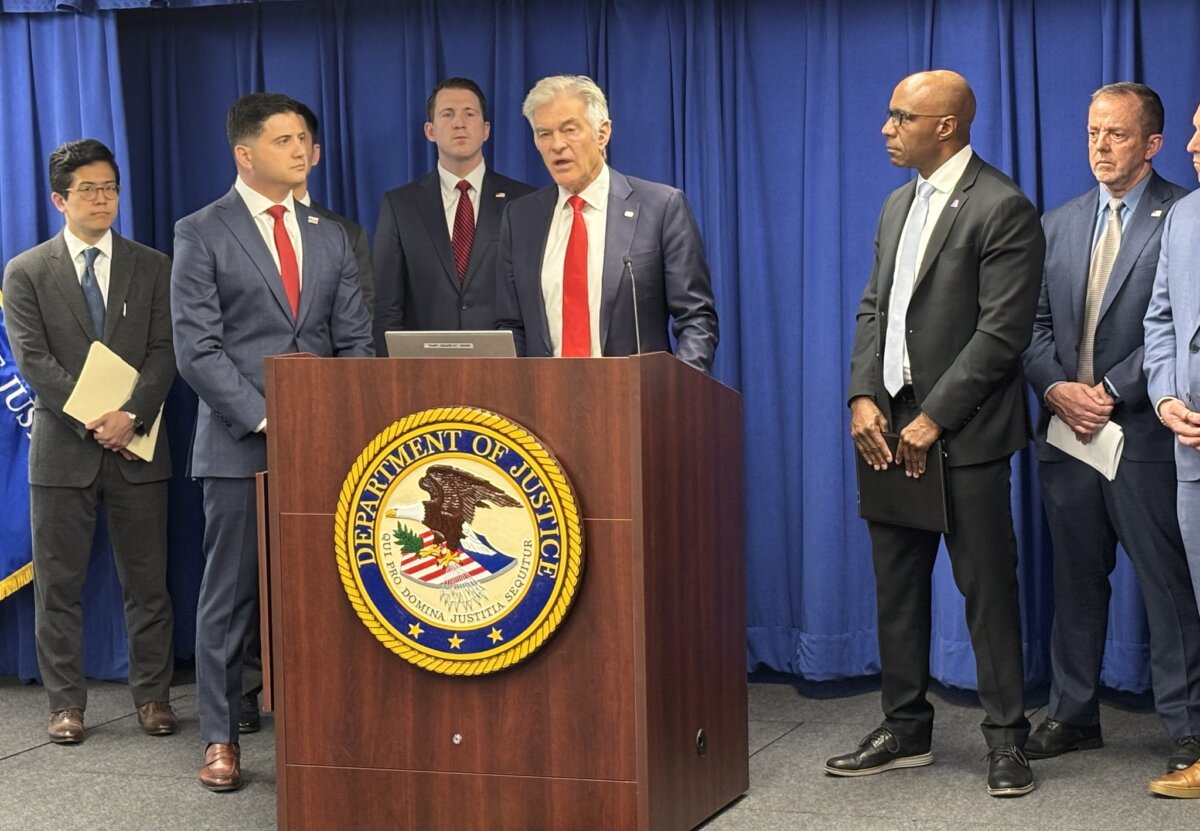
The Centers for Medicare and Medicaid Services suspended 49 Ohio home health providers identified as posing a high risk to the Medicaid program, Administrator Dr. Mehmet Oz said on June 4.
Oz announced the action in Columbus, Ohio, during a news conference highlighting major anti-fraud enforcement measures.
“Unfortunately, this area around Columbus is responsible for one-third of all of the $1.5 billion spent on home healthcare in Ohio,” Oz said. “That’s three times what you would expect.”
At the request of Ohio Gov. Mike DeWine, the agency also imposed a six-month moratorium on the enrollment of new home healthcare service providers and hospices in the state. Similar action was taken in California on May 13.
The agency intends to launch a state-specific Medicaid fraud initiative in cooperation with Ohio officials, part of a strategy to arm states with information on high-risk providers.
“The findings surfaced through this state partnership, we believe, will free us to be able to directly collaborate at a national level, getting all states to understand what the problems are within their areas and accelerate our ability to take out high-risk providers,” Oz said.
Oz said fraud had been “weaponized” in the state of Ohio, mentioning a particular area where 288 home healthcare facilities were allegedly located in a single roadway.
“It defies belief,” Oz said. “Some of these buildings were vacant … certainly not the place that would house home healthcare.”
The federal government spends approximately $2 trillion on Medicare, Medicaid, and related programs, Oz said, which makes it a target for fraudsters, including foreign entities and possibly foreign governments.
Todd Blanche, acting U.S. attorney general, also announced a 32-count indictment of two state employees and two others who allegedly billed the government for $30 million in medical services that were not rendered.
“These numbers are staggering, but just the tip of the iceberg, both here in Ohio and nationwide,” Blanche said.
Autism therapy for children has been a particular target for fraudulent or improper billing, Oz said. The average service provider is paid about $200,000, yet nine providers billed Medicaid for more than $1 million and one billed for $3 million, he added.
“This is taking advantage of children with autism, or getting their parents to lie about whether the child has autism, or weakening the system, so the kids who actually need the services can’t get them anymore,” Oz said.
Indiana has agreed to provide data from fraudulent providers of autism therapy to educate other states, Oz said.
Two people were criminally charged in Minnesota on May 21 for allegedly taking part in a $46.6 million fraud scheme involving medical services for people younger than 21 with autism spectrum disorder.
The government will audit other state Medicaid programs to help them assess the strength of their anti-fraud efforts.
“We don’t have a national effort that allows states to at least get a best-practices idea from surrounding areas,” Oz said.
Blanche said autism services themselves were not under scrutiny, only fraudulent billing for these services.
“If you are a parent or somebody who runs a center that’s doing the right thing, you ought not worry,” Blanche said. “What we’re doing is actually protecting you.”
The national anti-fraud initiatives will not be successful without cooperation from both federal and state agencies, Blanche said.
“Anytime you have anybody that … says, ‘We’re not going to do it,’ or ‘We have an objection,’ or ‘We’re not going to share information,’ it makes it more difficult,” Blanche said.
 Friends Read Free
Copy
Facebook
Tweet
Friends Read Free
Copy
Facebook
Tweet