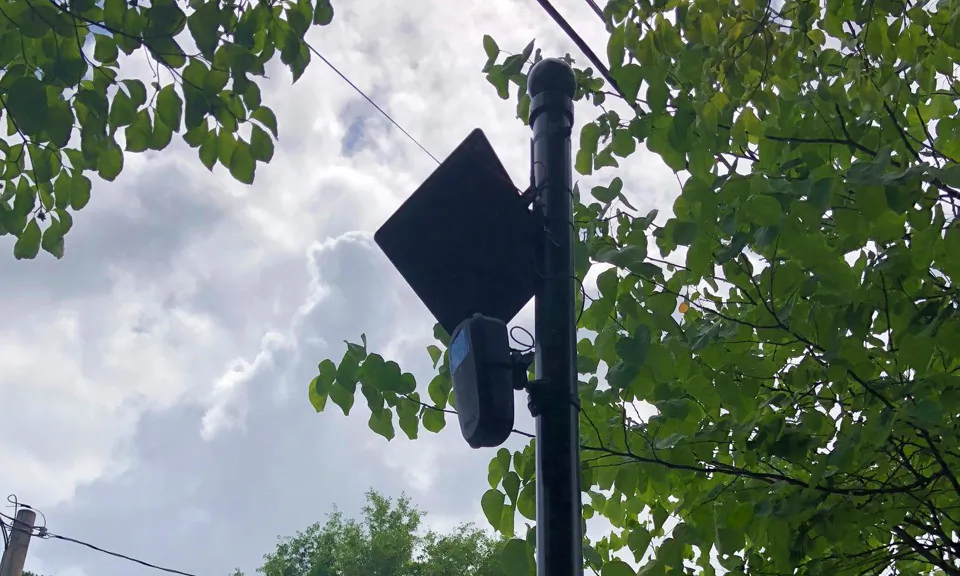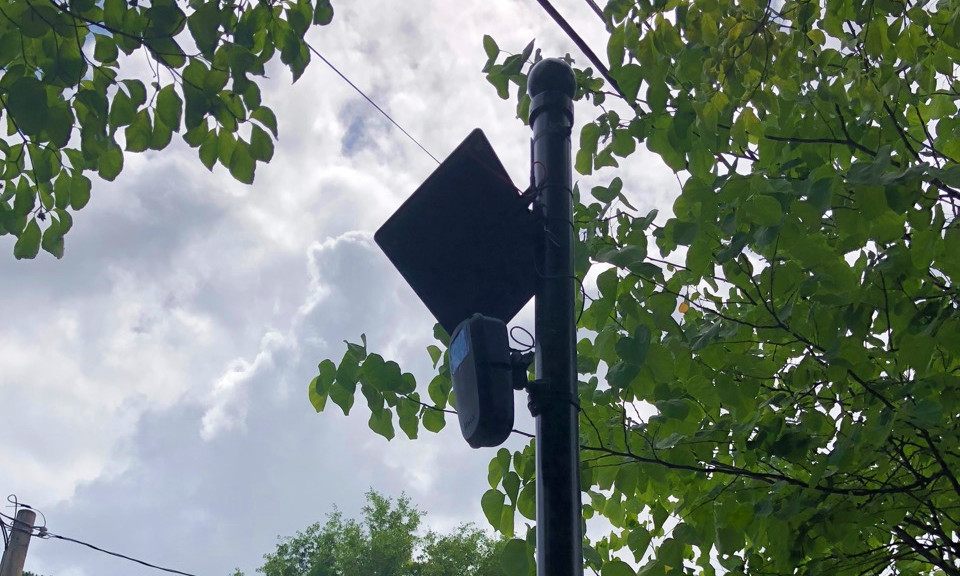

Surveillance technology giant Flock Safety announced sweeping changes to its platform on Aug. 13 aimed at addressing concerns over data access, privacy, and cases of law enforcement members allegedly abusing its camera network.
Flock, one of the largest providers of automated license plate readers (ALPRs) in the nation, operates a growing network of cameras that feed vehicle characteristics and plate data into its platform, which can be accessed by thousands of law enforcement agencies.
The company has faced increasing scrutiny in recent months by citizens, lawmakers, and civil liberties advocates following concerns over data retention and reports of misuse, as well as incidents of innocent motorists being mistakenly pulled over after an ALPR made a false match on their vehicle.
Flock stated that it is changing the retention time for its ALPR data from 30 days to a week, as well as rolling out “evidence mode” for law enforcement.
“Our analysis shows that over 90% of searches without a full plate are done within a week,” the company said in a statement. “Evidence Mode, which will roll out in the coming weeks, addresses the exceptional cases that take longer: detectives can preserve specific ALPR data as evidence for an active investigation in cold storage, consistent with existing laws and policies.”
Flock founder and CEO Garrett Langley said in a video statement that this means that “every image our cameras capture is by default purged from the customer’s database after one week, unless it becomes evidence in an active criminal investigation.”
Abuse of its technology, “at any level, is unacceptable,” Flock said. The company will begin requiring all law enforcement agencies using its cameras to adopt its “audit assistance” technology by the end of the year.
The feature is designed to detect abnormal activity on the company’s platforms and flag it for administrator review.
“In recent weeks, those reviews have been associated with arrests of several law enforcement officers who allegedly abused the system,” Flock said.
Late last month, authorities arrested a North Carolina officer for allegedly exploiting Flock’s camera network for non-law enforcement purposes.
The officer’s arrest was the latest in a series of related incidents of law enforcement officers accused of accessing Flock camera data for non-work-related reasons, with dozens of cases linked to officers allegedly stalking romantic interests.
In addition to audit assistance, Flock said on Aug. 13 that it will also institute a policy called “proactive lockout,” which will automatically suspend access to its databases whenever a user’s activity is flagged as abnormal behavior.
In response to reports of mistaken arrests and traffic stops after Flock cameras mistook the cars of innocent motorists for target vehicles, Flock stated that “an alert is a lead, not a conclusion, which should be confirmed by an officer.”
“Before an alert goes out, the Flock system matches both the plate and the issuing state against the hotlist record. The system then filters out low-confidence reads before sending alerts to officers,” Flock stated.
“The final safeguard is human. Before acting, an officer visually confirms the plate and confirms the stop complies with law and agency policy. No stop should ever rest on an unverified alert standing alone.”
Langley confirmed that an unverified ALPR alert alone is not enough lawful basis for a traffic stop.
“Officers should verify that the vehicle matches the alert, that the alert is still active, prior to taking any type of enforcement action,” he said.
In an Aug. 13 blog post, the American Civil Liberties Union stated that Flock shortening its evidence retention window “may be a step in the right direction.”
However, the organization described Flock’s other changes as “retreads of previous inadequate safety measures.”
 Friends Read Free
Copy
Facebook
Tweet
Friends Read Free
Copy
Facebook
Tweet