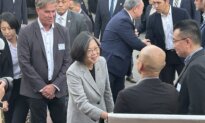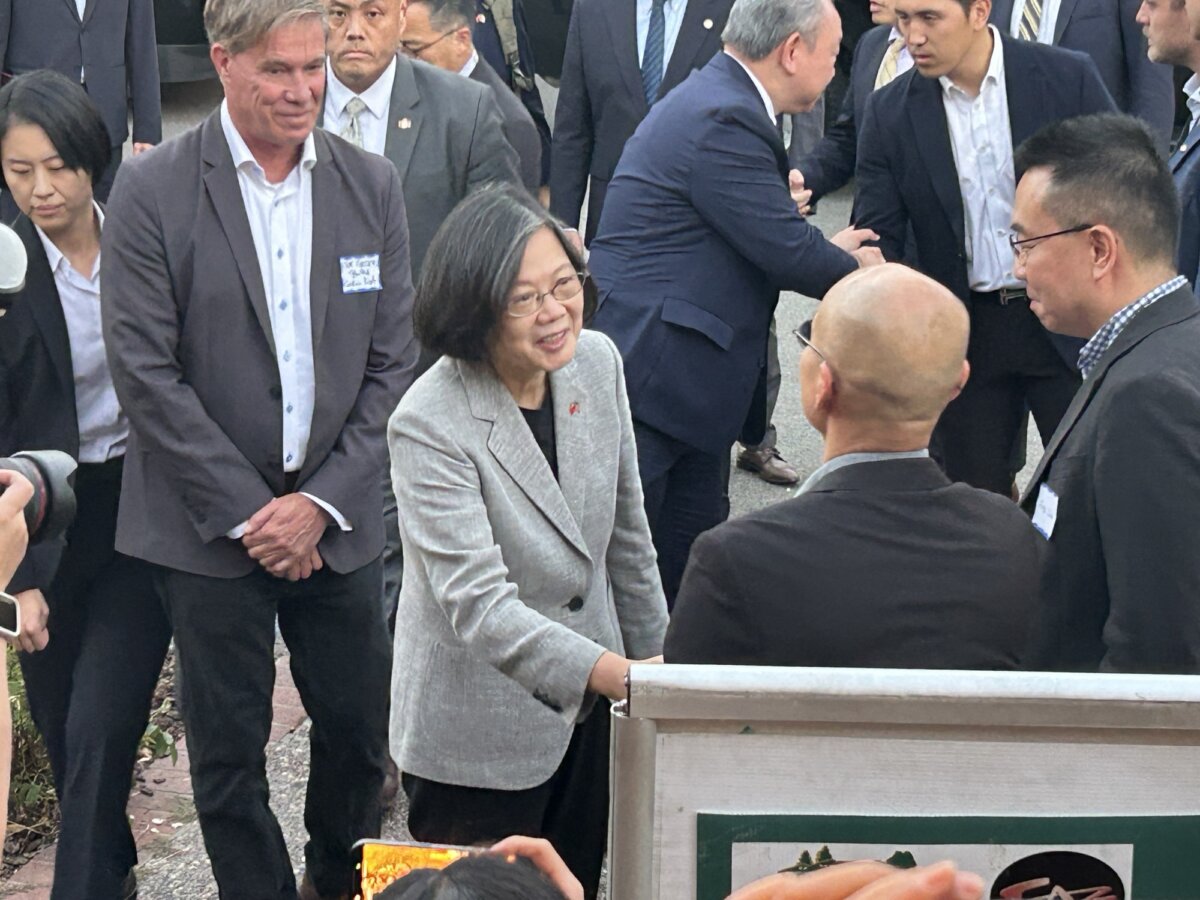
STANFORD, Calif.—Former Taiwanese President Tsai Ing-wen called for deeper cooperation among democratic countries in technology, defense, and supply-chain security during a keynote speech at Stanford University on Oct. 7.
Tsai delivered the opening keynote at the fourth annual Stanford DEFCON Conference on Tech & National Security during her first visit to the United States since she left office in 2024.
The conference is a student-run initiative under Stanford University’s Gordian Knot Center for National Security Innovation. According to the organizers, its mission is to bring together current and future national security leaders and to examine how emerging technologies can strengthen national security.
The 2026 conference brought together participants from academia, government, the defense sector, and the technology industry.
This year’s program featured discussions on artificial intelligence, autonomous systems, defense industrial production, space technology, energy security, commercial intelligence, and the U.S.–Taiwan partnership. A panel immediately following Tsai’s keynote speech focused on the topic “Defending Taiwan’s Democracy: Sovereignty, Emerging Technology, and the U.S.–Taiwan Partnership.”
Taiwan’s Security Challenges
In her speech, Tsai described Taiwan’s security environment as increasingly complex, citing military pressure, cyberattacks, information manipulation, economic coercion, and attempts to compromise critical infrastructure.
She said Chinese military aircraft and vessels regularly operate around Taiwan, while other activities around the island have created sustained pressure without crossing into open conflict. Tsai characterized these actions as “grey zone” activities intended to impose costs, test Taiwan’s responses, and gradually alter the security environment.
Tsai said Taiwan must respond in ways that preserve its confidence and freedom of action while continuing to strengthen its ability to defend itself.
Technology and Global Security
Tsai also discussed the connection between Taiwan’s technology sector and international security.
Taiwan is a major part of global semiconductor and advanced manufacturing networks. Tsai said that because Taiwan is deeply integrated into global technology and manufacturing, a serious disruption in the Taiwan Strait would have consequences extending far beyond Taiwan and the Indo-Pacific.
“Deeper cooperation with Taiwan therefore strengthens not only Taiwan’s own security, but also the stability of the Indo-Pacific and the resilience of the wider democratic community,” Tsai said, according to a transcript of her speech provided to The Epoch Times by the Taipei Economic and Cultural Office in San Francisco.
The conference program included defense-technology entrepreneurs, venture capital investors, military leaders, government officials, and researchers examining how emerging technologies are changing national security.
The Stanford speech was one of the major public events of Tsai’s visit. Her visit has also included meetings and discussions with American and Taiwanese communities in the San Francisco Bay Area.
 Friends Read Free
Copy
Facebook
Tweet
Friends Read Free
Copy
Facebook
Tweet