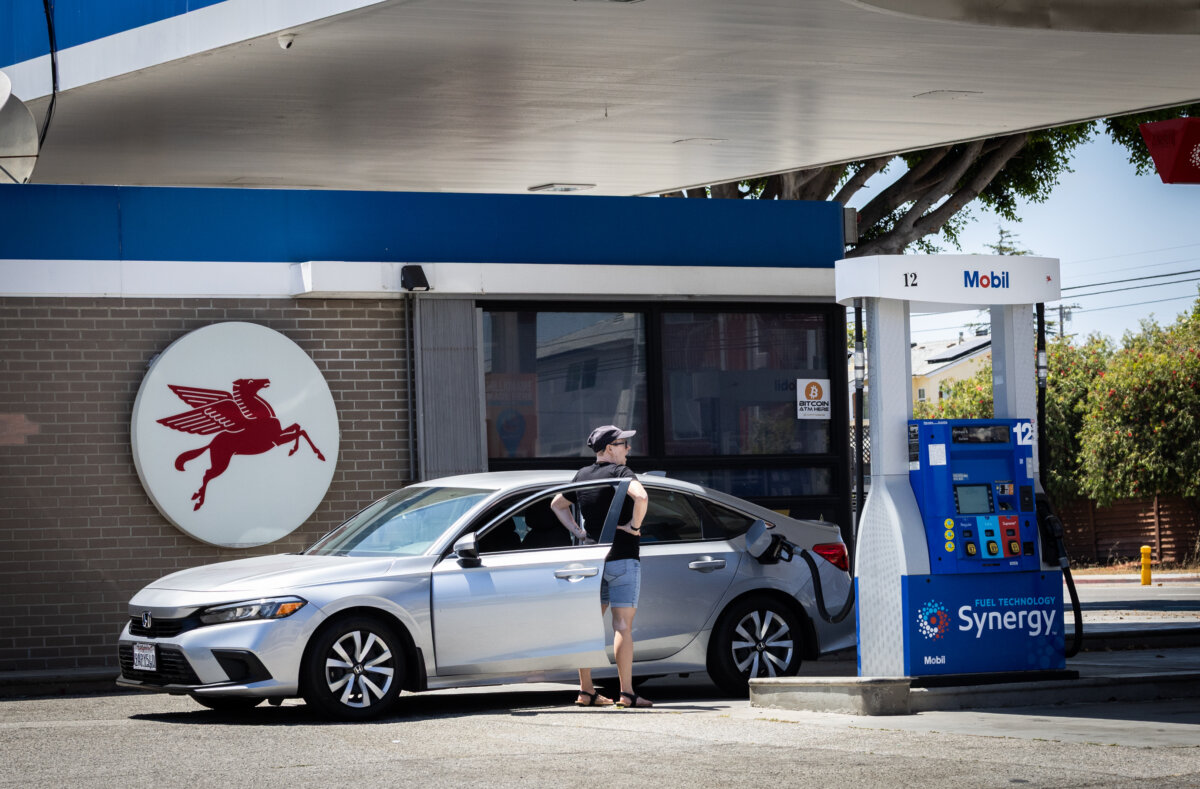

Retail gasoline prices in the U.S. are expected to drop in 2027, according to the U.S. Energy Information Administration’s (EIA) Short-Term Energy Outlook released on Sept. 9.
The EIA, a federal statistical agency inside the Department of Energy, predicted the national price for a regular gallon of gasoline will average around $3.35 by 2027, down from $3.84, the average cost so far in 2026. In 2025, a gallon of gasoline cost $3.10.
It’s also higher than the $2.98 average in February when the Iranian war started, according to the American Automobile Association (AAA).
As of Sept. 9, the national average price for a regular gallon of gas was $4.22, while diesel hit a record high of $5.94, according to AAA data.
On Sept. 9, a barrel of Brent crude oil traded above $100 for the first time since July.
Goldman Sachs warned that oil prices could climb to $120 per barrel if attacks on commercial shipping continue in the Strait of Hormuz.
Daan Struyven, co-head of global commodities research at Goldman Sachs, suggested in a Sep. 7 appearance on Bloomberg Television that the ongoing fighting in the Middle East means that shipping disruptions will be “broadening and intensifying.”
However, the EIA predicted that oil production in the Middle East will rise in the coming months if routes are increased in the Strait of Hormuz or if alternative routes are used.
About one-fifth of the world’s oil came through the crucial waterway before the conflict in Iran began and disrupted operations.
 Vessels in the Strait of Hormuz off Bandar Abbas, southern Iran, on Aug. 10, 2026. (Atta Kenare/AFP via Getty Images)
The EIA predicts that most Middle East crude oil production will likely return to near pre-conflict averages by the second quarter of 2027.
Record Electricity Generation
Meanwhile, the agency expects U.S. electricity generation to grow 2.2 percent to a record 4.37 billion kilowatt-hours (BkWh) this year. EIA predicted an additional 1.7 percent growth in electricity generation for 2027.
EIA also said the data center boom is expected to boost U.S. electricity sales by 2 percent in 2026, to 4.14 BkWh, and another 2 percent in 2027.
“Data center development and increased manufacturing activity are driving growth in the commercial and industrial sectors,” according to the EIA’s analysis on Sep. 9.
“Despite a pause in new data center projects in Texas, the West South Central region remains the largest regional contributor to electricity sales growth in EIA’s forecast.”
Andrew Moran and Tom Ozimek contributed to this report.
 Friends Read Free
Copy
Facebook
Tweet
Friends Read Free
Copy
Facebook
Tweet