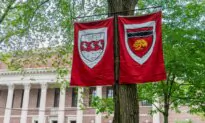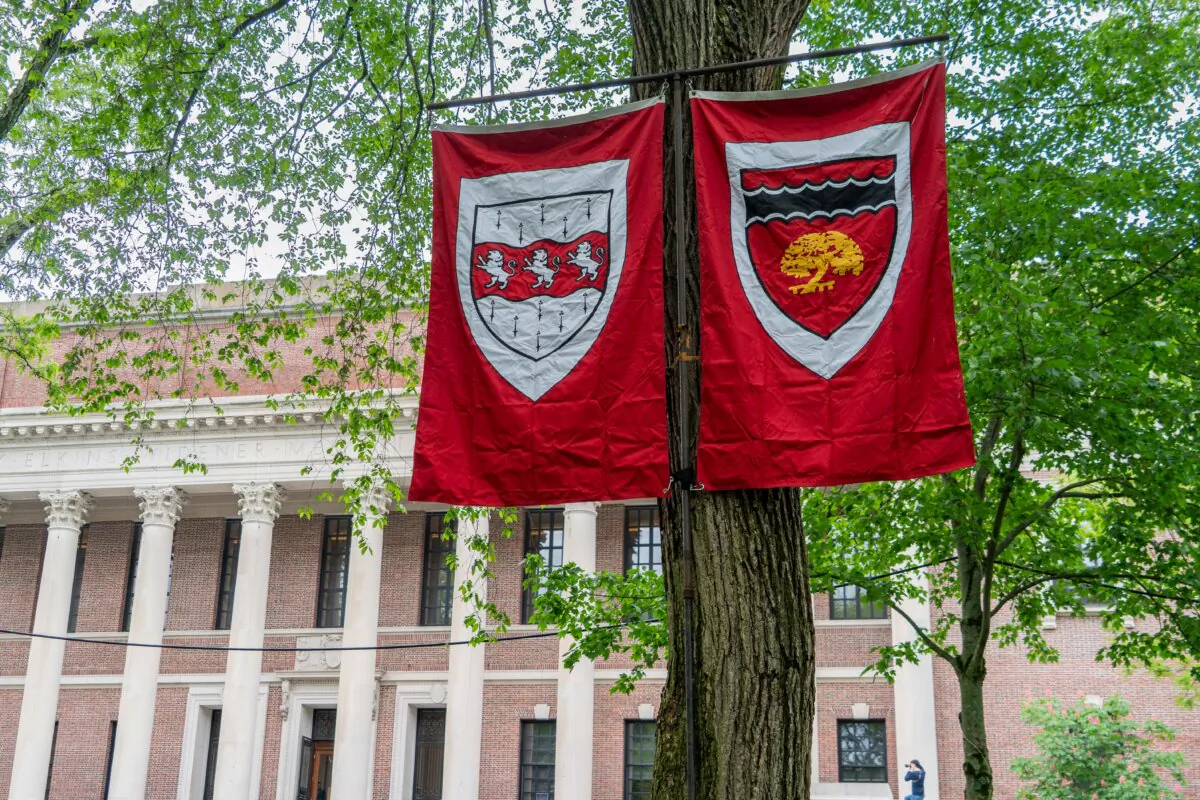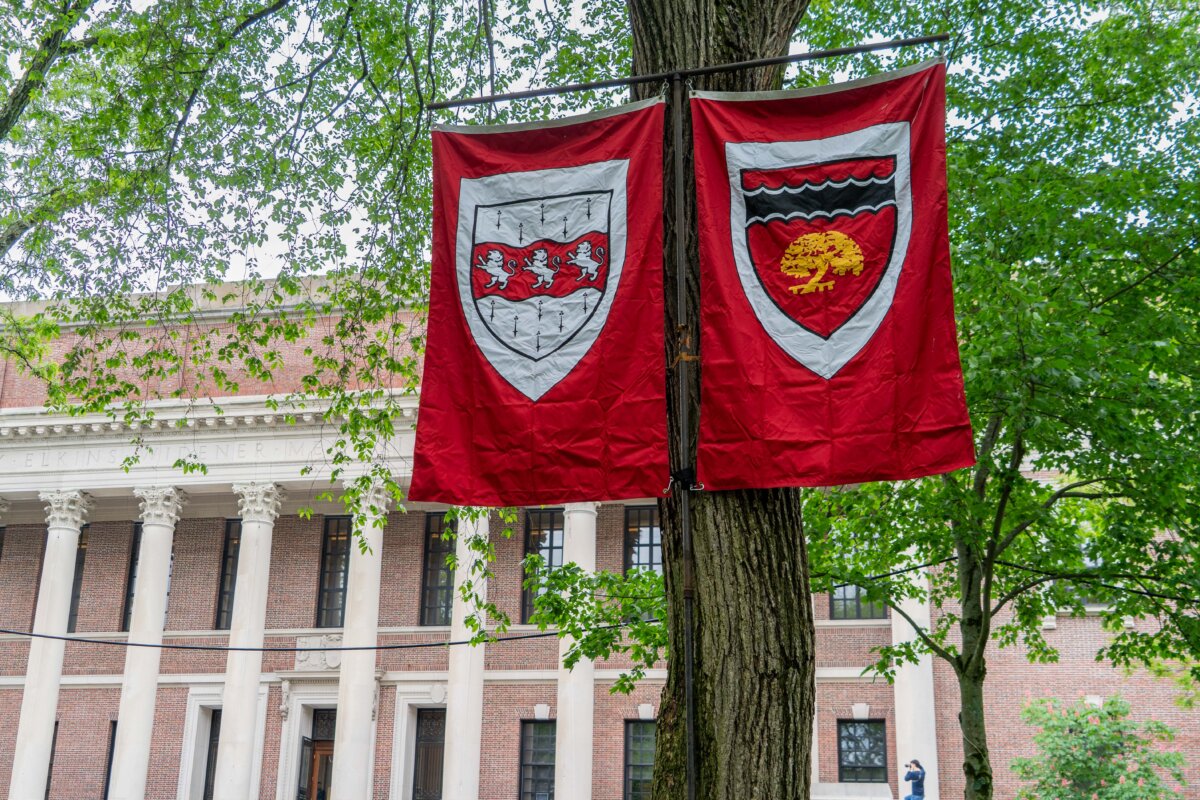

Lawyers for the Trump administration said in a notice that the government will give Harvard University 30 days to provide evidence in response to the White House’s move to strip the Ivy League college of its ability to enroll foreign students.
In a court filing dated May 29, the Department of Homeland Security (DHS) said that on May 28 it sent Harvard a notice of intent to withdraw the school’s certification under the federal Student and Exchange Visitor Program (SEVP), which allows Harvard to enroll non-U.S. students.
The notice from DHS made reference to evidence that suggested Harvard coordinated with the Chinese Communist Party (CCP) and “other foreign adversaries,” which is a “valid and substantive reason for withdrawing” Harvard’s ability to enroll the students, it stated.
The development came ahead of a scheduled hearing before Judge Allison Burroughs, of the U.S. District Court for the District of Massachusetts, in Boston over whether to extend a temporary order blocking the government from revoking the Ivy League school’s ability to host international students.
“This notice is not a means to submit information or evidence that should have been previously provided as part of established reporting requirements,” DHS told Harvard.
Instead, it should be seen as an “opportunity for your school to demonstrate compliance” with DHS requirements and federal law, the notice stated. “Failure to respond to this notice within the allotted time will result in the withdrawal of your school’s certification.”
On May 22, DHS announced that Harvard’s foreign admissions certification would be revoked, warning that other colleges could also be targeted.
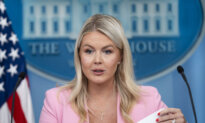
“This administration is holding Harvard accountable for fostering violence, antisemitism, and coordinating with the Chinese Communist Party on its campus,” Homeland Security Secretary Kristi Noem said in a statement.
In April, Noem had issued a request to the school and said it must provide information regarding foreign students who may have been involved in on-campus protests or violence that may lead to them being deported.
The DHS notice last week said that the school could retain its capacity to host foreign students if it provides records on those students within 72 hours, which has already passed. Her office had demanded records, audio and video footage, and other details about non-U.S. citizen students who partook in protests or dangerous activity.
The May 28 notice provided more insight into the DHS’s arguments that Harvard had collaborated with CCP officials.
It noted that as recently as 2024, Harvard had “hosted and trained” individuals who belong to the CCP paramilitary group known as the Xinjiang Production and Construction Corps that has been “complicit in the Uyghur genocide” in China’s Xinjiang region “even after its 2020 designation on the U.S. Treasury’s Specially Designated Nationals List.”
University researchers allegedly “collaborated with China-based academics on projects funded by an Iranian government agent,” including on military advancements such as optics and aerospace research, the notice stated. Some researchers at the school also partnered with China’s defense industrial base, it said.
Regarding the other allegations, DHS accused Harvard of failing to confront “pervasive race discrimination and anti-Semitic harassment.” It also said that the school allowed “pro-Hamas student groups” to promote anti-Semitism on campus, among other allegations.
Harvard has previously denied allegations of fostering anti-Semitism on campus, coordinating with the CCP, and enabling an anti-conservative atmosphere. Harvard enrolls about 6,800 foreign students at its Cambridge, Massachusetts, campus. Many are graduate students, and they come from more than 100 countries.
The university also said that losing that right to host foreign students would affect about one-quarter of its student body and would financially devastate the school.
In a lawsuit filed in the Boston federal court on May 23, Harvard’s attorneys said that the government directive should be considered unconstitutional retaliation for defying what the college said are politicized demands from the White House.
“With the stroke of a pen, the government has sought to erase a quarter of Harvard’s student body, international students who contribute significantly to the University and its mission,” lawyers for Harvard said before Burroughs ruled against the government.
The DHS directive, they argued, “is the latest act by the government in clear retaliation for Harvard exercising its First Amendment rights to reject the government’s demands to control Harvard’s governance, curriculum, and the ‘ideology’ of its faculty and students,” according to the court filing.
Lawyers were scheduled to appear in federal court on May 29 to hear arguments in the case.
Before the decision, Harvard and the government were already locked in a battle over billions of dollars in federal funding. The university has filed a lawsuit in a separate case to block the government from withholding that money.
In April, Harvard President Alan Garber indicated that the school should attempt to fight the government’s demands.
“We have informed the administration through our legal counsel that we will not accept their proposed agreement. The University will not surrender its independence or relinquish its constitutional rights,” he said in a statement at the time.
Like a number of other colleges and universities in recent months, Harvard has received widespread criticism over how it handled anti-Israel protests and riots on campuses after the October 2023 Hamas terrorist attack in Israel that sparked a ground invasion of Gaza.
 Friends Read Free
Copy
Facebook
Tweet
Friends Read Free
Copy
Facebook
Tweet