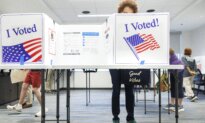

Federal officials obtaining and compiling data on voters as part of an effort to combat voter fraud is illegal, three organizations said in an Oct. 15 lawsuit.
The Department of Homeland Security (DHS) compilation of the data from nearly every state violates the Privacy Act, which only lets agencies maintain information that is relevant and necessary for authorized purposes, the League of Women Voters, the Electronic Privacy Information Center, and the League of United Latin American Citizens said in the lawsuit, filed in federal court in the District of Columbia.
“Congress created DHS to prevent terrorism, secure the border, and address other specified threats—not to conduct a voter-fraud dragnet centered on the private voting information of millions of Americans and records reflecting the exercise of constitutional rights essential to democracy,” the plaintiffs said.
DHS did not respond to a request for comment by the time of publication.
Federal law requires states to keep lists of registered voters. The lists always have the names of all registered voters, and usually include other details such as their addresses, sex, date of birth, and partial or complete Social Security number.
Certain individuals can request the data from states, but there are restrictions on requesters and other restrictions on disclosure.
For instance, most states do not allow people who obtain the data to disclose Social Security numbers.
The Privacy Act states in part that for information concerning activity protected by the U.S. Constitution’s First Amendment, agencies can “maintain no record describing how any individual exercises rights guaranteed by the First Amendment unless expressly authorized by statute or by the individual about whom the record is maintained or unless pertinent to and within the scope of an authorized law enforcement activity.”
The Department of Justice has been sharing voter lists it obtained with DHS, according to letters released by the government. DHS has obtained some version of voter registration lists from at least 47 states, according to the lawsuit.
The Department of Justice’s Office of Legal Counsel said in a May legal opinion that the department “has authority to seek statewide voter lists and share them with the Department of Homeland Security as part of its effort to identify individuals who are ineligible to vote.”
The office also said that DHS is “authorized by law to investigate … voter fraud.”
DHS has since been reviewing the data, along with information it purchased from commercial sources, to try to identify people who are not eligible to vote. In litigation filed separately on Thursday, the government said an analysis of the list and federal data showed that more than 20,000 people registered to vote in California are likely noncitizens.
The lawsuit shows that DHS possesses voter files for California and is improperly using them for election administration purposes, the League of Women Voters and the other plaintiffs said in the District of Columbia filing.
They’re asking the court to declare the voter data collection policy violates federal law, enjoin government officials from carrying out the policy, and to order officials to delete information it has collected.
“The federal government has no business secretly collecting the sensitive personal information of millions of American voters and feeding it into immigration enforcement systems under the guise of election security,” Celina Stewart, the CEO of the League of Women Voters, said in a statement.
“Let’s be clear: Voting is a fundamental right, not a privilege granted by this administration, and our personal information is not theirs to exploit. The League will not stand by while this administration weaponizes voter data, undermines public trust, and threatens our fundamental freedoms.”
 Friends Read Free
Copy
Facebook
Tweet
Friends Read Free
Copy
Facebook
Tweet