
The U.S. State Department announced new sanctions on Oct. 15 targeting a Cuban state-owned commercial bank linked to Iran as the Trump administration continues to place economic pressure on both the Middle Eastern nation and Cuba.
The sanctions designated Cuba’s Banco Internacional de Comercio S.A. under Executive Order 14404, which President Donald Trump issued in May. The order targets those responsible for threats to U.S. national security and foreign policy and for the regime’s repression of Cubans.
Thursday’s sanctions come as the Trump administration has continued to increase pressure on Cuba to make political and economic reforms in recent months. The United States has maintained an oil blockade against the communist regime and has released multiple rounds of sanctions targeting Cuban entities.
The State Department said in a press statement on Thursday that Cuba’s Banco Internacional de Comercio S.A. was being sanctioned for operating in or previously operating in Cuba’s financial services sector. The state-owned bank has provided services to the sanctioned Iranian Karafarin Bank since at least 2022, according to the department.
The Treasury Department sanctioned Karafarin Bank in 2020 under Executive Order 13902. The order imposed sanctions on key sectors of the Iranian economy and intended to prevent the regime from gaining resources that could be used to support its nuclear program, missile development, and terrorism.
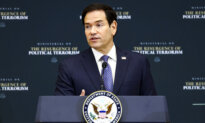
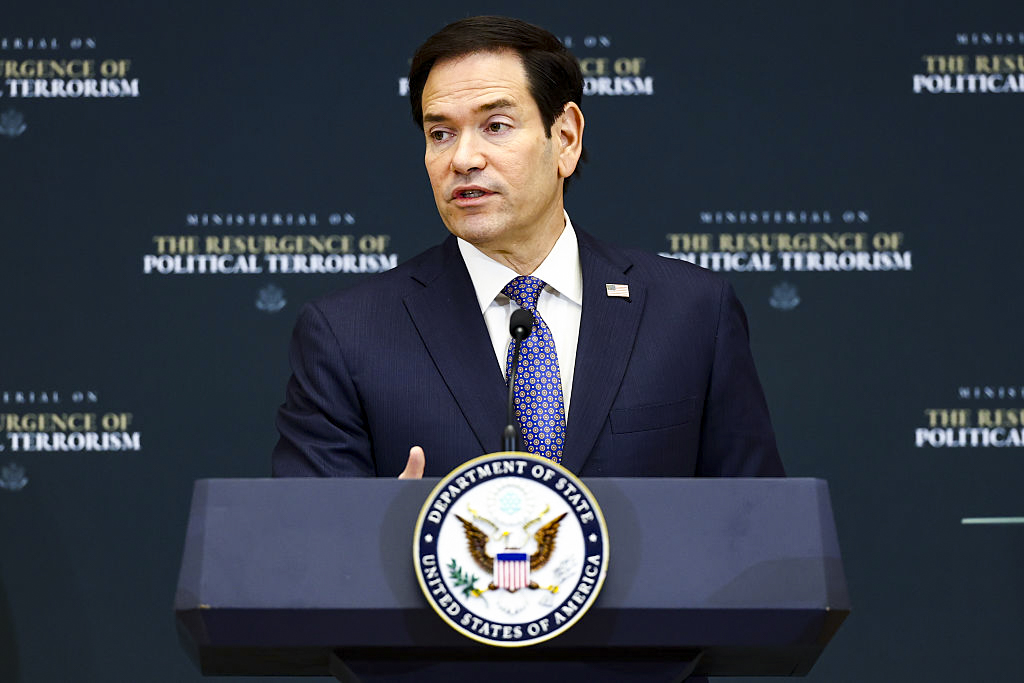
“For too long, Communist Cuba has been allowed to operate as an outpost for malign actors and terror groups – including the Islamic Republic of Iran, the world’s number one state sponsor of terrorism – to target the United States,” Secretary of State Marco Rubio wrote in an X statement on Thursday.
“Let me be absolutely clear: the Trump Administration will not tolerate a rogue state hosting hostile foreign military, intelligence and terror operations less than a hundred miles from our homeland.”
Under the sanctions, any property of the designated bank in the United States or in the possession of U.S. persons will be blocked and must be reported to the Treasury’s Office of Foreign Assets Control.
Any entities owned 50 percent or more by blocked persons will also be blocked as a result of Thursday’s sanctions.
In addition to imposing sanctions on Cuba’s Banco Internacional de Comercio S.A., the State Department said Thursday that it would continue to “aggressively identify and eliminate” the financial and security connections the Cuban regime has with Iran and with “other dangerous and hostile states and actors.”
The Epoch Times reached out to Cuba’s embassy in Washington and Banco Internacional de Comercio S.A. for comment but did not receive a response before publication time.
Recent Developments
The State Department released a report titled “Cuba: The Capital of 21st Century Communism” in July, which accused the regime of attempting to subvert the United States by infiltrating the government and supporting extremist groups.
The Trump administration imposed sanctions in August targeting the leadership of the Cuban Institute of Friendship with the Peoples and multiple state-owned companies.
In late September, the Treasury’s Office of Foreign Assets Control released new Cuba sanctions regulations aimed at closing sanction evasion loopholes and broadening pressure on the regime’s military, intelligence, terror, and subversive networks.
Earlier this year, the United States imposed an oil blockade against Cuba, which has caused the country to struggle with blackouts and fuel shortages. The U.S. government recently announced the seizure of 90 biodiesel shipments that were part of an effort to illegally export fuel to Cuba.
Cuban Foreign Minister Bruno Rodríguez told the U.N. General Assembly on Sept. 26 that the country faces “a multidimensional aggression from the United States government.” He said the U.S. energy blockade prohibiting countries from exporting fuel to Cuba was “equivalent to a naval blockade classified under international law as an act of war.”
Trump told reporters on Sept. 26 that he expected the United States and Cuba would reach a deal and that he did not believe military action would be needed.
“The Communist regime is under great pressure, the biggest pressure they’ve ever been under,” he said. “It’s an absolutely failed state. It’s failing like never before, and it will fall.”
The Trump administration’s pressure campaign against Cuba has been criticized by Democratic lawmakers. In July, a group of Democratic representatives released a joint statement accusing the administration of engaging in a “siege” of Cuba.
The U.S. lawmakers called on the administration to remove what they described as “cruel sanctions” negatively impacting the Cuban people and to conduct “serious and comprehensive negotiations” with Cuba’s leaders.
 Friends Read Free
Copy
Facebook
Tweet
Friends Read Free
Copy
Facebook
Tweet