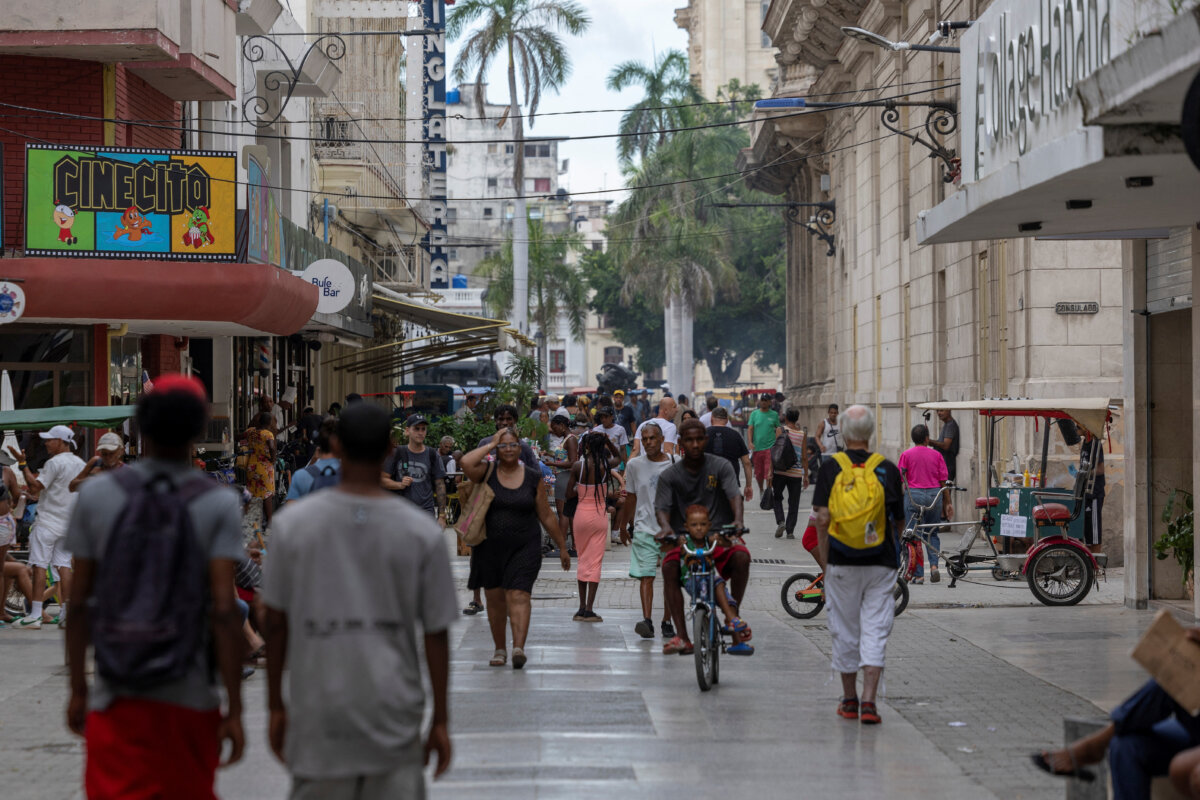

The United States seized 90 biodiesel shipments worth more than $2.8 million that were part of an attempt to illegally export fuel to Cuba.
Last month, U.S. Customs and Border Protection (CBP) identified biodiesel shipments being exported from the country, specifically from Port Everglades in Florida and the Port of Houston in Texas, to ENETEC S.A., a Cuban wholesaler engaged in trading fuel. Law enforcement agencies sought to have the shipments detained.
In total, 71 shipments of around 496,000 gallons of biodiesel were seized at Port Everglades, and 19 shipments of roughly 119,000 gallons were detained at the Port of Houston, Immigration and Customs Enforcement (ICE) said in a statement on Oct. 7.
ENETEC was one of the state-owned entities sanctioned by the United States in July over allegations of funneling revenues to the Cuban regime.
The seizure was requested by Homeland Security Investigations (HSI) over suspected violations of federal export laws, including the Export Administration Regulations and the International Emergency Economic Powers Act, according to ICE.
“This seizure underscores HSI Miami’s commitment to stopping fuel and other goods from the United States from being illegally exported to Cuba through sanctioned entities or deceptive commercial networks,” HSI Miami Special Agent in Charge Jose R. Figueroa said in the statement.
In an Oct. 7 statement, the Miami-Dade County Tax Collector’s office said the federal government has not identified publicly the U.S. exporters involved in the illegal fuel shipment.
President Donald Trump has issued multiple executive orders targeting the Cuban regime. In January, Trump signed an executive order declaring a national emergency and setting up a process to impose tariffs on goods from nations that provide oil to Cuba.
In May, Trump signed another executive order, imposing sanctions on individuals and entities supporting the Cuban regime.
Democrats have criticized the Trump administration’s actions against Cuba. In a July 13 statement, Reps. Mark Pocan (D-Wis.), Teresa Leger Fernandez (D-N.M.), Delia C. Ramirez (D-Ill.), and Maxine Dexter (D-Ore.) alleged that Cuban citizens were suffering from what they termed America’s economic blockade.
They blamed the Trump administration for not providing evidence that Cuba posed a national security threat to the United States.
“We call on the Trump administration and our colleagues in Congress to listen to the majority of U.S. and Cuban citizens and the rest of the world by lifting the cruel sanctions weighing on the Cuban people,” they said.
In a May 1 fact sheet, the White House said the Cuban regime aligns with nations and malign actors that are hostile to the United States. Cuba maintains ties with major state sponsors of terrorism, including Iran, and offers a safe haven for terror groups, such as Hezbollah.
The Cuban regime provides a permissive environment for foreign intelligence, terrorist, and military operations that are less than 100 miles from the U.S. homeland, according to the White House.
“These actions constitute an unusual and extraordinary threat to U.S. national security and foreign policy,” the White House said.
In a Sept. 22 speech before the U.N. General Assembly, Trump said that his administration was seeking a “fundamental change in the situation in Cuba,” calling the country a failed state.
Trump accused Cuba of coordinating with communist networks and left-wing radical groups in the United States. He cited the State Department as saying Cuba has cultivated ties with Antifa and Communist Party USA.
Speaking to reporters at the White House on Sept. 26, Trump said military action may not be necessary against Cuba.
“I would say that Cuba and us will make a deal. I don’t think we’ll need the military,” Trump said. “We want to help Cuba.”
 Friends Read Free
Copy
Facebook
Tweet
Friends Read Free
Copy
Facebook
Tweet