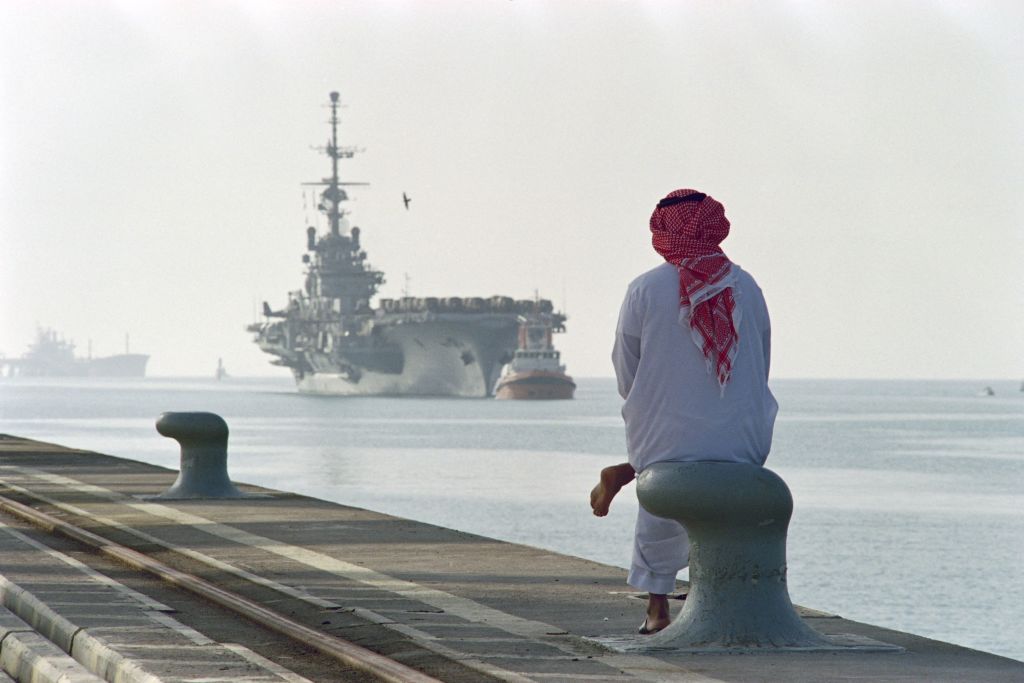

A fifth of the world’s traded oil and gas passed through the Strait of Hormuz before the Iran conflict began in February.
The strategic waterway is the primary export route for oil produced by Gulf countries, including Saudi Arabia, the United Arab Emirates, Iraq, and Iran. Disruption to shipping in the strait has prompted governments to accelerate efforts to diversify the routes by which oil reaches international markets.
While some countries already have ways to move oil around the chokepoint, others are racing to develop new options that link the Gulf with the Mediterranean and the Red Sea.
But who actually has a way around the strait? What would new routes cost, and when could they open? And could any of them replace Hormuz?
This is a breakdown of what we know so far.
Saudi Arabia
Saudi Arabia is better positioned than most Gulf producers to reduce its reliance on the Strait of Hormuz because it already operates the East-West Pipeline. It carries crude from the kingdom’s Eastern Province to the Red Sea export terminal at Yanbu.
The pipeline has a maximum capacity of 7 million barrels per day, according to Saudi Aramco, the country’s national petroleum and natural gas company.
Saudi Energy Minister Prince Abdulaziz bin Salman said on Oct. 12 that the kingdom could temporarily add up to 1.2 million barrels per day of export capacity within seven to eight weeks by converting a domestic gas pipeline to transport crude oil.
With additional investment in pumping stations and other infrastructure, Saudi Arabia could increase its ability to divert exports to around 10 million barrels per day over the next two to three years.
Even so, the East-West Pipeline is not being used to its full potential. According to intelligence firm Kpler, the main bottleneck is not the pipeline itself but export infrastructure at Yanbu, where loading capacity limits how much crude can be shipped from the Red Sea.
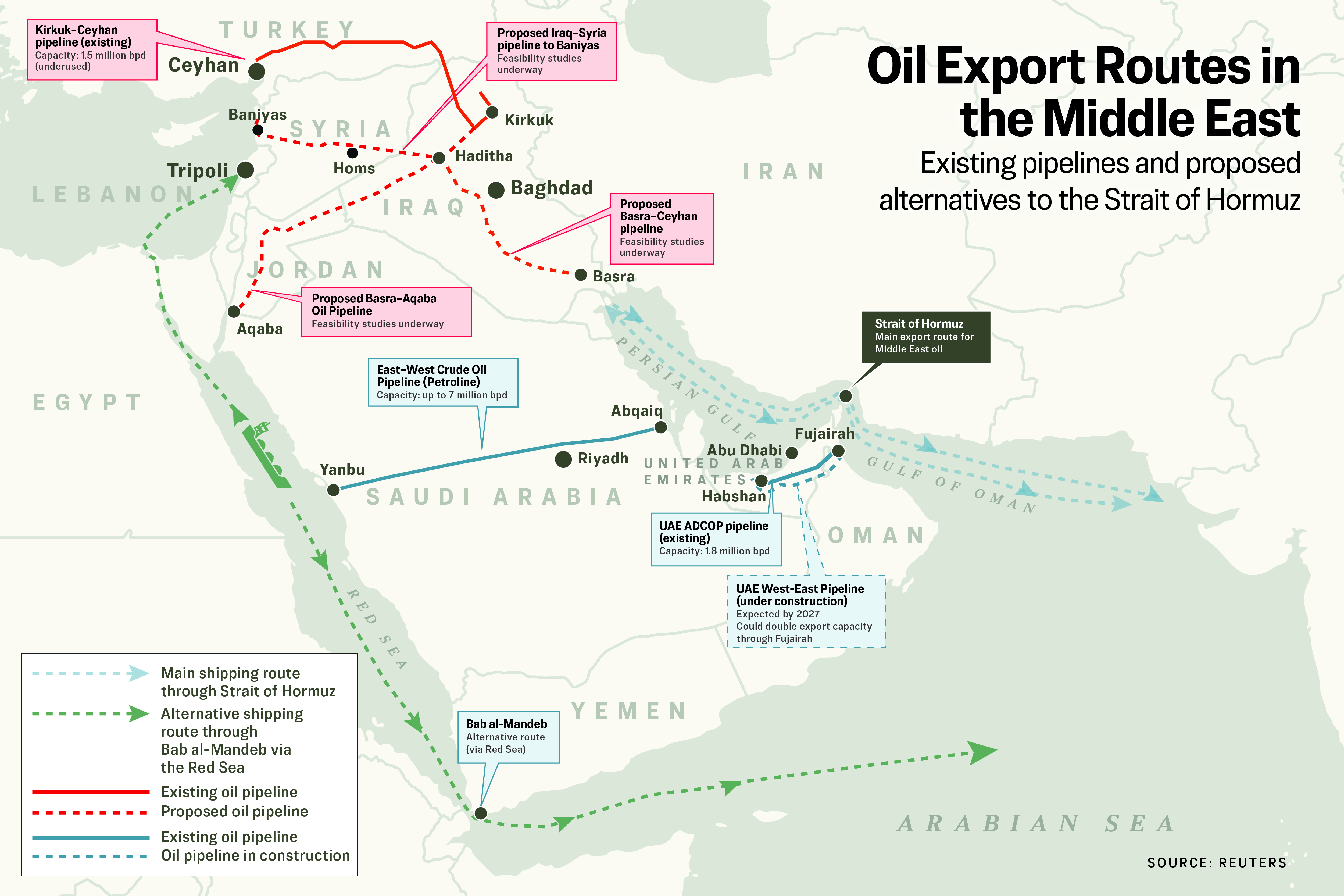
The western route also carries its own risks. Since the outbreak of the conflict, the Houthi terrorist organization in Yemen has targeted commercial shipping in the Red Sea and around the Bab al-Mandeb Strait.
UAE
The UAE is expanding infrastructure that already allows part of its crude exports to bypass Hormuz.
Its Abu Dhabi Crude Oil Pipeline (ADCOP), with a capacity of up to 1.8 million barrels per day, carries oil from inland fields to the port of Fujairah on the Gulf of Oman, outside the Strait of Hormuz.
In May, the UAE announced plans for the West–East Pipeline, also known as the Hamriyah–Fujairah pipeline, which would further expand export capacity through Fujairah by 2027.
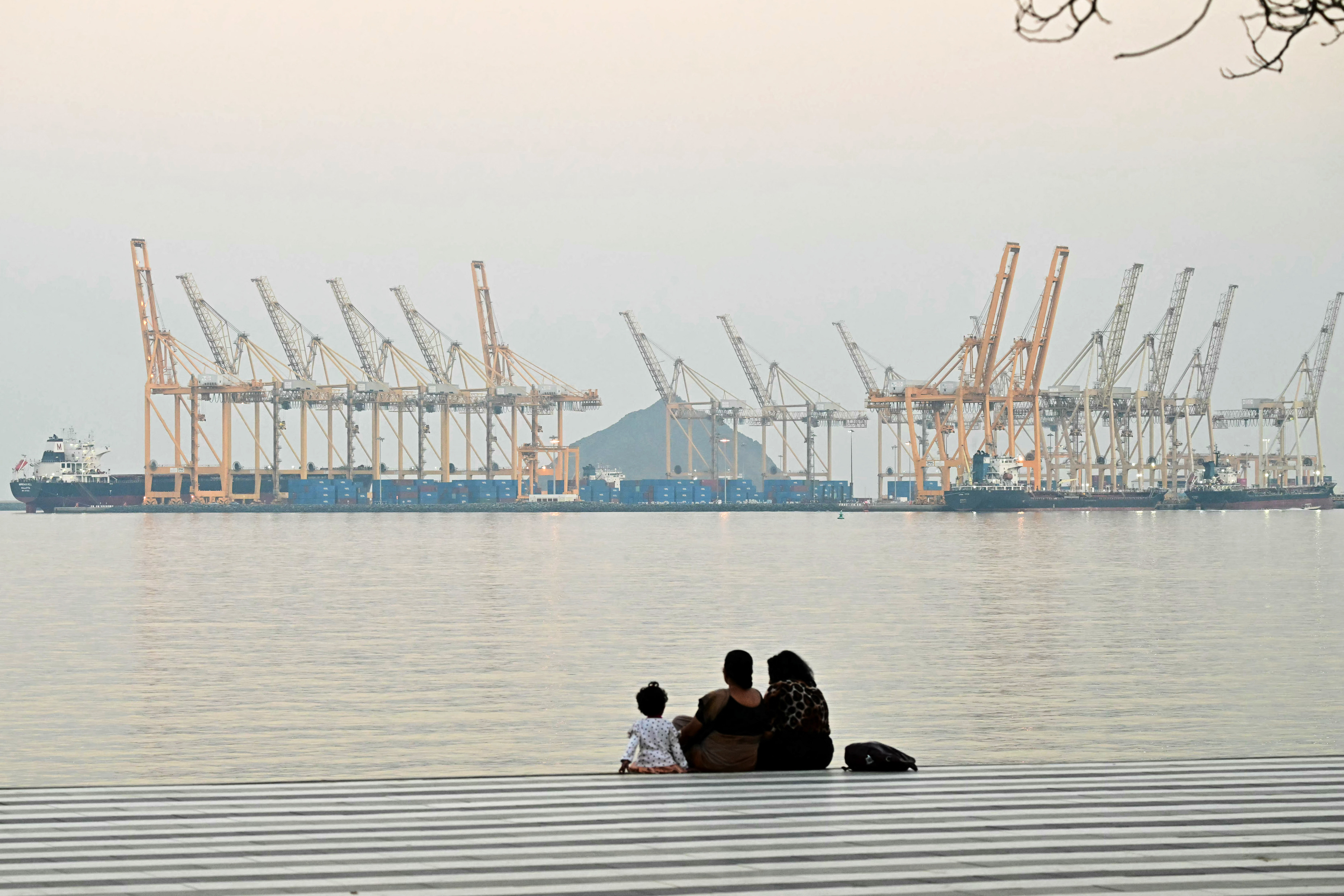 A family sits against the backdrop of a dockyard off the coast of Fujairah, in the Strait of Hormuz, in the United Arab Emirates, on Feb. 25, 2026. (Giuseppe Cacace/AFP via Getty Images)
The intelligence firm estimates the pipeline is more likely to begin materially boosting exports by mid-2027, as Fujairah’s loading facilities will also need to be expanded before the additional capacity can be fully utilized.
Iraq, Syria, Turkey
Iraq, unlike Saudi Arabia and the United Arab Emirates, lacks a major operational pipeline that bypasses the Strait of Hormuz.
Iraq’s main oilfields are in the south around Basra, and almost all of the country’s crude exports are shipped from terminals on the Persian Gulf. Official Iraqi export data show that Basra remained the country’s main export hub and northern shipments increased steadily during the first half of 2026.
With the Strait of Hormuz closed, Iraq has sent oil to foreign buyers by truck through Syria’s Baniyas port on the Mediterranean coast for months.
Baghdad has also started moving fuel the other way, importing gasoline through the same port under a three-month agreement with Syria.
Qatar-based conglomerate UCC buys the gasoline, while Syria handles transport and collects transit fees. Shipments arrive at Baniyas, then travel by land through al-Tanf in the southeast before reaching Iraq.
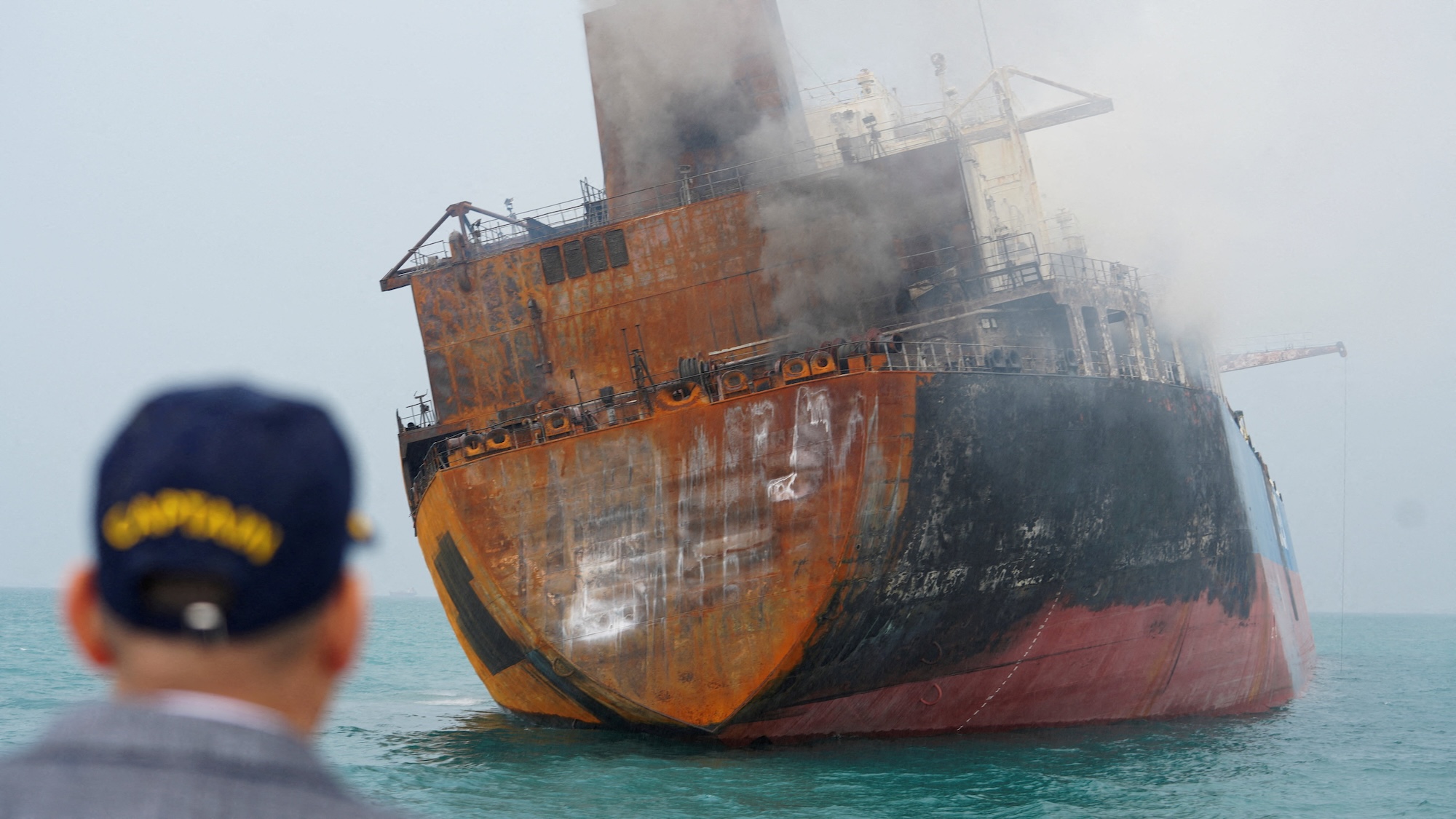 A tanker carrying fuel oil is damaged following unidentified attacks near Basra, Iraq, on March 12, 2026. (Reuters/Mohammed Aty/File Photo)
Iraq’s cabinet approved preliminary agreements allowing Basra Oil Company to work with a consortium including Chevron, TI Capital and UCC Holding on technical and financial feasibility studies for the two proposed export corridors.
The studies are expected to be completed by the end of the year, after which construction could begin, although the projects are likely to take several more years to build.
What Are the Biggest Obstacles?
The renewed push to develop alternatives to the Strait of Hormuz does not mean those projects will be completed quickly or at all.
Many regional pipeline proposals have been discussed for years but repeatedly stalled, according to Kpler analysis. This is due to high construction costs, logistical complexity, and the political challenges of building infrastructure that crosses multiple countries.
Unlike domestic pipelines, cross-border projects require sustained cooperation between governments whose relationships have often been shaped by regional rivalries and security concerns.
The war has changed the incentives and revived stalled projects, but all would still need substantial capital and several years to come online, Kpler said.
Security remains another major challenge. In a September analysis, Chatham House said energy infrastructure has become an increasingly frequent target during the conflict.
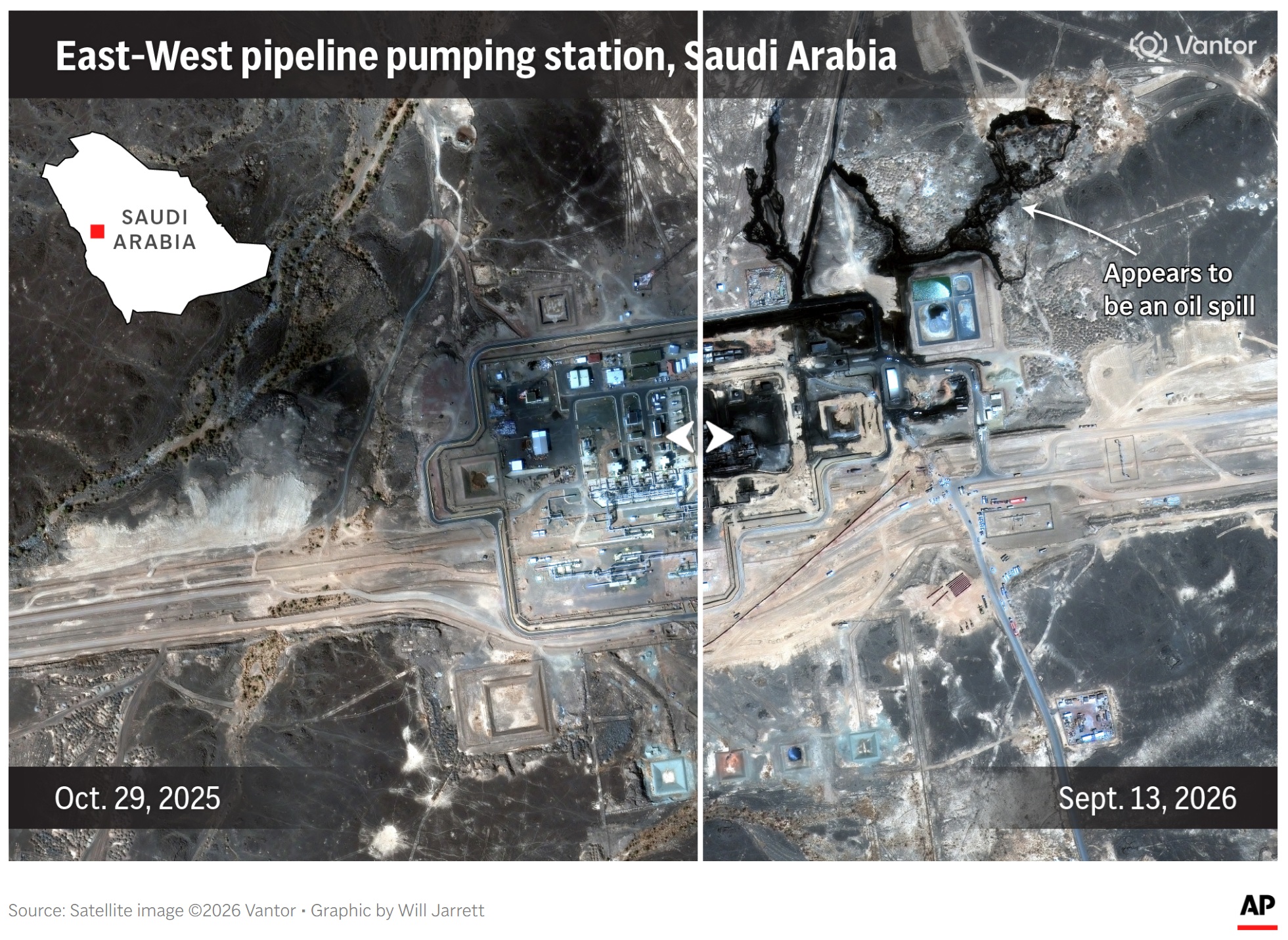 A slider showing damage to a pumping station on the East-West pipeline in Saudi Arabia. (AP Digital Embed)
Some proposed routes would pass through conflict zones or areas where armed groups operate, particularly in Iraq and eastern Syria. That raises construction costs and security risks, making it harder to attract investors and insurers, according to Chatham House.
For now, analysts say the most realistic strategy is to expand existing infrastructure rather than rely on entirely new regional pipeline networks. While the latest crisis has accelerated long-term planning, the Strait of Hormuz is expected to remain the Middle East’s primary oil export gateway for years to come.
Reuters and The Associated Press contributed to this report.
 Friends Read Free
Copy
Facebook
Tweet
Friends Read Free
Copy
Facebook
Tweet