

The International Energy Agency (IEA) has announced its member nations will hasten the release of emergency oil reserves as energy markets tighten amid the Iran and Russia–Ukraine conflicts.
After meeting on Thursday, the IEA said that is members “agreed to take all necessary steps to complete the remaining releases of around 100 million barrels [of oil] in a timely manner consistent with national circumstances.”
So far, around 330 million of the 400 million barrels of oil pledged in March have been released by IEA member states, according to the agency. The United States accounts for more than 40 percent of the total released so far.
Some members, it added, have released more oil than initially pledged ,while other member states indicated they intend to release some, “making the total amount of stocks to be released exceed the original total.”
The IEA also announced it would accelerate the release of some 20 million barrels of diesel as Russia, the second-largest exporter of diesel after the United States, has restricted supply amid a surge in attacks on its refineries by Ukraine. The average U.S. price for the fuel currently sits at well over $6 per gallon. The IEA urged countries with the ability to produce diesel to increase their supplies.
The price for the global benchmark Brent crude decreased by more than 1 percentage point to $104 per barrel on Wednesday morning, while West Texas International crude rose slightly to $95 per barrel.
Since February, Iran has launched attacks on commercial shipping in the Strait of Hormuz, a waterway that connects key oil-producing Gulf nations with world markets. In peacetime, the strait allowed for the transportation of around 20 million barrels of oil per day.
Moscow has said it would begin shipping diesel to the strained global market after the United States removed sanctions that were placed on Russia amid the war.
U.S. President Donald Trump said a deal was reached after he spoke with Russian President Vladimir Putin last week, according to a social media post. The president added that due to U.S. efforts in the strait and because of the deal, energy and diesel prices would be coming down.
Meanwhile, a container ship and a dry bulk carrier were both sunk near the Strait of Hormuz in the past 24 hours after being hit by projectiles in separate incidents, maritime officials said on Wednesday.
Attacks around the waterway have surged over the past 10 days, with Iran saying it is stepping up strikes in response to the U.S. blockade of its ports and tougher sanctions introduced last month after peace talks stalled.
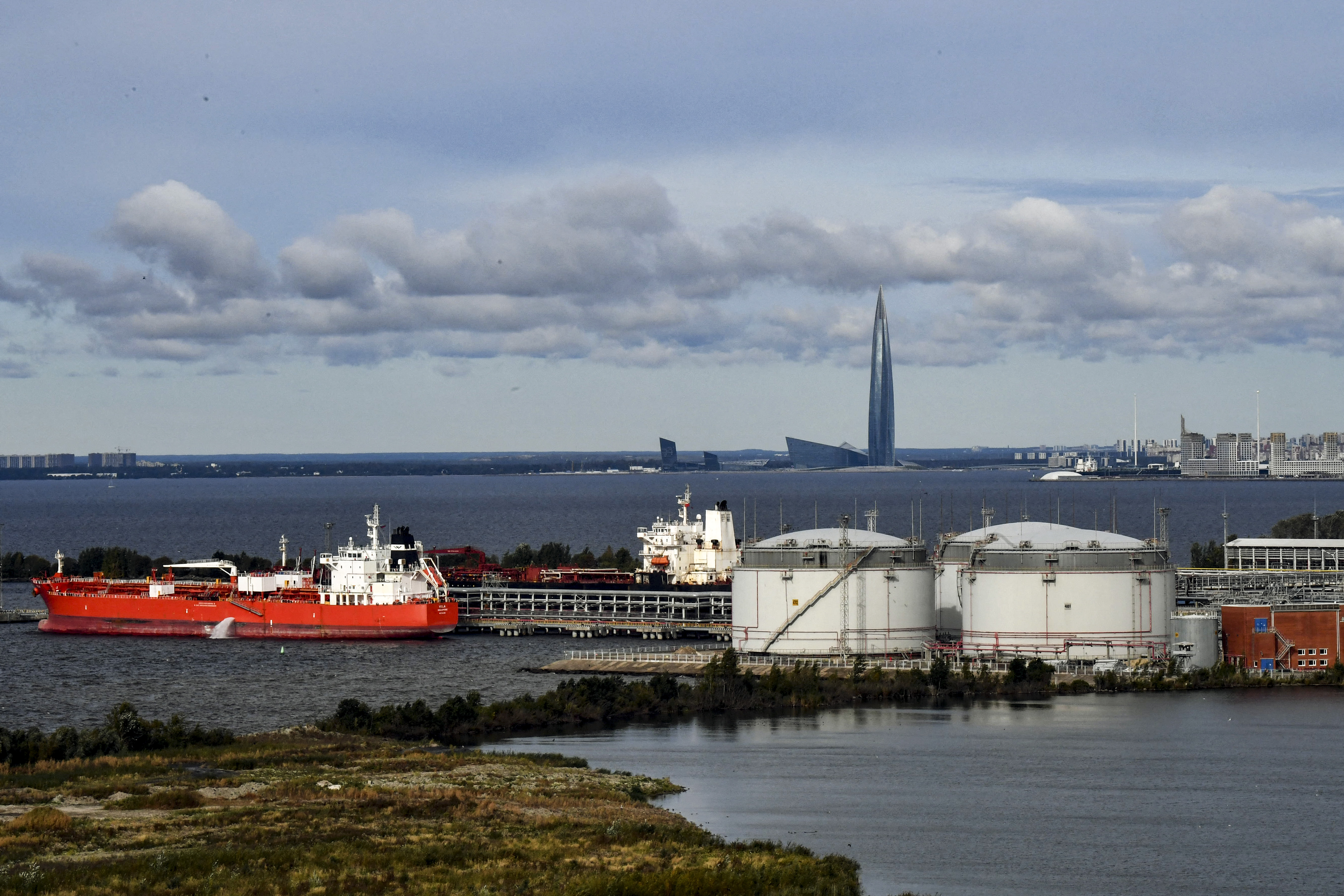 The oil terminal at the port of Saint Petersburg on Sept. 26, 2025. (Olga Maltseva/AFP via Getty Images)
The Iran-backed Houthi terrorist group on Wednesday said it would launch more attacks against Saudi oil facilities and airports. Saudi Arabia has faced widening Houthi strikes over the past week, including an attack on King Khalid International Airport in Riyadh on Saturday that killed 13 people.
Also on Wednesday, U.S. military forces destroyed an Iran-linked ship that was conducting surveillance and targeting U.S. Navy ships in the Gulf of Oman, which is located near and connects to the Hormuz Strait.
U.S. Central Command said in a post on X, which included a video of the ship’s destruction, that crew members on the vessel were safely relocated before it was sunk.
Reuters contributed to this report.
 Friends Read Free
Copy
Facebook
Tweet
Friends Read Free
Copy
Facebook
Tweet