
U.S. lawmakers in both the House and Senate have introduced war powers resolutions in their respective chambers directing the president to remove the U.S. military from hostilities that Congress has not authorized, citing the potential of military action by the Trump administration in Venezuela.
Ranking Member of the House Rules Committee Rep. Jim McGovern (D-Mass.), alongside two colleagues, introduced a resolution in the House on Dec. 1.
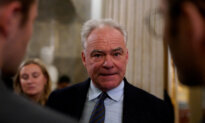
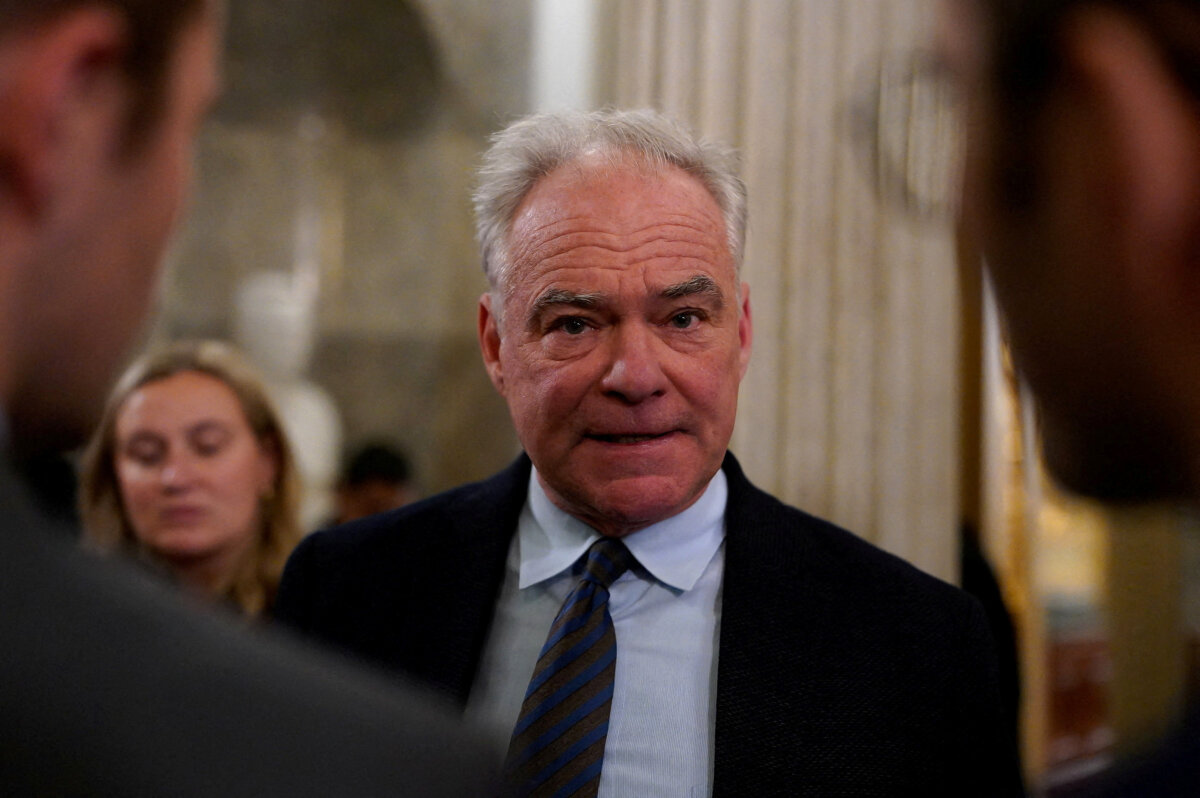
Sen. Tim Kaine (D-Va.) said he had filed a corresponding resolution in the Senate on Dec. 3, alongside Sens. Chuck Schumer (D-N.Y.), Adam Schiff (D-Calif.), and Rand Paul (R-Ky.).
McGovern cited President Donald Trump’s potential action against Venezuela following the president’s declaration that the airspace “above and surrounding Venezuela” should be considered closed.
“Donald Trump claimed he would put America first—instead he’s trying to drag us into an illegal war in Venezuela,” he said in a Dec. 2 statement.
Kaine said of the Senate’s effort: “We should not be risking the lives of our nation’s servicemembers to engage in military action within Venezuela without a robust debate in Congress.”
Earlier on Dec. 2, Trump threatened that U.S. military strikes on Venezuela would begin “very soon.” The president did not provide further details but has, in recent weeks, indicated a willingness to transition from strikes against what he called narco-terrorists at sea to strikes on land to deter drug trafficking and address America’s opioid crisis.
Both resolutions were introduced in relation to the War Powers Resolution of 1973. McGovern’s office said the measure is privileged and should receive consideration in the House. The War Powers Resolution is also privileged in the Senate, meaning it must be called up for a vote in a matter of days.
“Whatever this is about, it has nothing to do with stopping drugs,” McGovern said, pointing to Trump’s pardoning of Ross Ulbricht, founder of online black marketplace Silk Road, and former Honduran President Juan Orlando Hernández, who was convicted by a U.S. jury on drug trafficking and firearms convictions.
“To me, this appears to be all about creating a pretext for regime change. And I believe Congress has a duty to step in and assert our constitutional authority. No more illegal boat strikes, and no unauthorized war in Venezuela.”
Ranking Member of the House Foreign Affairs Committee’s Western Hemisphere Subcommittee Rep. Joaquin Castro (D-Texas) and Rep. Thomas Massie (R-Ky.) co-sponsored the effort.
Castro said Trump had put the United States on “the brink of a war with Venezuela” without a debate or vote in Congress.
“This resolution will ensure that every member of the House is on the record about sending service members to a war that Americans do not want,” he said.
Massie said the Constitution does not allow the executive branch to “unilaterally commit an act of war against a sovereign nation that hasn’t attacked the United States,” and only Congress has the sole power to declare war.
“Congress must decide such matters according to our Constitution,” he added.
McGovern, Massie, and Castro said that their goal is to “force a debate and a vote before any further escalation,” according to McGovern’s office.
In October, the president and his team sent one of the largest military forces in decades to the Caribbean, including the world’s most advanced aircraft carrier, to support counter-narcotics operations.
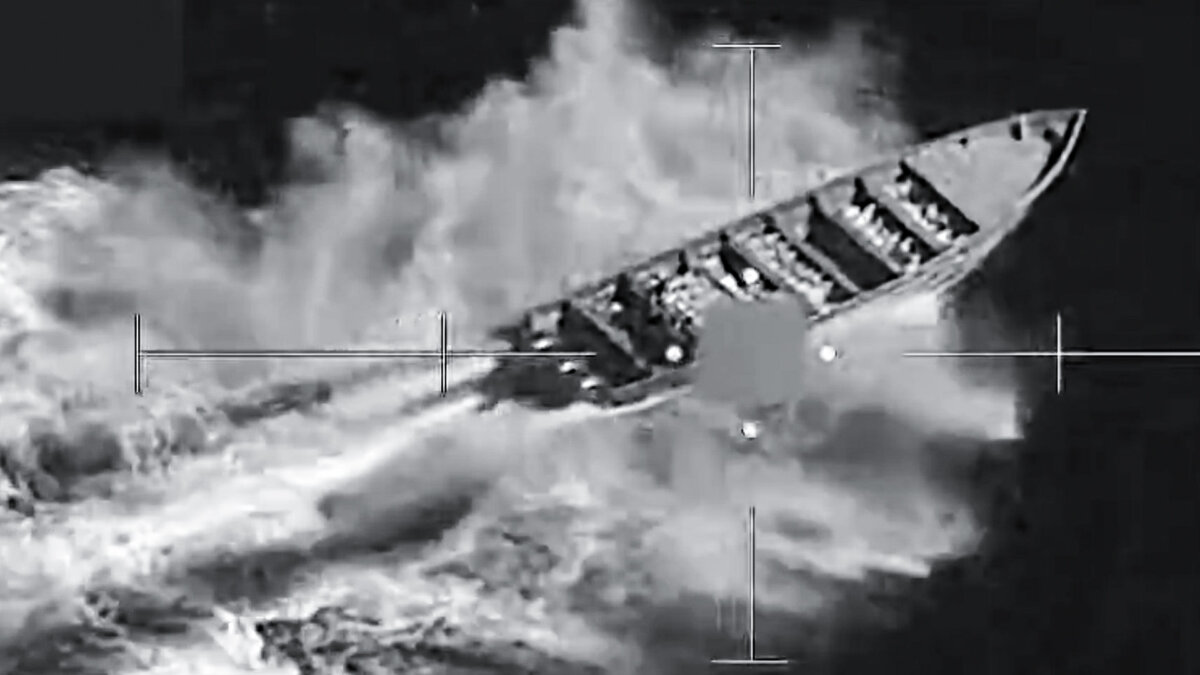
The Pentagon also ordered lethal strikes against vessels in the Caribbean Sea and eastern Pacific that the Trump administration said were in the process of trafficking illegal drugs to the United States. More than 80 alleged traffickers onboard the targeted vessels were killed, with the strikes in international waters under scrutiny.
The administration has also been accused of potential war crimes for intentionally launching a second strike on a boat after observing survivors. The House and Senate Armed Services Committees are currently probing the allegations of wrongdoing.
Navy Vice Adm. Frank “Mitch” Bradley, who ordered the strike, is set to testify to lawmakers in a classified setting on Dec. 4 as part of the probe. The White House has defended the strike as a lawful action of war.
The U.S. government in November formally designated Venezuelan leader Nicolás Maduro as a member of a foreign terrorist organization, which the Trump administration says authorizes the United States to expand military operations in Venezuela if needed.
“Based in Venezuela, the Cartel de los Soles is headed by Nicolás Maduro and other high-ranking individuals of the illegitimate Maduro regime who have corrupted Venezuela’s military, intelligence, legislature, and judiciary,” U.S. Secretary of State Marco Rubio said in a Nov. 16 statement.
He said that the cartel is “responsible for terrorist violence throughout our hemisphere as well as for trafficking drugs into the United States and Europe. The United States will continue using all available tools to protect our national security interests and deny funding and resources to narco-terrorists.”
Argentina, Peru, Ecuador, Paraguay, and the Dominican Republic also recognize the Cartel de Los Soles as a terrorist organization.
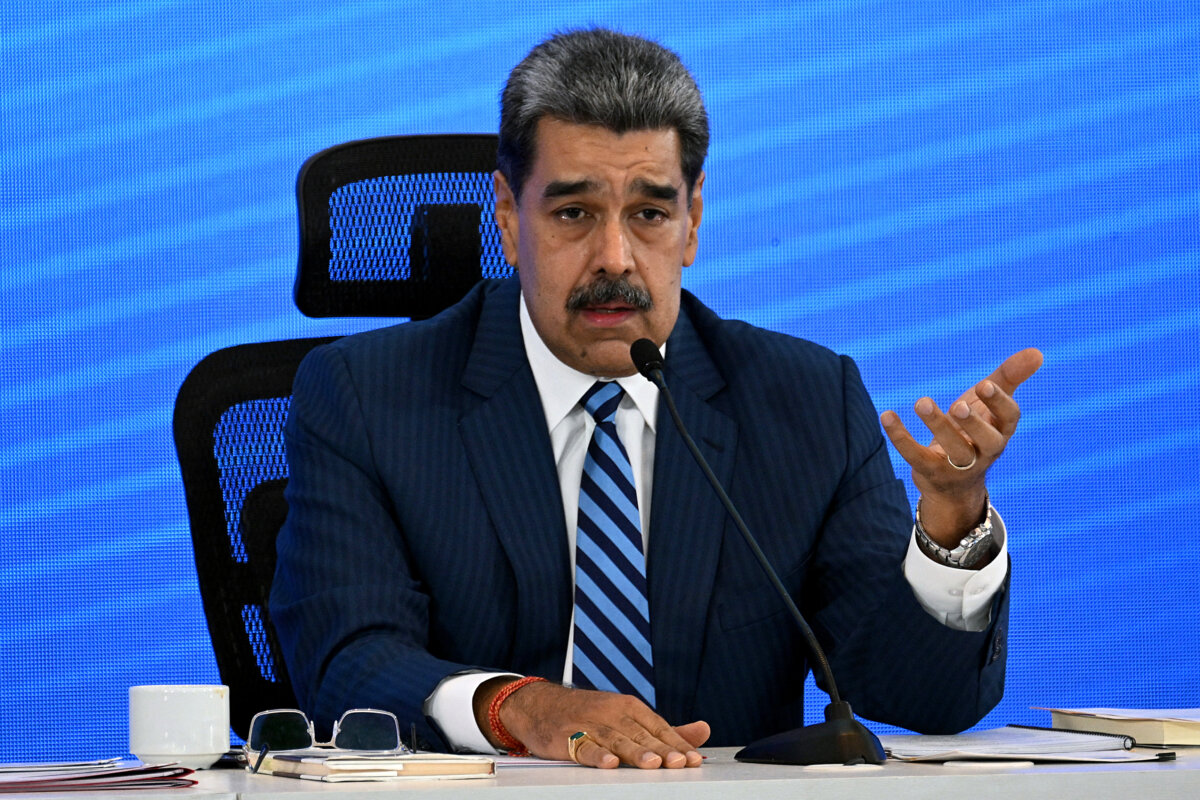
The Venezuelan leader has denied the allegations and condemned the actions as military provocation in coordination with the CIA, and as a “false flag” operation for regime change.
A false flag operation is an act carried out with the intent to make it appear as though the other party was responsible.
The Trump administration has said it does not consider Maduro the legitimate leader of Venezuela. Venezuelan opposition leader Edmundo González was recognized by the United States and Europe as Venezuela’s rightful president-elect following the disputed 2024 election. He is currently living in exile in Spain after fleeing Venezuela in September 2024, after an arrest warrant was issued by Maduro.
Venezuelan opposition leader María Corina Machado said she supports Trump’s approach to her nation, calling it “absolutely correct” that the White House considers military action targeting drug trafficking in the country. She said the action would “protect millions of lives of Latin American citizens and certainly Venezuelan citizens.”
Kaine has already sponsored two previous resolutions seeking to limit U.S. military action in the region, which failed to win enough support in the Senate.
House Democrats have also introduced a proposal to block the funding needed to sustain the use of U.S. military force in direct hostilities with Venezuela unless approved by Congress.
Trump has made other threats involving the U.S. military. On Nov. 1, he threatened military action in Nigeria if the West African country didn’t take more action to prevent the killing of Christians by “Islamic terrorists.”
Reuters contributed to this report.
 Friends Read Free
Copy
Facebook
Tweet
Friends Read Free
Copy
Facebook
Tweet