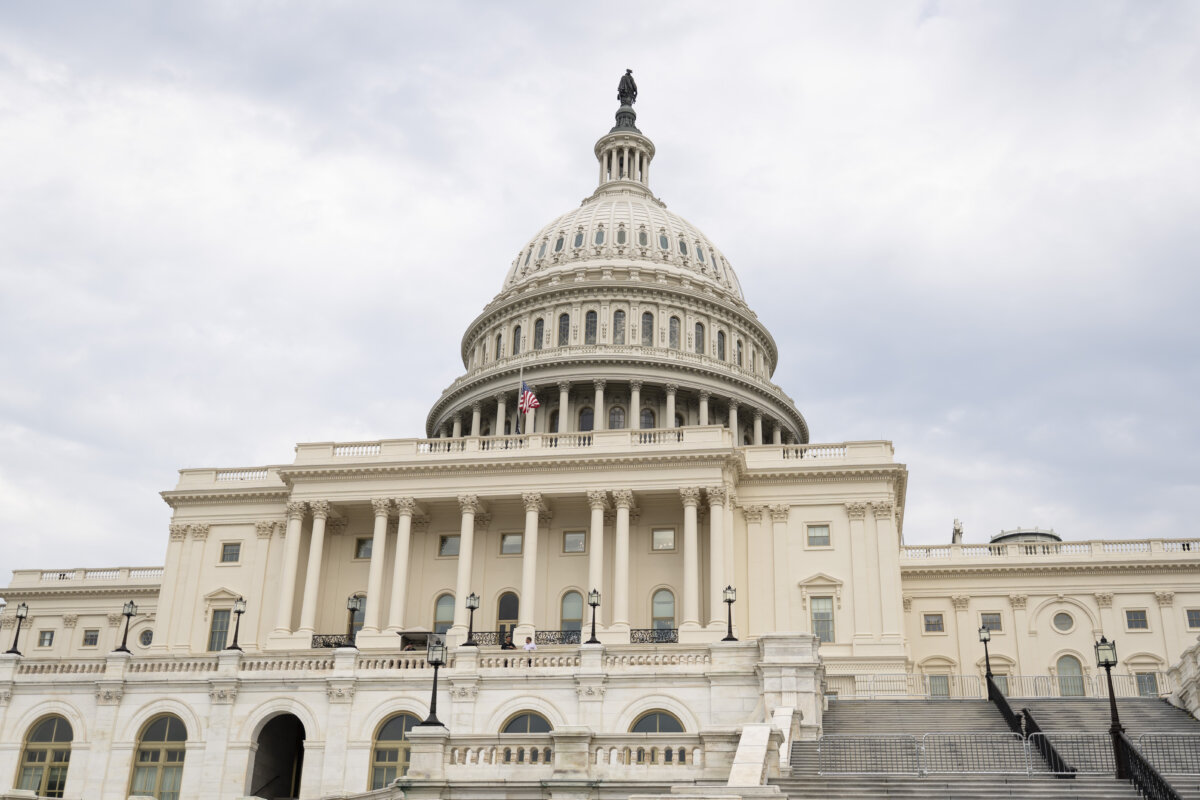

The House of Representatives passed a bill on Sept. 1 to fund the government past the midterms, thereby avoiding a shutdown.
The tally was 370–48, meeting the threshold for a two-thirds majority since the bill was brought under suspension of the rules. Known as a continuing resolution (CR), it would fund the government through Dec. 11.
It now goes to President Donald Trump for his signature. The Senate passed the measure on Aug. 8 by a vote of 90–6.
The legislation sets guardrails for the Department of War, prohibiting it from initiating new programs, increasing production rates, or entering into multi-year procurement.
It would permit spending above the default rate, where necessary, to maintain certain programs, including the Special Supplemental Nutrition Program for Women, Infants, and Children.
The bill would prohibit the Office of Management and Budget from issuing or finalizing its proposed Regulation for Federal Financial Assistance. It stated that if the rule is finalized before the measure’s enactment, it “shall not have force or take effect” through Dec. 11. The rule was published in the Federal Register on May 29.
While the resolution would mainly fund the government at current levels, other provisions include delaying a ban on hemp for a month. While the Trump administration pushed for the delay, conservatives in Congress oppose it.
Ahead of the vote, Rep. Chip Roy (R-Texas) expressed opposition to the CR. He said it does not prevent taxpayer dollars from going toward abortion services such as Planned Parenthood.
“Throughout this Congress, we have worked aggressively through both reconciliation and the appropriations process to advance key conservative priorities, particularly protecting unborn life and ending taxpayer support for the abortion industry,” Roy wrote in an Aug. 31 letter to House Appropriations Chairman Tom Cole (R-Okla.) and House Budget Committee Chairman Jody Arrington (R-Texas).
“Unfortunately, several of those priorities remain unresolved despite those efforts.”
“Members voting for this CR should understand that they are voting to continue federal funding for the current mifepristone regime and to allow taxpayer dollars to continue flowing to Planned Parenthood and should be prepared to account for those votes accordingly,” he added.
Roy also said the delay of the hemp ban is a reason for his opposition.
On the other hand, House Speaker Mike Johnson (R-La.) has defended the CR.
“We’re going to avoid the threat of another Democrat shutdown,” he said at a press conference on Sept. 1.
Johnson said the CR is to give appropriators more time to hash out a full-year budget bill.
“Republicans have made remarkable progress towards returning to regular order and restoring the appropriations process the way it’s supposed to work—to a committee-driven approach, as it should be,” he said.
“And our appropriators have worked very hard to restore that muscle memory, and we are really, really grateful for their work because that is how you act as a good steward of taxpayer dollars and resources, and we’re going to continue all that great work.”
Ahead of the vote, Democrats also expressed support for the CR.
House Democratic Conference Chairman Pete Aguilar (D-Calif.) said there would be bipartisan support for the measure, and Rep. Rosa DeLauro (D-Conn.) urged her fellow Democrats during a caucus meeting to vote in favor of the measure.
 Friends Read Free
Copy
Facebook
Tweet
Friends Read Free
Copy
Facebook
Tweet