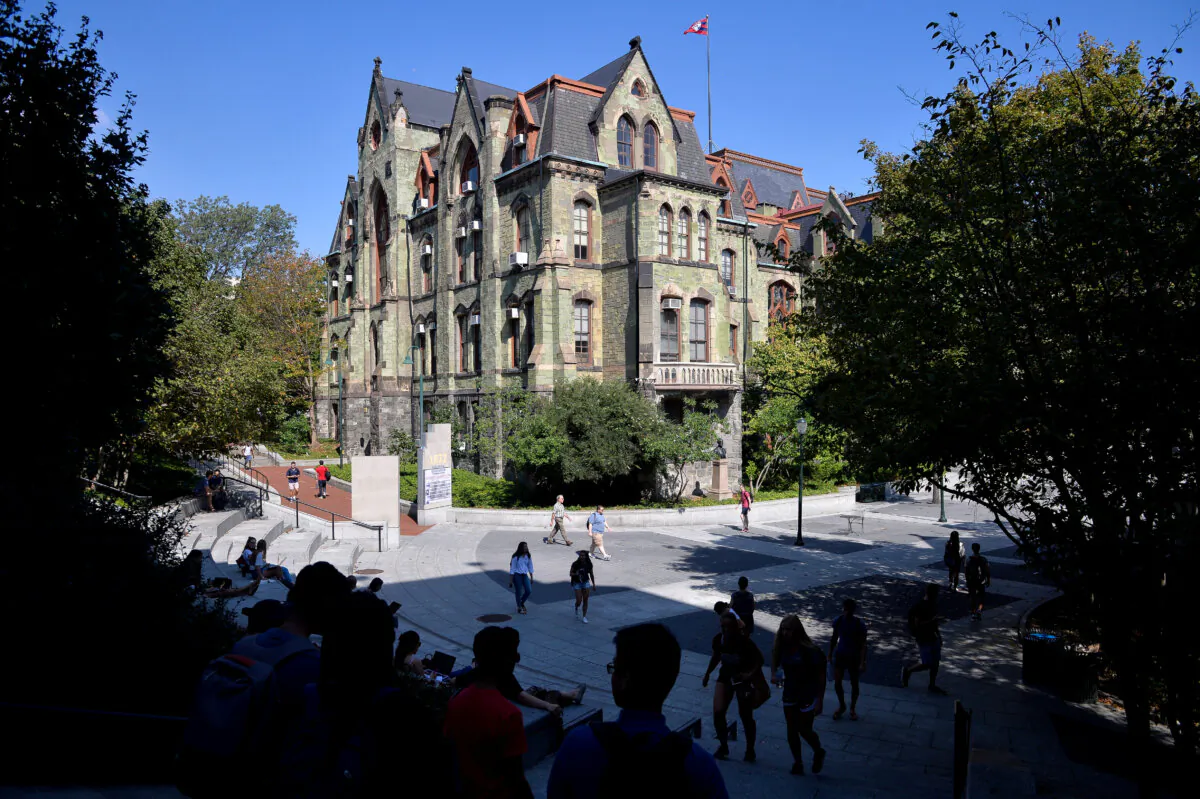

A federal judge on April 27 agreed to delay a previous order requiring the University of Pennsylvania to provide information about its Jewish-linked groups to the U.S. Equal Employment Opportunity Commission (EEOC).
The commission issued a subpoena to the university in November 2025 seeking information about potential witnesses and victims of anti-Semitic harassment on campus. The EEOC said the investigation followed a charge brought by EEOC Commissioner Andrea Lucas in 2023 alleging the university subjected faculty and staff to anti-Semitic harassment across its workplaces and failed to address the issue.
In a November 2025 filing, the commission said the university’s refusal to comply with its subpoena had delayed and hampered the investigation. On March 31, U.S. District Judge Gerald J. Pappert ordered the university to comply.
Among the information requested by the commission are “lists of school groups and organizations ‘related to the Jewish religion,’ including personal contact information for Penn employees in those groups,” according to court documents.
In an order on April 27, Pappert granted the university’s request to stay his March 31 order, putting the ruling on hold while the university appeals.
In his memorandum, Pappert determined that while the university “does not have a strong chance of prevailing on appeal,” it has “narrowly” demonstrated irreparable harm absent a stay of his order.
“Staying the court’s order will not substantially injure the EEOC and a stay will allow the Third Circuit Court of Appeals to address in an orderly manner a matter of great public interest,” the judge stated.
The commission had argued that staying the order would hinder its ability to investigate, citing concerns that witnesses and victims may leave the university and that the alleged discrimination may persist.
The judge rejected that argument.
“About five months after Commissioner Lucas issued the charge in December 2023, the EEOC went dark for nearly one year. Though the EEOC represented this sort of investigatory delay is not ‘unusual,’ it undermines its asserted injury,” Pappert said.
“The EEOC’s articulated harms—memories fade, witnesses and victims may leave Penn and potential harassment may persist—are also ‘speculative.’ Nothing in the record supports these harms would come to fruition.”
A spokesperson for the University of Pennsylvania told The Epoch Times by email that, with the stay now granted, the university can “proceed with the appeal process.”
The Epoch Times reached out to the commission for comment but did not receive a response by publication time.
The university said in a March 31 statement that handing over lists of Jewish faculty and staff, along with their personal contact details, to the commission would pose “serious privacy and First Amendment concerns.”
“We remain committed to confronting antisemitism and all forms of discrimination, and have taken multiple steps to prevent and address these despicable events. While we acknowledge the important role of the EEOC to investigate discrimination, we also have an obligation to protect the rights of our employees,” it stated. “We intend to appeal.”
 Friends Read Free
Copy
Facebook
Tweet
Friends Read Free
Copy
Facebook
Tweet