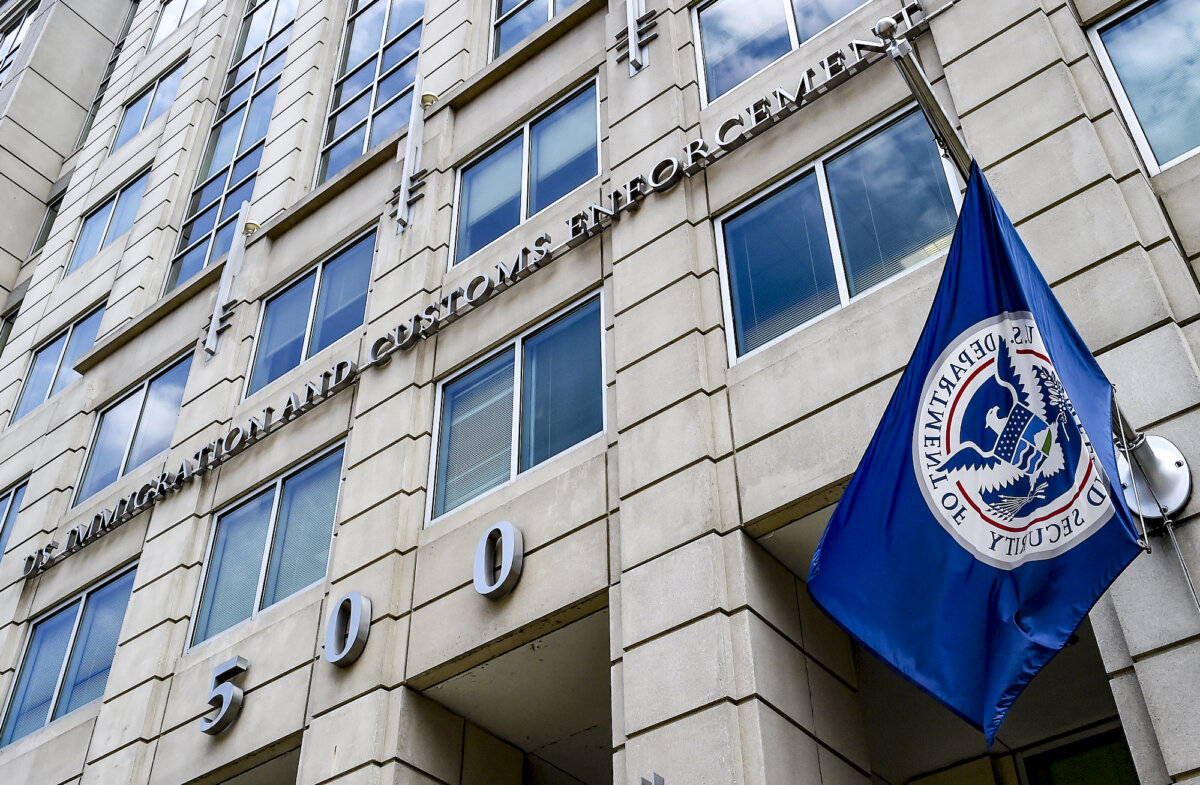

A federal judge in Maryland found the Department of Homeland Security (DHS) in contempt of court on Sep. 25, ruling that it violated three orders she issued blocking the deportation of an illegal immigrant from El Salvador.
Meanwhile, the government said in a court filing that the deportee, identified only by the initials “E.L.A.,” doesn’t want to return to the United States.
“Defendants confirmed that they would place E.L.A. on a flight from El Salvador to the United States and maintain that there are multiple such flights weekly,” DHS said in a court filing, adding that it “cannot compel E.L.A. to avail himself of the proffered relief.”
U.S. District Judge Stephanie A. Gallagher issued her contempt ruling on Sep. 25, but ordered that the opinion explaining her decision be sealed. It’s the second contempt ruling she has issued in the case in less than two months.
In a previous ruling, sealed on July 29 and made public shortly after, she found that the government had violated the terms of a 2024 settlement in which it agreed not to deport members of the class action if they still had active asylum claims.
She ordered the government to return E.L.A. to the United States while his claim for asylum plays out, and provide the court with at least five days’ notice before deporting him again.
E.L.A. was one member of a class action suit against the government stretching back to 2019. A group of unaccompanied minors sued to prevent their deportation. As the case ran on, some of the plaintiffs were no longer minors, but the government agreed in 2024 not to remove them until their asylum claims were fully processed.
However, some of those plaintiffs were mistakenly deported anyway, the government admitted, sometimes because their names were not properly flagged in Immigration and Customs Enforcement systems.
E.L.A. was deported on Sep. 1, after failing last year to report to ICE for a biometrics appointment where the government would collect his fingerprints and other data.
When a person claiming asylum misses such an appointment, U.S. Citizenship and Immigration Services usually “closes the case and provides notice to the applicant of the closure,” the government explained in its filing.
The government did not close his asylum case, but the marker flagging him as a member of the class action suit—and ineligible for deportation—was subsequently removed.
His attorneys asked the judge to order that he be returned to the United States to finish the process of his asylum claim without holding those missed appointments against him.
They argued that the government is only offering to bring him back so they can “hand him a notice” saying his case is closed for missing the biometrics appointment.
 Friends Read Free
Copy
Facebook
Tweet
Friends Read Free
Copy
Facebook
Tweet