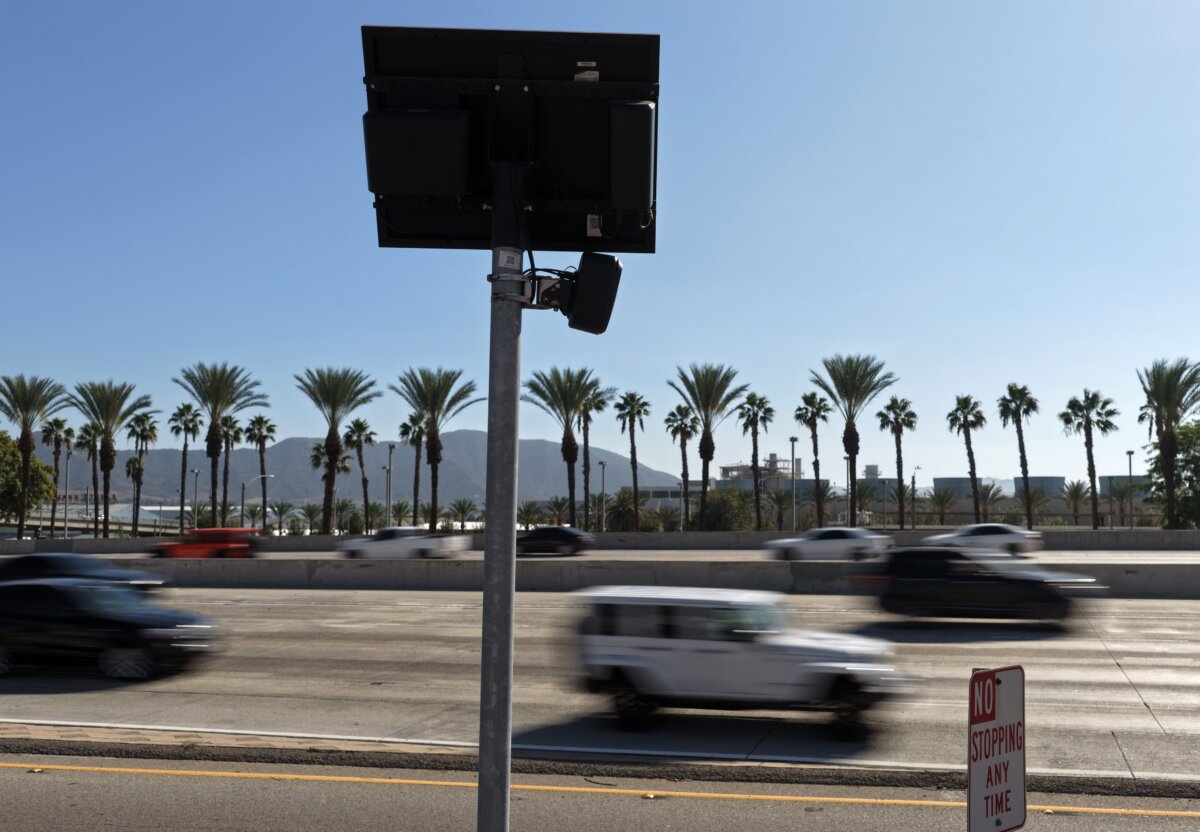

A law enforcement officer in Oklahoma violated the constitutional rights of a woman traveling in the state when he searched without a warrant for details on her vehicle, a federal judge has ruled.
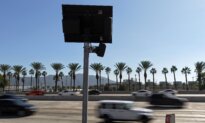
The system the officer used, which draws data from Flock cameras, is “a type of indiscriminate mass surveillance” that “collects information about all vehicles that pass by any network-connected camera at all times” and “serves up the information to law enforcement on demand,” U.S. District Judge Sara Hill in Oklahoma said in an Oct. 1 ruling.
She added later, “Freedom from persistent, dragnet-style surveillance while in public is not a foreign concept in our society, and it is a reasonable expectation that society already accepts. This is the same expectation of privacy that the Supreme Court has continued to recognize.”
Hill granted a motion from lawyers representing the woman, Melisa Susan Kyle, to suppress evidence that was gathered after the officer searched for information, which returned results from automated license plate reader cameras.
“The case is ongoing, and I cannot comment at this time,” Robert Williams, an attorney representing Kyle, told The Epoch Times in an email on Oct. 5.
The Tulsa County Sheriff’s Office, whose deputy conducted the search, also declined to comment, while prosecutors did not respond to a request for comment by the time of publication.
“The ruling goes against the overwhelming weight of authority in similar cases across the country, including multiple recent decisions in Oklahoma, and we expect it will be appealed and ultimately overturned,” a spokesperson for Flock told news outlets in a statement.
The deputy ran the plate of the vehicle Kyle was driving in eastern Tulsa on May 10. The deputy saw that the vehicle had recently traveled to California before coming back to Oklahoma. He pulled up behind the SUV and turned on his lights after the SUV allegedly failed to follow traffic laws.
Kyle provided identification but could not locate a rental agreement for the vehicle. The officer asked her to get into his car as he prepared a citation. Kyle did so, and told him about her trip to California as she located the agreement. She said she had visited a cousin and went swimming.
The officer found the nature of the travel suspicious, including the amount of luggage Kyle had in the vehicle. He handed her her license but soon ordered a search of the vehicle, which uncovered methamphetamine, according to charging documents.
Kyle’s attorneys filed a motion to suppress the evidence collected in the case, saying the stop was illegal under the Constitution’s Fourth Amendment, which protects privacy. They said that the use of the license plate reader database was unconstitutional because it disclosed weeks of travel data without a warrant, and said there was no reasonable suspicion to prompt the search of the vehicle.
Hill, the judge, largely agreed.
She said the traffic stop was justified because Kyle was following the car in front of her too closely.
She said, though, that she found the reasons the authorities gave for extending the stop or conducting the vehicle search lacking.
Authorities said Kyle’s trip was suspicious because she was only gone for a few days and that she went swimming and visited a cousin with a farm.
“Kyle’s short trip to California might not have been something [the officer] would have personally done,” the judge said. “But Kyle had a reasonable explanation for the short turnaround—that the drive was as fulfilling as seeing the people she visited.”
Kyle’s explanation for having lots of luggage—that she enjoyed buying things while traveling—was also plausible, the judge said.
She later concluded that the use of the license plate reader system violated Kyle’s constitutional rights.
While it’s true many courts in the country have ruled in favor of law enforcement basing searches on such data, they have given too much weight to a 1983 Supreme Court decision that said a person traveling in an automobile on public roads “has no reasonable expectation of privacy in his movements from one place to another,” Hill said.
More relevant rulings include a 2018 decision that held a government using cellphone location records was a search under the Fourth Amendment, and a similar 2019 ruling, she said. Taken together, the principle the nation’s top court has laid out is that people “have a reasonable expectation of privacy in the whole of their physical movements.”
Automated license plate readers collect information on all vehicles that pass by, and officers such as the deputy can access continuously updated location history for those vehicles, which makes it akin to being told by another person, “Hey, I have been following your car for the last 30 days, and here is a detailed log of every place your vehicle has been with supporting photographic evidence” and “I am also going to share this information with law enforcement throughout the country so they know your whereabouts, too,” Hill wrote.
“It is not difficult to imagine what is next: more cameras on more street signs, buildings, and perhaps on more police cars,” she added later. “It is also no longer difficult to imagine law enforcement using a fleet of drones hovering over an entire city so they don’t miss the movement of a single vehicle.”
The government did not identify any adequate exceptions that would have supported the warrantless search, Hill said, so all evidence obtained after the database search “must be suppressed as fruit of the poisonous tree.”
 Friends Read Free
Copy
Facebook
Tweet
Friends Read Free
Copy
Facebook
Tweet