
The Trump administration must keep in place temporary protected status (TPS) for nationals of South Sudan, a federal judge ruled on Feb. 12.
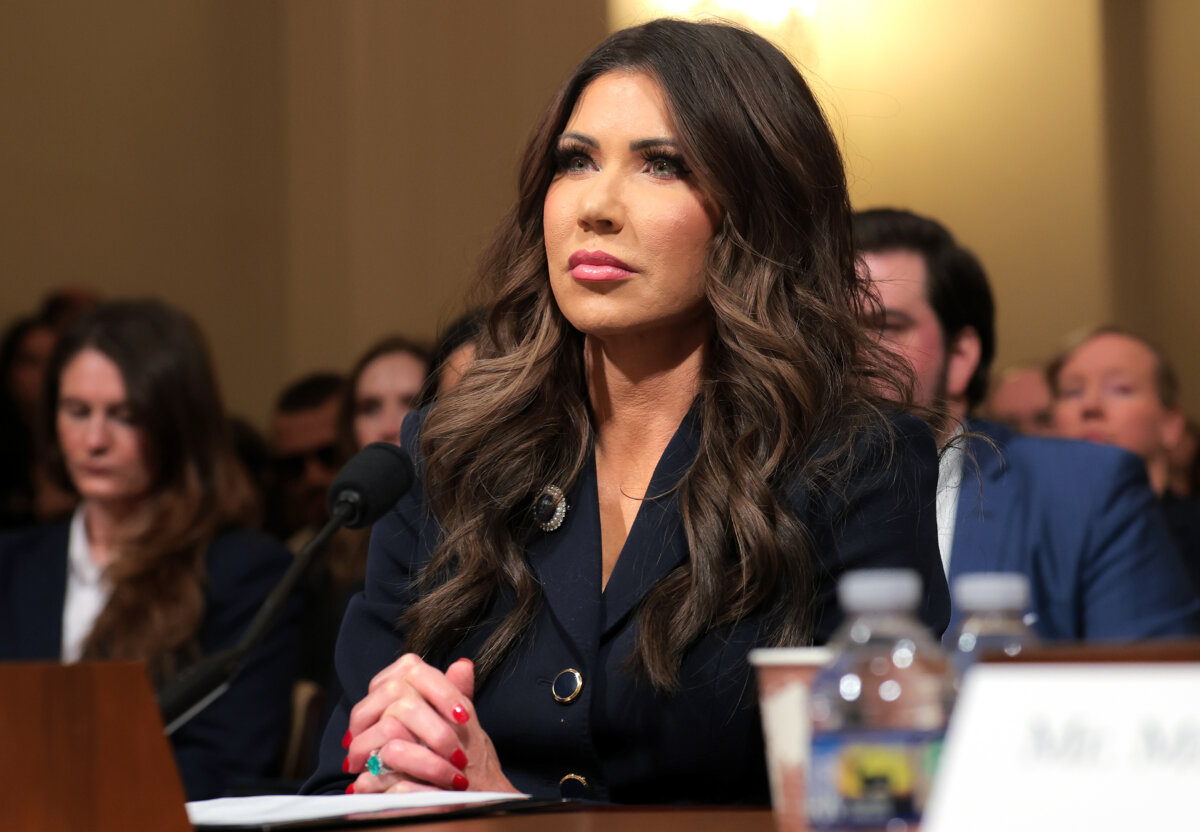
Homeland Security Secretary Kristi Noem likely violated federal law when she ended the status for South Sudanese nationals in 2025, U.S. District Judge Patti Saris ruled.
Saris said in a 46-page decision that, based on filings in the case and discussion during a hearing, Noem appeared to violate the Administrative Procedure Act by “arbitrarily adopting a pattern and practice of terminating each and every TPS designation, by giving pretextual reasons for the termination of South Sudan’s TPS designation, and by failing to meaningfully consult with appropriate agencies.”
South Sudanese nationals who would face deportation absent TPS would suffer irreparable harm absent a halt to the end of the protection, Saris said.
Department of Homeland Security spokeswoman Tricia McLaughlin told The Epoch Times in an email that under the previous administration, temporary protected status was “abused to allow violent terrorists, criminals, and national security threats into our nation.”
“TPS was never designed to be permanent,” she said. “With the renewed peace in South Sudan, their demonstrated commitment to ensuring the safe reintegration of returning nationals, and improved diplomatic relations, now is the right time to conclude what was always intended to be a temporary designation.”
There are about 232 South Sudanese nationals who have TPS and another 73 who have applied for the protection.
The case was brought in December 2025, after Noem announced that TPS for South Sudanese nationals would be terminated on Jan. 5. If TPS ended for the population, they would face deportation if they were still in the country.
The Homeland Security secretary can designate TPS for nationals due to temporary conditions in their country that prevent safe return there, such as a civil war or an earthquake.
Janet Napolitano, homeland security secretary in 2011, provided TPS for South Sudanese nationals because of an ongoing armed conflict. The TPS was extended multiple times.
Noem said officials reviewed the current situation in South Sudan and found that there is no ongoing armed conflict that poses a threat to nationals returning there.
“The Secretary has also determined that while certain extraordinary and temporary conditions remain, the termination of the South Sudan designation is required because it is contrary to the national interest to permit South Sudanese nationals (or nationals having no nationality who last habitually resided in South Sudan) to remain temporarily in the United States,” Noem wrote.
A federal judge in late 2025 halted the pending removal of the protection until further action by the court as the case moved forward.
In a recent filing, plaintiffs told the court that Noem did not ask for or receive any information from the State Department about South Sudan, meaning that she did not consult with appropriate agencies as required by the law enabling TPS. They said that she “either failed entirely to consider or cherry-picked” evidence “to reach an improperly pre-ordained result.”
Government lawyers said in a brief that the law precludes judicial review and that even if the courts had jurisdiction, Noem’s determination “fully complied with the TPS statute and was both reasonable and reasonably explained.”
Other judges have blocked similar determinations for nationals of other countries, although a federal appeals court on Feb. 9 unanimously reversed one of those rulings regarding people from Nepal, Honduras, and Nicaragua.
 Friends Read Free
Copy
Facebook
Tweet
Friends Read Free
Copy
Facebook
Tweet