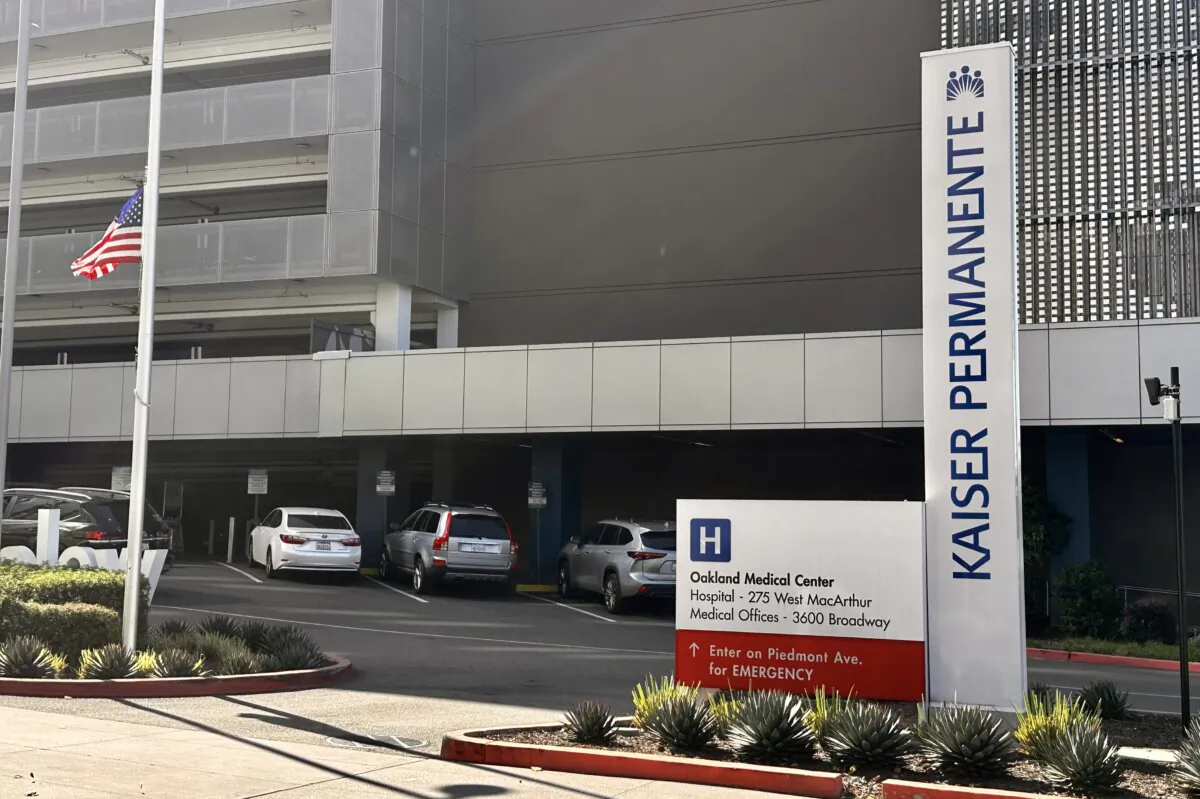

Kaiser Permanente, a health care system headquartered in Oakland, California, has agreed to pay $556 million to resolve allegations that it submitted invalid diagnosis codes for Medicare Advantage Plan enrollees, thereby receiving higher federal government payments.
The case started because two former Kaiser employees, Ronda Osinek and James M. Taylor, acted as whistleblowers and sued on behalf of the government.
In 2021, the United States filed a complaint in the Northern District of California, alleging Kaiser engaged in a scheme in California and Colorado to make false claims for risk adjustment payments.
From 2009 to 2018, Kaiser added roughly half a million extra diagnoses and received additional Medicare payments in the range of $1 billion, according to the lawsuit.
Kaiser did not admit liability in the settlement announced Jan. 14.
Alleged Conduct
The United States alleged that Kaiser systematically pressured its physicians to retrospectively add diagnoses to patient medical records.
Kaiser allegedly added notes to patients’ files after their visits to make it appear that certain health conditions were addressed during the appointment, when they had not.
The government alleged that the diagnosis codes submitted were false in two primary ways.
In some cases, Kaiser allegedly added diagnoses for conditions that did not require or affect patient care during that visit, which violates Medicare rules.
In others, Kaiser allegedly submitted codes for conditions the patient did not actually have at the time of the visit and contradicted medical records.
Kaiser implemented automated algorithms and human reviews to mine old medical records for potential diagnoses that had not been submitted to Medicare for that year, the lawsuit alleged.
Once identified, Kaiser allegedly sent queries to doctors urging them to add these diagnoses, often months or even a year after the patient’s visit. These “leading” queries directed the doctor to a specific diagnosis rather than asking for a neutral medical opinion, according to the lawsuit.
Kaiser allegedly targeted certain lucrative conditions to capture more revenue, such as aortic atherosclerosis (AA) and cachexia.
Northern California Medical Group internal documents described an AA diagnosis as a “$40 [million] opportunity.” Each AA diagnosis is worth roughly $2,500 to $3,000 per patient in additional risk-adjustment payments, according to the lawsuit.
Kaiser also allegedly set specific goals for the number of diagnoses a physician or facility should “refresh” and singled out those who were “underperforming,” the lawsuit stated.
Kaiser allegedly linked physician and facility bonuses and incentives to meeting risk-adjustment diagnosis targets, and also held group sessions where physicians were expected to sit together and work through lists of diagnoses to add to past patient visits.
“Over 50% of the physicians tell me they feel that they are being ‘forced’ to add diagnoses that they did not consider, evaluate, and/or treat. Especially since they feel their bonuses are being impacted,” Ronda Osinek, one of the whistleblowers and a Kaiser-certified medical coder, reported to Kaiser executives in 2011.
“Medicare Advantage is a vital program that must serve patients’ needs, not corporate profits,” said U.S. Attorney Craig H. Missakian for the Northern District of California. “Fraud on Medicare costs the public billions annually, so when a health plan knowingly submits false information to obtain higher payments, everyone—from beneficiaries to taxpayers—loses.”
“We have an obligation to protect the American taxpayer from waste, fraud, and abuse and we will relentlessly pursue individuals and organizations that compromise the integrity of the Medicare program,” he added.
Settlements
Kaiser agreed to pay the United States $556 million. Half of the settlement amount ($278 million) will be paid back to cover the government’s losses.
As a reward to the whistleblowers, Osinek and Taylor will receive a $95 million share of the total recovery.
Kaiser was also required to pay more than $764,000 in legal fees to the lawyers who represented Osinek.
“The agreement resolves a False Claims Act lawsuit and has no admission of wrongdoing or liability,” said Kaiser in a statement published on its website. “We chose to settle to avoid the delay, uncertainty, and cost of prolonged litigation.”
In exchange for the payment, the government agreed not to sue Kaiser again for the alleged wrongful conduct under the False Claims Act.
However, the government reserved certain rights, so it can still prosecute Kaiser for any criminal liability, issues involving the IRS and taxes, the liability of specific individuals, and claims for personal injury or property damage.
Other Alleged Diagnosis Coding Fraud
Sen. Chuck Grassley (R-Iowa) published a report on Jan. 12 alleging that UnitedHealth Group, the largest Medicare Advantage organization, used aggressive tactics to maximize federal payments by capturing high-paying, often discretionary, medical diagnoses.
“My investigation has shown UnitedHealth Group appears to be gaming the system and abusing the risk adjustment process to turn a steep profit. Taxpayers and patients deserve accurate, clear-cut, and fair risk adjustment processes,” Grassley said in a statement.
In 2024, Independent Health, a regional Medicare Advantage insurer in New York, was accused of sending Medicare diagnosis codes that did not accurately reflect patients’ true health conditions.
Independent Health agreed to pay up to $98 million to resolve these civil accusations.
In 2023, Cigna, a large national insurer, was accused of using in‑home nurse visits and other methods to generate extra diagnoses that were not properly supported in medical records, then using those diagnoses to bill Medicare more.
To settle these civil False Claims Act allegations, Cigna agreed to pay about $172 million to the government.
 Friends Read Free
Copy
Facebook
Tweet
Friends Read Free
Copy
Facebook
Tweet