



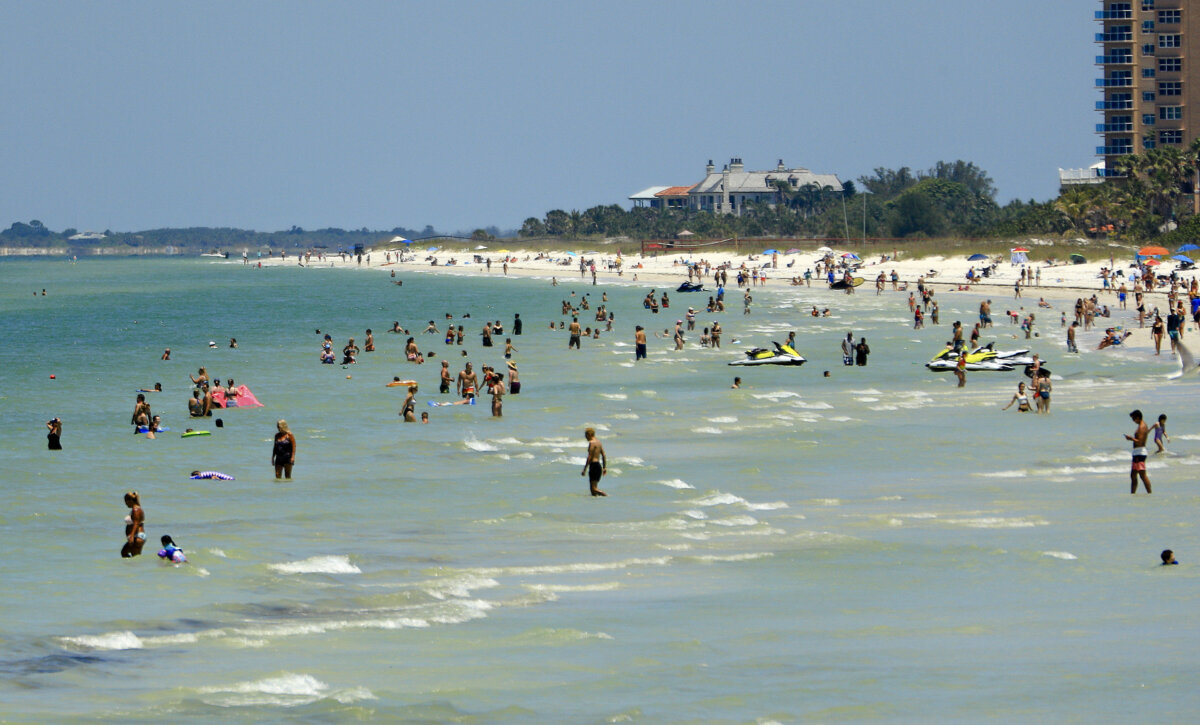
Authorities in Mississippi this week warned beachgoers about the dangers of a potentially deadly bacteria that has left at least seven people in Florida and Louisiana dead in 2026.
Mississippi Department of Health officials on Monday said that people should “be on guard to protect themselves from Vibrio bacteria,” namely Vibrio vulnficus, which is often described as a “flesh-eating bacteria” in media reports.
The bacteria, which live in warm coastal waters, often causes gastrointestinal symptoms as well as septic shock and necrotizing fasciitis—a quickly spreading infection that can destroy tissue, according to the Centers for Disease Control and Prevention.
The organism causes gastrointestinal symptoms along with septic shock and necrotizing fasciitis, which is a fast-moving infection that destroys tissue and blood vessels beneath the skin.
Severe infections might require limb amputation.
Necrotizing fasciitis is one of the reasons Vibrio vulnficus is sometimes called a “flesh-eating bacteria,” the CDC said.
So far, five people in Louisiana and two in Florida have died from Vibrio vulnficus so far this year, according to the two states’ respective health departments.
This year, 14 other cases have been confirmed in Florida, and nine cases have been reported in Louisiana.
Vibrio vulnificus and other Vibrio-family bacteria are connected to raw shellfish, namely oysters, health authorities have said.
Meanwhile, Vibrio vulnificus can be found in warm, salty, or brackish waters, where salt and fresh water mix together.
According to health officials in Mississippi, 29 Vibrio cases have been reported this year, of which three were Vibrio vulnficus infections. There were no deaths.
Vibrio vulnificus can enter the body through unhealed cuts and scrapes, recent piercings and tattoos, and recent surgical incisions.
People with such a wound are advised to stay out of saltwater or brackish water, or cover it with a waterproof bandage if there’s a chance of exposure.
Individuals who come in contact with coastal waters or raw seafood are advised by the CDC to immediately wash cuts and scrapes thoroughly with soap and clean running water.
Vibrio bacteria are most common in May through October, when the water temperatures are warmer, the Mississippi Health Department said.
People who are more susceptible to developing a severe infection include individuals with HIV, cancer, liver disease, diabetes, who receive immune-suppression therapy, take medicine to decrease stomach acidity levels, or have had stomach surgery, Mississippi health officials said.
“If you develop a skin infection, tell your medical provider if your skin has come into contact with brackish or salt water, raw seafood, or raw seafood juices,” the department also said.
It added that people should not eat raw or undercooked oysters or other shellfish.
It also advised people to wash their hands after handling raw shellfish.
Symptoms of a Vibrio infection can include fever, chills, dangerously low blood pressure, skin discoloration, redness around a wound, stomach pain, nausea, vomiting, and watery diarrhea, authorities say.
The CDC estimates there are around 80,000 cases of Vibrio bacteria-family infections each year, on average.
Of that figure, around 52,000 result from eating contaminated food.
The Associated Press contributed to this report.