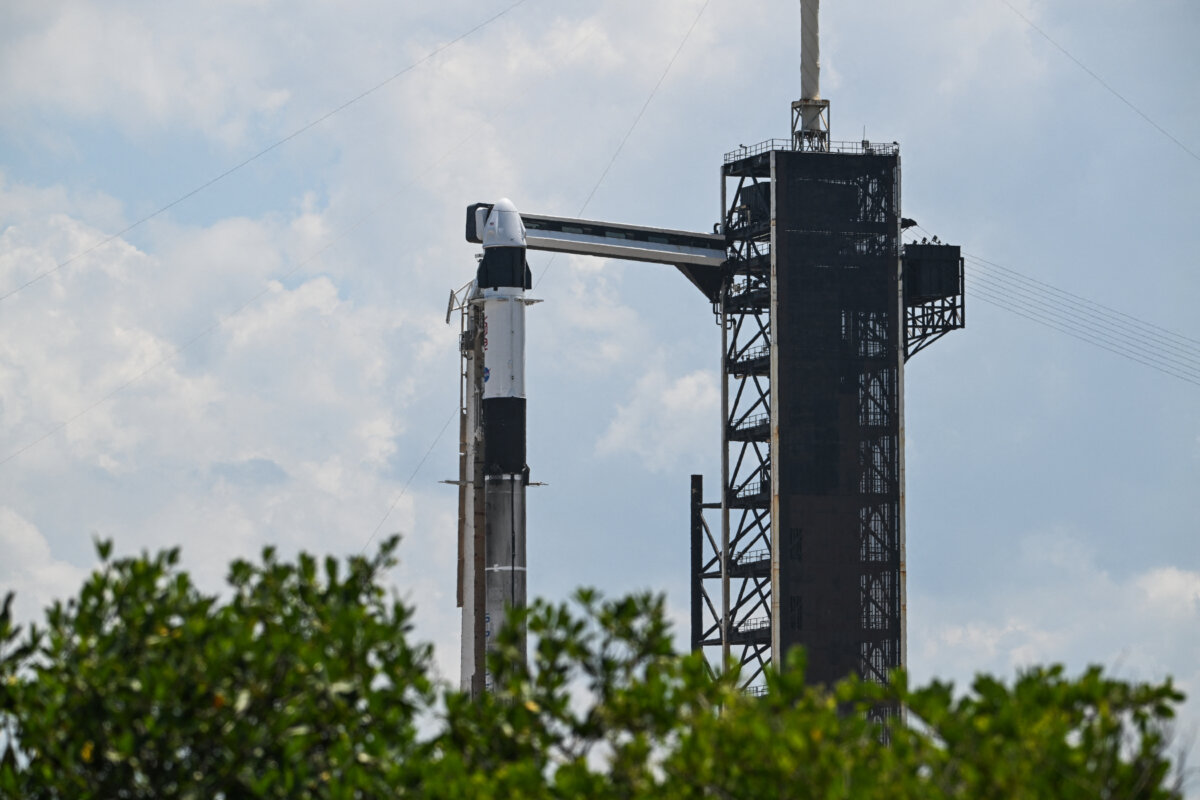
CAPE CANAVERAL, Fla.—Four astronauts bound for the International Space Station were forced to scrub their launch with just 67 seconds left before their scheduled take-off.
National Aeronautics and Space Administration (NASA) astronauts Zena Cardman and Mike Fincke, Russian cosmonaut Oleg Platonov of Roscosmos, and Kimiya Yui of the Japan Aerospace Exploration Agency (JAXA), were set to launch aboard a SpaceX Falcon 9 rocket and the Crew Dragon spacecraft Endeavour on July 31 to begin NASA’s Crew-11 mission to the space station.
As the sun rose over the shores and inlets of Cape Canaveral and Merritt Island, Florida, the launch was given a 90 percent chance to go on time.
Transportation Secretary and acting NASA Administrator Sean Duffy were on-scene to wave the crew off as they bid their final goodbyes, walking out of their crew quarters to the vehicles that would carry them to their spaceship.
With less than two hours left to go in the count, cumulus clouds began to build inland behind the Vehicle Assembly Building. Those clouds turned stormy, dropping heavy rain north of the launch pad.
Launch control kept an eye on the growing storms as the countdown and rocket fueling continued, but the expanding cloud coverage was too fast, breaching the safe perimeter of the rocket with only one minute left to go.
While some blast-offs can “hold” or pause the countdown and then resume it to continue down to zero, this launch required an on-time departure to rendezvous with the space station.
Dark grey clouds were seen creeping over Launch Pad 39A as the crew and ground teams commenced detanking fuel and other standdown procedures.
The next launch attempt will be at 11:43 a.m. ET on Aug. 1.
This will be the third launch of the Dragon 9 booster, which will make the final landing on Landing Zone 1 at Kennedy Space Center; the sixth flight of the Endeavor capsule, and SpaceX’s fourth crewed flight and fifth overall to the space station so far this year.
After a three-day handover period with Crew-10, Crew-11 will spend six months onboard, conducting scientific experiments, lunar landing simulations, and other tests to advance understanding of long-term spaceflight on the human body, and receiving multiple different resupply modules.
SpaceX’s upcoming cargo mission will deliver a booster kit designed to help save fuel already onboard to keep the space station at an optimal altitude.
Crew-11 will also be part of the expedition crew that will be on the space station on Nov. 2 to mark 25 years of continuous human presence in space, thanks to the International Space Station.
The night before the launch attempt, Ken Bowersox, former astronaut and associate administrator of NASA Space Operations, emphasized how NASA and its international partners prioritize launching missions safely.
“I’m so eager to see this mission launch, but as always, we will launch when we’re ready,” he said.
Correction: A previous version of this article misspelled Russian cosmonaut Oleg Platonov’s name. The Epoch Times regrets the error.
 Friends Read Free
Copy
Facebook
Tweet
Friends Read Free
Copy
Facebook
Tweet