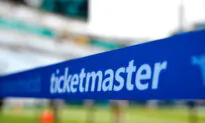

The Department of Justice (DOJ) has settled with Live Nation, the parent company of Ticketmaster, in a lawsuit that alleged the company was hindering competition and had a monopoly over ticket sales.
Under the agreement, Live Nation must pay up to $280 million in fines, open up ticket sales to competitors, and divest itself of control of 13 concert venues, a DOJ official told reporters on a press call.
Ticketmaster, the world’s largest ticket provider for live music and sports events, merged with Live Nation in 2010. The March 9 settlement came one week into a trial pitting the DOJ and dozens of states against the ticketing giant.
However, New York Attorney General Letitia James said on March 9 that the settlement “fails to address the monopoly at the center of this case, and would benefit Live Nation at the expense of consumers.” She said her department would not agree to it.
“My attorney general colleagues and I have a strong case against Live Nation, and we will continue our lawsuit to protect consumers and restore fair competition to the live entertainment industry,” James said in a statement.
“We will keep fighting this case without the federal government so that we can secure justice for all those harmed by Live Nation’s monopoly.”
The suit will go forward with attorneys general from dozens of other states, she said, including Arizona, California, Colorado, Connecticut, Illinois, Kansas, Maryland, Massachusetts, Michigan, Minnesota, Nevada, New Hampshire, New Jersey, New Mexico, North Carolina, Ohio, Pennsylvania, Rhode Island, Tennessee, Utah, Vermont, Virginia, Washington, Wisconsin, Wyoming, and the District of Columbia.
Live Nation did not respond to a request for comment by publication time.
The DOJ’s complaint accuses Live Nation of bullying some venues, ticket-selling competitors, and artists, while colluding with others to strengthen its grip on the ticket market.
In some cases, the DOJ alleged, Live Nation would move shows away from concert venues unless they agreed to sell tickets only through Ticketmaster.
In one instance, a concert venue decided to use SeatGeek, which offered it a larger share of the profits. Live Nation allegedly retaliated by rerouting some of its artists away from that venue and demanding that the venue disable second-party ticket sales on its website. Live Nation eventually backed down on that threat, but only after the venue agreed to share some of the extra profit it made through SeatGeek, according to the DOJ.
“The threat of steering shows away from venues allows Live Nation to exercise its monopoly power to get better promotion deals and impose Ticketmaster on venues,” the DOJ complaint reads.
“The knowledge and awareness in the industry—that Live Nation will route shows away from venues that do not choose Ticketmaster—is so widespread that other intermediaries deliver threats and warnings to venues for Live Nation’s benefit.”
In a court filing, Live Nation said that the DOJ could not prove that its actions led to “inferior” contract terms for artists or venues.
“There is no evidence that anything Defendants did led to higher prices, less output, or reduced quality to venues or artists,” its reply brief states.
The Associated Press contributed to this report.
 Friends Read Free
Copy
Facebook
Tweet
Friends Read Free
Copy
Facebook
Tweet