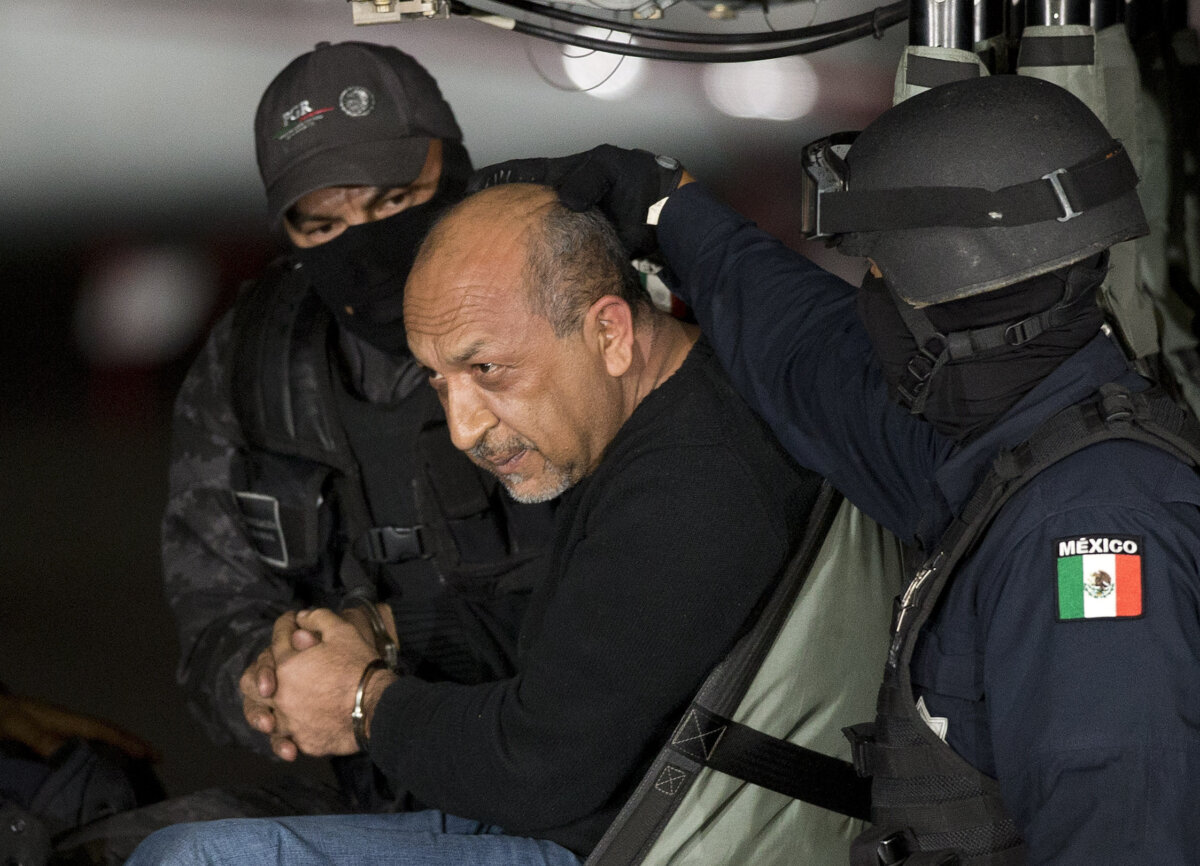

Mexico extradited 26 alleged cartel members to the United States on Aug. 12, including high-ranking members of violent cartels labeled as foreign terrorist organizations by the U.S. government.
Mexican Security Secretary Omar García Harfuch said on X that the extradition was carried out at the request of the U.S. Justice Department, which provided assurances that it would not pursue the death penalty for those facing prosecution.
Those handed over to U.S. custody from Mexico include leaders of the Sinaloa Cartel; the Jalisco New Generation Cartel, or CJNG; and the Northeast Cartel, formerly known as Los Zetas.
All 26 defendants face a range of criminal charges in the United States, including drug trafficking, kidnapping, illegal use of firearms, human smuggling, money laundering, and the killing of a sheriff’s deputy.
In a statement released by the Justice Department, Attorney General Pam Bondi expressed gratitude to Mexico’s national security team for its cooperation in carrying out the extradition.
“These 26 men have all played a role in bringing violence and drugs to American shores,” Bondi said. “Under this Department of Justice, they will face severe consequences for their crimes against this country.”
The extradition from Mexico to the United States marks the second of its kind this year, as the Trump administration has intensified efforts to curb drug trafficking across the border.
In February, Mexico transferred 29 cartel members to the United States, including Rafael Caro Quintero, a drug lord allegedly involved in the killing of a U.S. Drug Enforcement Administration agent in 1985.
The U.S. Embassy stated that the latest extradition demonstrated the “growing depth of cooperation” between the two nations in tackling the threat posed by transnational terrorist organizations.
“These fugitives will now face justice in U.S. courts, and the citizens of both of our nations will be safer from these common enemies,” U.S. Ambassador to Mexico Ronald Johnson said in a statement.
U.S. President Donald Trump has raised tariffs on Mexican imports to pressure the country to take stronger action against drug trafficking, saying Mexico was not doing enough to curb the flow of fentanyl and illegal immigrants at the border.
He announced a 90-day delay in U.S. tariff hikes on Mexican goods on July 31 to allow time for negotiations but said Mexico would still face an across-the-board 50 percent levy on aluminum, copper, and steel, as well as a 25 percent tariff on automobiles.
Mexican President Claudia Sheinbaum on Aug. 8 ruled out allowing U.S. troops to conduct military operations within Mexico, after reports emerged that Trump had secretly directed U.S. military action against Latin American cartels designated as foreign terrorist organizations.
“The United States is not going to come to Mexico with the military,” Sheinbaum told reporters. “We cooperate, we collaborate, but there is not going to be an invasion. That is ruled out. Absolutely ruled out.”
Ryan Morgan contributed to this report.
 Friends Read Free
Copy
Facebook
Tweet
Friends Read Free
Copy
Facebook
Tweet