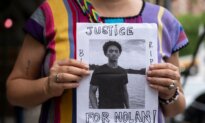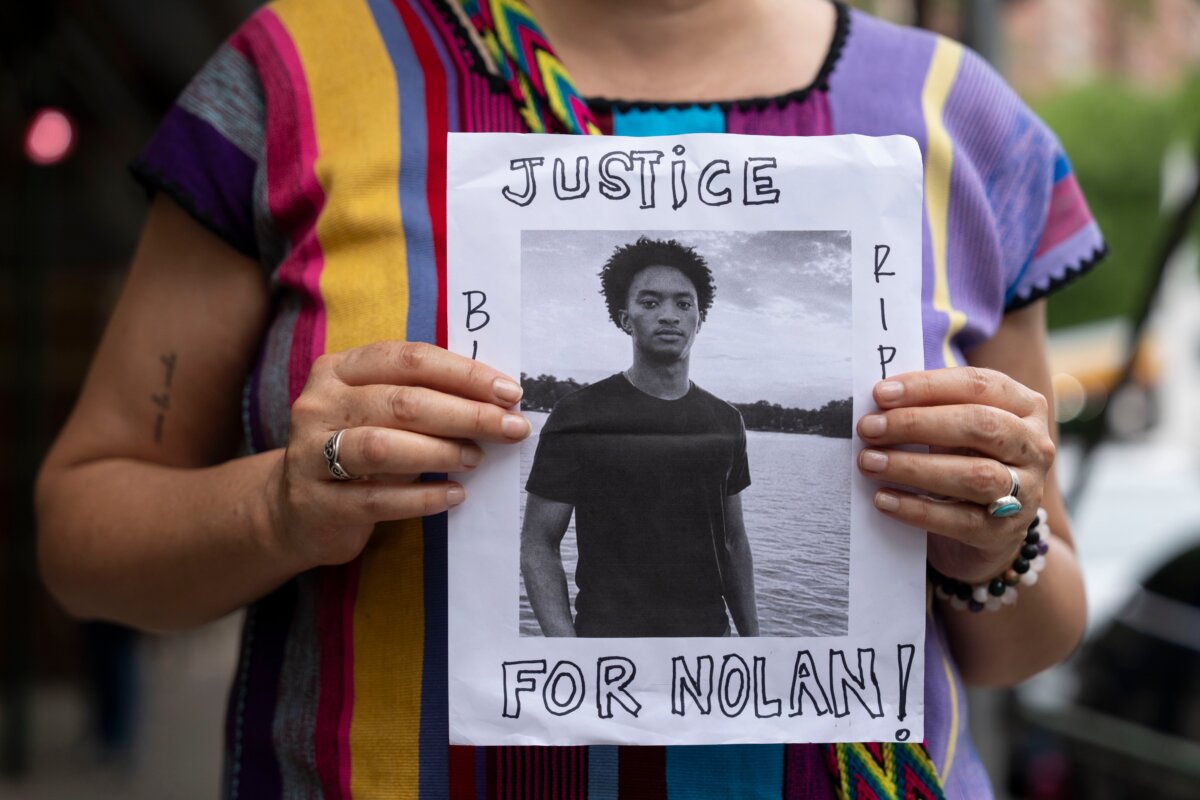
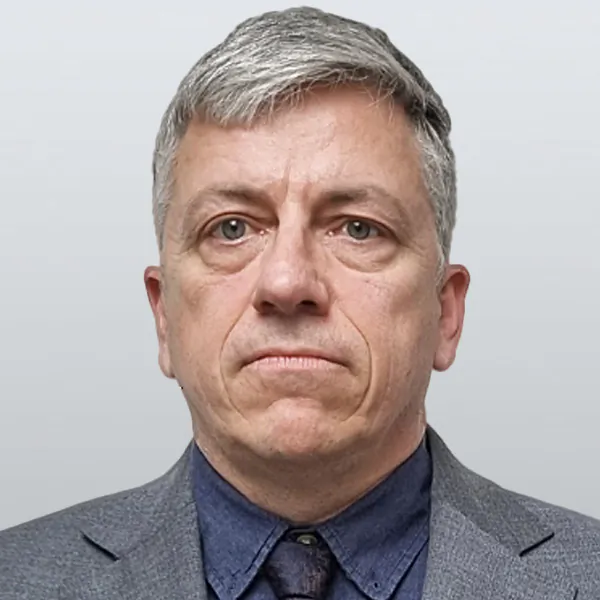
A grand jury decided on Monday against indicting anyone over the death of Nolan Wells, a black teenager whose body washed up on shore after going on a July 4 boating trip with his friends off the coast of Mississippi.
Jackson County District Attorney Angel Myers McIlrath announced the decision on Facebook and said there was no evidence the 18-year-old’s disappearance and death were racially motivated.
Wells’s body was found on July 6 on Horn Island, five miles off the coast, south of Pascagoula, two days after his friends had returned to Ocean Springs from the trip.
McIlrath uploaded the grand jury document on Facebook, and it states that jurors “unanimously returned a No True Bill with respect to the death of Nolan Xavier Wells.”
Wells and his friends traveled to Horn Island on three boats: the Triton, the Palm Beach, and the Tideline.
“The grand jury finds no credible evidence to support the public allegations that any persons who rode to or from Horn Island on July 4, 2026, on the Triton, the Palm Beach, or the Tideline engaged in any criminal conduct related to the death of Mr. Wells,” the document states.
‘Public Clamor, Private Malice’
“The allegations against the occupants of the Triton, the Palm Beach, and the Tideline are not based in truth, and are solely the result of public clamor, and private malice,” stated the grand jury.
“The public attacks on the occupants of the Triton, the Palm Beach and the Tideline, as well as to their family and friends are malicious, false and have no truth in fact or evidence,” continued the grand jury.
“The grand jury finds the position of, the condition of, time of discovery, and location of Mr. Wells’ body is consistent with drowning,” it states.
The teenager’s mother, Christine Wells Wonsley, had hired prominent civil rights attorney Ben Crump, and various media outlets were quick to suggest a racial motivation behind his death.
The U.S. edition of London-based outlet The Guardian published an article on Aug. 5 that cited “scores of people on social media” who had pointed out Wells was the only black person in a group of four friends according to a photograph that had circulated.
But the grand jury decided that the images circulated on social media were not taken on July 4 and “had no evidentiary value to the death investigation of Mr. Wells.”
The grand jury also decided Wells was not the only African American on Horn Island on July 4, and said such “false assertions have led to misidentification, speculation and rumors” concerning his death.
In a Sept. 21 post on X, Crump wrote: “No True Bill Does Not Resolve How Nolan Wells Died.”
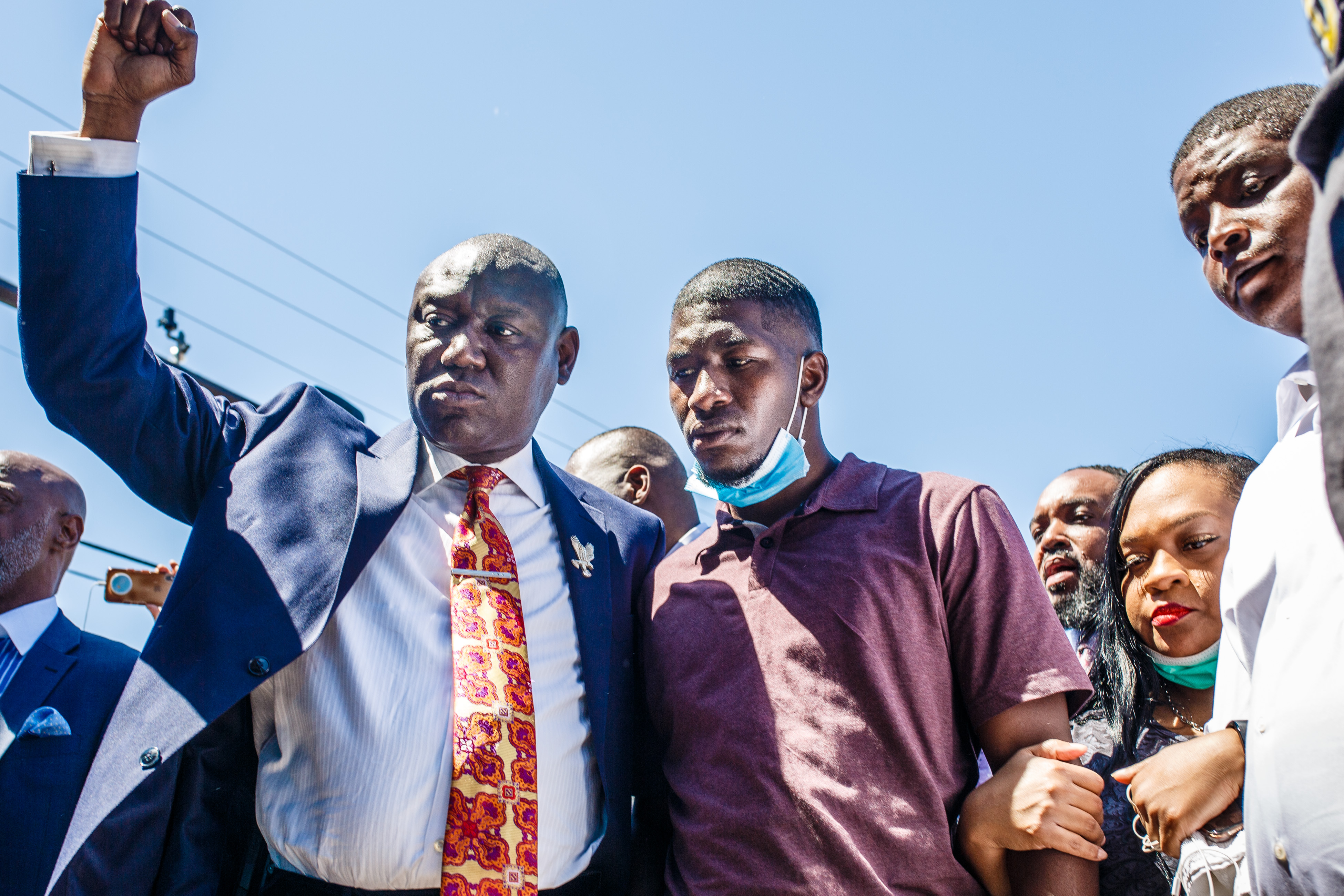 Ben Crump (L), attorney for George Floyd’s family, with Floyd’s son, Quincy Mason Floyd (2nd R), during a visit to the site of his death, in Minneapolis on June 3, 2020. (Kerem Yucel/AFP via Getty Images)
Wells’s death was one of a number of deaths of young black men that have drawn national scrutiny.
Questions were raised after his death by his relatives and activists about transparency, accountability, and alleged disparities in attention to cases involving black victims.
Crump spoke about the case at the NAACP’s convention in August, and the organization’s CEO, Derrick Johnson said, “The world is watching.”
“Too often, the deaths of young black people are dismissed, downplayed, or inadequately investigated unless we demand answers,” Johnson said.
“Our involvement in this case is part of our ongoing commitment to make sure those answers are pursued with urgency and respect for black lives.”
Reuters contributed to this report.
 Friends Read Free
Copy
Facebook
Tweet
Friends Read Free
Copy
Facebook
Tweet