
Mother-daughter duo Nanette and Natasha Holt received a stampede of support from The Green Eyeshade Awards, winning three of the 2026 journalism awards.
The piece, “Where Wild Ponies Swim and Dreams Come True,” was published in American Essence Magazine and poignantly describes the annual “pony penning week” in Chincoteague, Virginia.
Chincoteague is a gateway to Chincoteague National Wildlife Refuge, on Assateague Island, which is teeming with wild ponies.
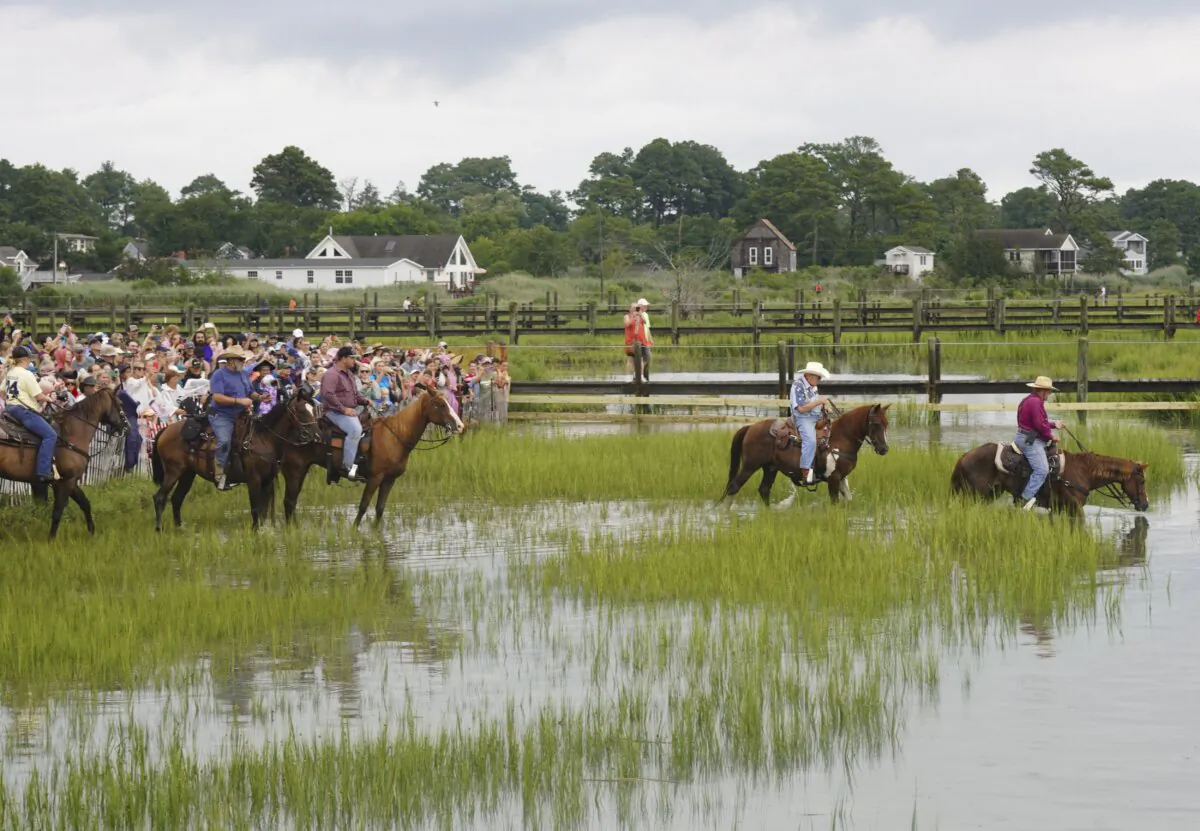
The 2025 end-of-July tradition brings tens of thousands of fans to the tiny town where, for 400 years, residents have witnessed wild ponies swim from the neighboring Assateague Island.
Officially known as the Chincoteague Pony Roundup, Swim, and Auction, the festivities, centered on the event, are held every year the week of the last Wednesday and Thursday in July.
The Holts interviewed Megan Fulmer, who grew up to fulfill a childhood dream of owning a Chincoteague pony.
The pair won first place in the Travel reporting category for their in-depth look at a tradition that began in 1924 by the Volunteer Fire Co. to corral the wild herd and sell some of the foals.
The piece also took second place in the Light Feature writing category, and Natasha Holt took second place in the Student Journalist of the Year category.
The Green Eyeshades contest began in 1950, and since that time has “recognized the very best journalism in the southeastern United States—which now includes print, television, radio, and digital.
The award was created by Southerners from the Society of Professional Journalists, which hosts The Green Eyeshade contest. Every dollar stays in the South, where it’s spent on Society of Professional Journalists programs.
The Holts’ article takes readers on a historical journey that makes another stop in the 1940s, when the event drew the attention of a publisher, who sent author Marguerite Henry to investigate, leading to Henry’s book series, “Misty of Chincoteague,” and eventually a 1961 film, “Misty.”
Henry’s portrayal made the community famous, aided by the fact that the film used only five outside professional actors. The rest were island residents.
The story gained so much national attention that in 1943 the federal government preserved the wild ponies’ home, calling it a national wildlife refuge. The deal allowed the fire company to keep its herd in the preserve, but every year most of the foals have to be sold so the island doesn’t become overpopulated.
Central to the Chincoteague story is the fact that it covers about 37 square miles. About 28 of those are underwater. Most residents make their living from tourism, and in 2024, the summer pony auction raised more than $547,000 for needed equipment and training.
Readers who engage with Nanette and Natasha Holt’s work will be enveloped in the story of a tradition that was started to solve the challenges of finding enough food for the wild ponies and supporting the community’s need for firefighting equipment.
A century later, that tradition continues to bring joy, laughter, and much-needed commerce to the tiny Virginia town.
 Friends Read Free
Copy
Facebook
Tweet
Friends Read Free
Copy
Facebook
Tweet