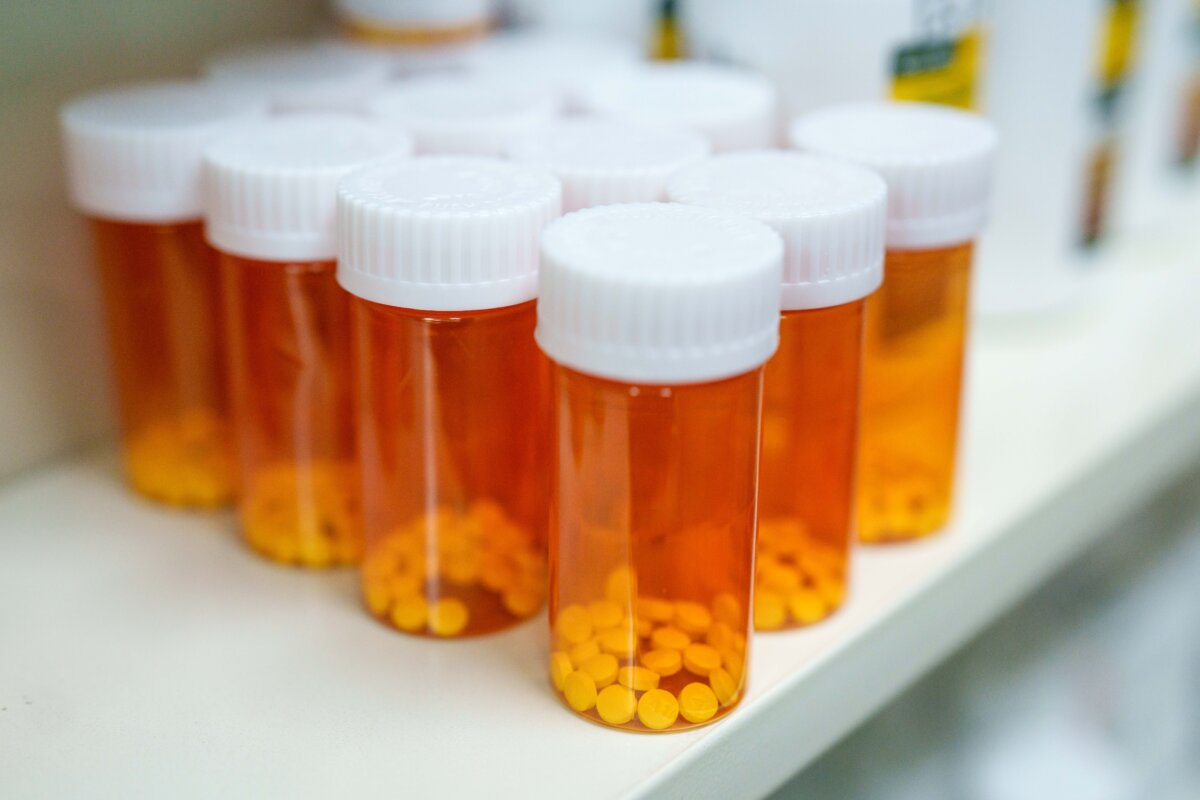

Nearly 16,000 bottles of a commonly prescribed thyroid medication were recalled nationwide by pharmaceutical giant Pfizer due to potency issues, according to notices published by the Food and Drug Administration (FDA) this week.
The recall encompasses 15,815 100-count bottles of Levoxyl, Pfizer’s brand name for levothyroxine sodium tablets USP, with a dose range of 175 micrograms, the notice said. It has lot number of 24W06 and an expiration date of Nov. 30, 2026.
Another notice said 134 1,000-count bottles of the same thyroid medication in the same strength were recalled. According to the report, that includes lot number 24W07 and also has a Nov. 30, 2026 expiration date.
The reason for the recall was listed as: “Subpotent Drug: confirmed out-of-specification (OOS) assay during stability testing.” No other details were provided.
According to a pharmaceutical guidance document provided by the FDA, OOS refers to “all test results that fall outside the specifications or acceptance criteria established in drug applications, drug master files, official compendia, or by the manufacture” or “all in-process laboratory tests that are outside of established specifications.”
Pfizer voluntarily initiated the recall of both lots on Sept. 29. The notices were published on the FDA’s database of recalls on Oct. 19.
The FDA classified the recall on Oct. 16 as Class II, which is a “situation in which use of or exposure to a violative product may cause temporary or medically reversible adverse health consequences or where the probability of serious adverse health consequences is remote.”
Neither the FDA nor Pfizer in the two notices provided guidance for consumers on what to do with the medication.
Class II recalls, according to the FDA, “are generally conducted at the retail level, and patients and consumers can continue using the medicine unless otherwise directed by the recalling company or FDA.”
Over this summer and fall, multiple thyroid medications have been recalled in the United States due to potency issues.
Major Pharmaceuticals, an Ohio-based company, issued a recall on July 13 of generic levothyroxine sodium due to it being a “subpotent drug.” The FDA labeled the action as a Class II recall on July 17, the notice said.
Several months ago, Vitruvias Therapeutics wrote in a notice issued by the FDA that it was voluntarily recalling one lot of a drug called thyroid tablets because the medication was deemed to be “superpotent,” potentially causing hyperthyroidism, or an overactive thyroid, in some individuals. The FDA in September elevated the classification of that recall to Class I, or its most serious.
More than a dozen lots of generic levothyroxine sodium made by Intas Pharmaceuticals for Accord Healthcare were recalled in August, according to another FDA notice.
Levothyroxine sodium is one of the most commonly used drugs in the United States, with drug database ClinCalc reporting that more than 18 million patients were taking the medication alongside more than 82 million prescriptions in 2024. It was also the second-most prescribed drug among Americans that year.
The medication is the synthetic version of the hormone thyroxine, and it is used to treat an underactive thyroid.
 Friends Read Free
Copy
Facebook
Tweet