
The head of the Federal Aviation Administration (FAA) said July 24 that the agency is confident there was no mechanical issue with Boeing’s fuel control system following a crash near Ahmedabad in June that killed 260 people.
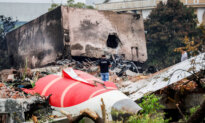
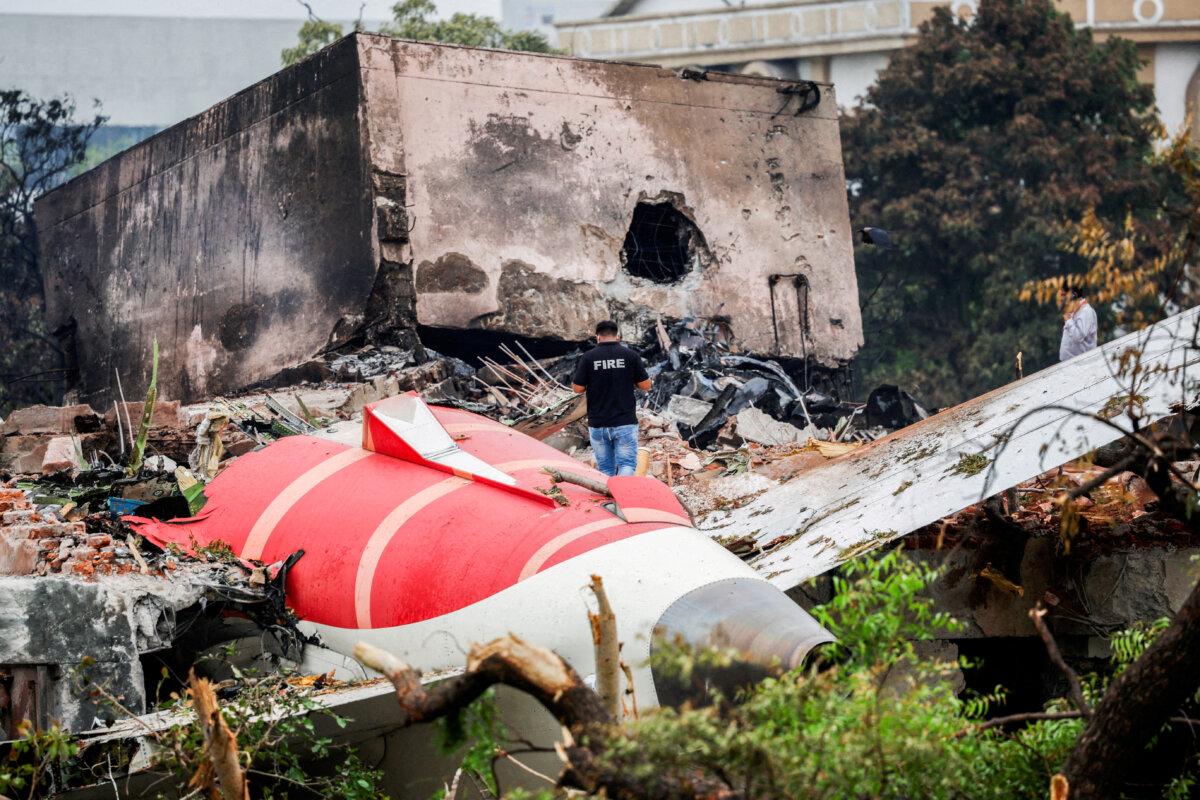
Air India Flight AI171 was en route to London Gatwick when it crashed into a medical college hostel near the Indian state of Gujarat on June 12. The flight was carrying 230 passengers and 12 crew members.
Only one person on board—40-year-old British national Vishwash Kumar Ramesh—survived.
Investigators are still probing the cause of the crash and have been focusing on the fuel control switches of the 12-year-old Boeing 787-8 Dreamliner aircraft.
Speaking to reporters at an air show in Wisconsin, FAA Administrator Bryan Bedford said, “We can say with a high level of confidence is it doesn’t appear to be a mechanical issue with the Boeing fuel control unit.”
The switches control the flow of fuel to the aircraft engines, allowing pilots to start or shut them down on the ground or manually intervene during in-flight engine failures.
Bedford added that FAA employees had removed the components and tested them.
The Epoch Times has contacted Boeing and Air India for comment.
Air India stated on July 22 that it had also detected no issues with fuel control switches on all its 787 and 737 aircraft following precautionary inspections.
“In the inspections, no issues were found with the said locking mechanism,” the airline said. “Air India had started voluntary inspections on 12 July and completed them within the prescribed time limit set by the DGCA. The same has been communicated to the regulator.”
The company’s statement came after a preliminary report into the incident from India’s Aircraft Accident Investigation Bureau (AAIB) published earlier this month said the flight’s fuel control switches were cut off just seconds after takeoff, causing the engines to lose power.
The aircraft “achieved the maximum recorded airspeed of 180 Knots [indicated airspeed] at about 08:08:42 UTC and immediately thereafter, the Engine 1 and Engine 2 fuel cutoff switches transitioned from RUN to CUTOFF position one after another with a time gap of 01 [second],” according to the report.
“In the cockpit voice recording, one of the pilots is heard asking the other why did he cutoff. The other pilot responded that he did not do so.”
The report also cited a 2018 “Special Airworthiness Information Bulletin” issued by the FAA that advised registered owners and operators of several Boeing models, including the 787, of “the potential for disengagement of the fuel control switch locking feature.”

The bulletin was issued based on reports from operators of Model 737 airplanes that the fuel control switches were installed with the locking feature disengaged. However, the “airworthiness concern is not an unsafe condition that would warrant airworthiness directive action,” the bulletin stated.
“If the locking feature is disengaged, the switch can be moved between the two positions without lifting the switch during transition, and the switch would be exposed to the potential of inadvertent operation,” the 2018 bulletin added. “Inadvertent operation of the switch could result in an unintended consequence, such as an in-flight engine shutdown.”
A total of 169 Indian nationals, 53 British nationals, seven Portuguese nationals, and one Canadian national were on board Flight AI171 when it crashed, according to Air India.
Another 19 individuals on the ground died when the plane struck a medical college hostel.
According to the Aviation Safety Network database, the Air India incident was the first-ever crash involving a Boeing 787-8 Dreamliner aircraft.
 Friends Read Free
Copy
Facebook
Tweet
Friends Read Free
Copy
Facebook
Tweet