
Pakistan has summoned the U.S. Embassy’s deputy chief of mission to issue a demarche against what it deemed “unwarranted” remarks made by the United States and India, which called on Pakistan to take action against terrorism.
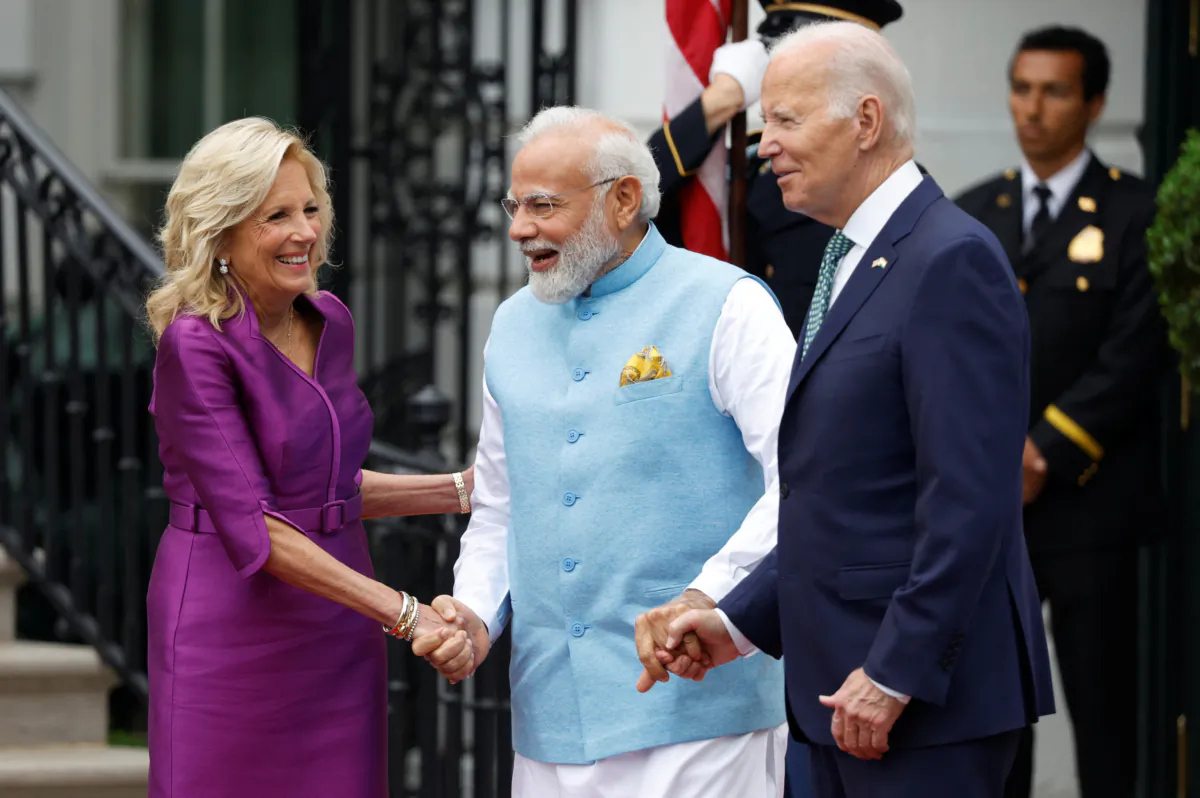
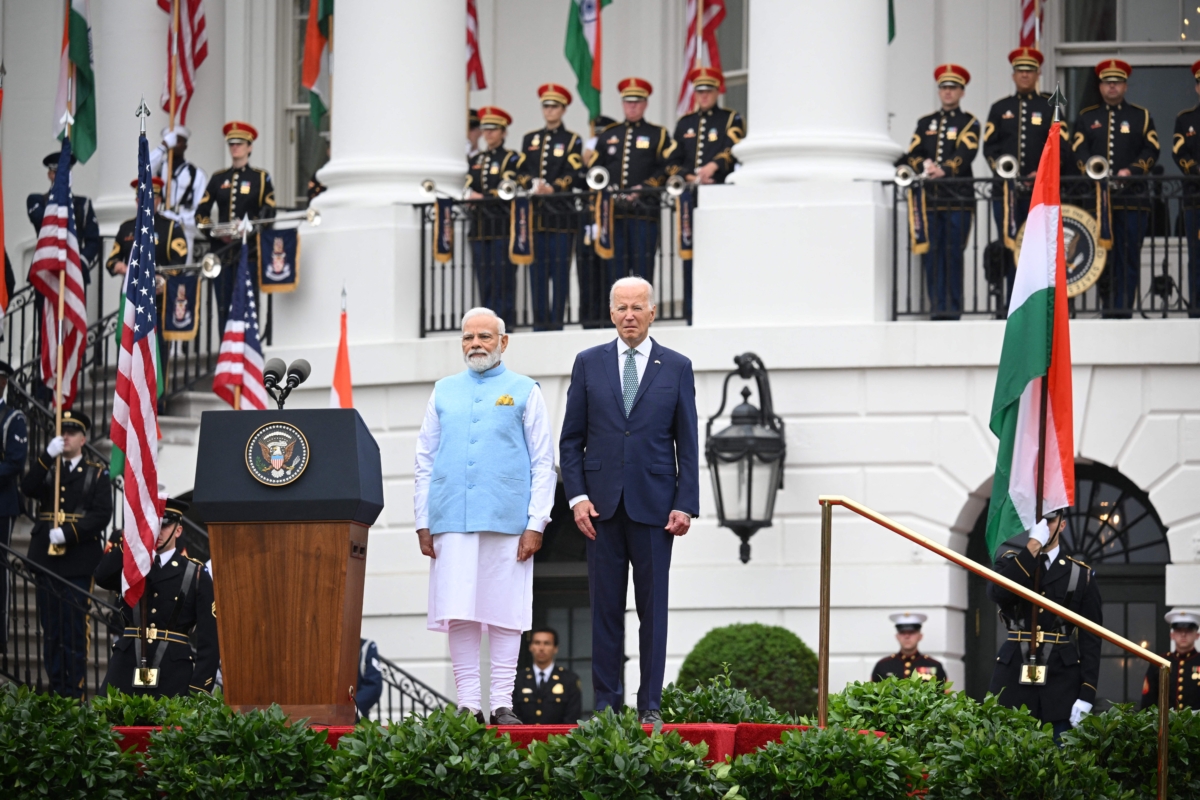
President Joe Biden and Indian Prime Minister Narendra Modi issued a joint statement after meeting in Washington on June 22, reaffirming their close partnership and commitment to a free and open Indo-Pacific.
In the joint statement, the two leaders strongly condemned cross-border terrorism and called on Pakistan to “take immediate action to ensure that no territory under its control is used for launching terrorist attacks.”
Pakistan’s foreign ministry hits back by issuing a demarche to the U.S. Deputy Chief of Mission Andrew Schofer on Monday, expressing its disappointment with what it viewed as “unwarranted, one-sided and misleading references” about it.
“It was stressed that the United States should refrain from issuing statements that may be construed as an encouragement of India’s baseless and politically motivated narrative against Pakistan,” the ministry said in a statement.
“It was also emphasized that counterterrorism cooperation between Pakistan and U.S. had been progressing well and that an enabling environment, centered around trust and understanding, was imperative to further solidifying Pakistan-U.S. ties,” it added.
State Department spokesperson Matt Miller said on Monday that Washington recognizes Pakistan’s efforts to counter terrorist groups but that more work remains to be done to address the issue.
“We have also been consistent on the importance of Pakistan continuing to take steps to permanently disband all terrorist groups, including Lashkar-e-Taiba, Jaish-e-Mohammed, and their various front organizations,” he told reporters.
US-India Relations
Modi’s visit came amid an ongoing rivalry between the United States and China in the Indo-Pacific. India recently surpassed China as the world’s most populous country, indicating a potential shift in its global status.
The inclusion of Pakistan in the U.S.-India joint statement drew a negative response from the country, whose relations with India have historically been tense. The nuclear-armed nations have fought two of their three wars over the disputed Himalayan region of Kashmir since they gained independence from British colonial rule in 1947.
At the National Assembly on June 23, Pakistani Foreign Minister Bilawal Bhutto Zardari said Pakistan should not feel insecure about its relationship with other countries over the U.S. alliance with India.
“I don’t believe there is any reason for Pakistan to be insecure about its relationship with the world or its bilateral partnership with America as a result of increasingly close cooperation between the U.S. and India,” Zardari said.
“We believe that terrorism is such an issue that big powers should not make it controversial. They shouldn’t make it a victim of geopolitics. If we have to face terrorism properly, then we will do it ourselves in our country,” he added.
In October last year, Pakistan summoned the U.S. ambassador in response to Biden’s remarks in which he referred to Pakistan as “one of the most dangerous nations in the world” due to its nuclear arsenal.
Terrorism in Pakistan
The U.S. Bureau of Counterterrorism’s 2023 report revealed that Pakistan experienced numerous terrorist attacks in 2021, with members of religious minorities facing substantial threats from terrorist groups.
Pakistan’s major terrorist groups include Tehreek-e-Taliban Pakistan (TTP), Balochistan Liberation Army (BLA), and Islamic State Khorasan Province (ISIS-K). They used various tactics to attack targets, including suicide bombings and targeted assassinations.
Pakistan took steps in 2021 to counter terror financing and restrain India-focused militant groups. The government also revised its 2015 National Action Plan to combat terrorism, but terrorist financing risks persisted.
“Several terrorist organizations, including U.N.-listed groups, operated in Pakistan, raising funds through a variety of means, including direct support, public fundraising, abuse of non-profit organizations, and through criminal activities,” the report reads.
The Associated Press contributed to this report.
 Friends Read Free
Copy
Facebook
Tweet
Friends Read Free
Copy
Facebook
Tweet