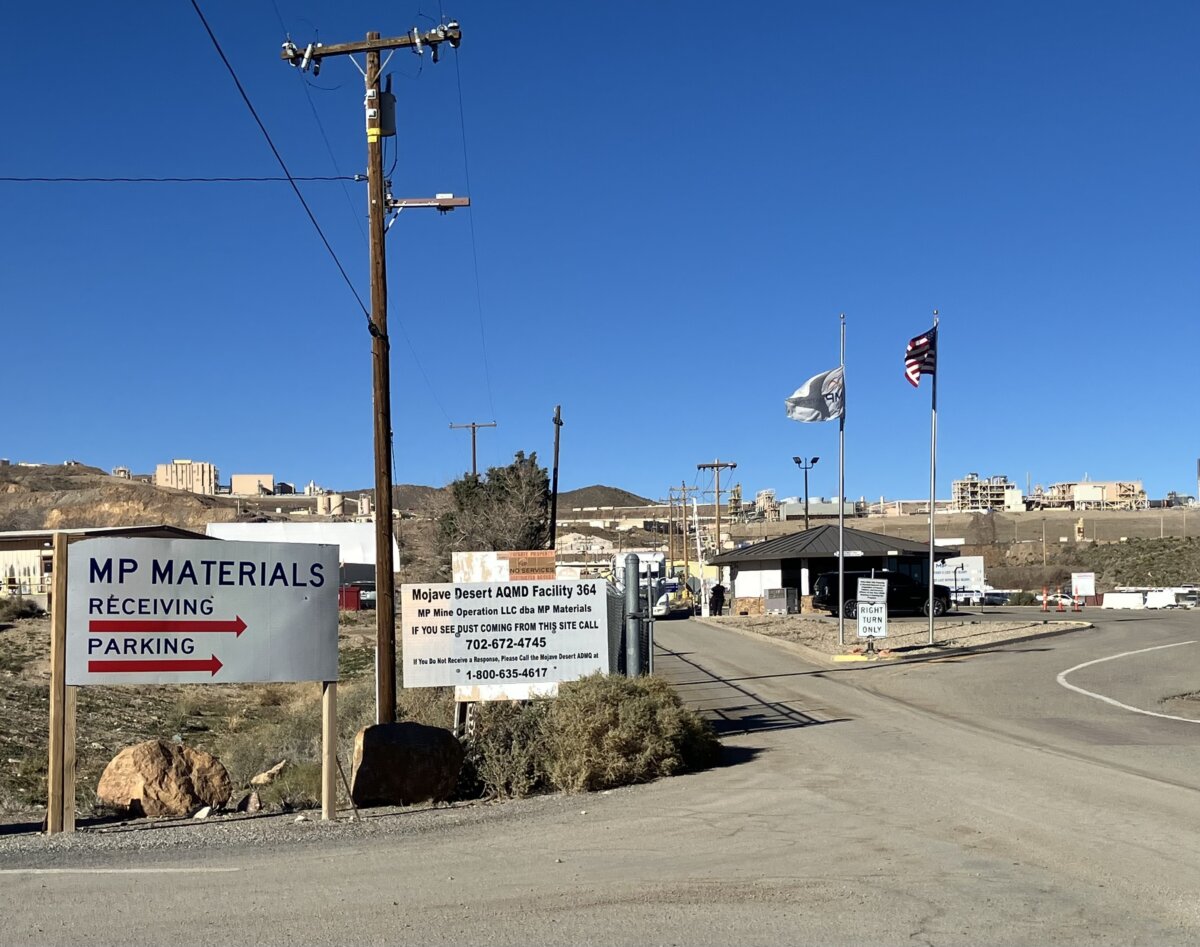

The Trump administration has funneled $15 billion in grants, tax credits, and incentives into 15 critical mining and refining projects, including $1 billion in taxpayer-funded “equity investments” in private companies, but Pentagon officials caution that it will take years of such sustained investment for domestic industry, including defense manufacturers, to overcome China’s manipulation of global minerals and metals markets.
Assistant Secretary of War for Industrial Base Policy Michael Cadenazzi told the Senate Armed Services Committee during a 90-minute hearing on Feb. 24 that it will require “sustained aggressive action” and new approaches to loosen the grip that the Chinese Communist Party (CCP) has on critical minerals needed for a range of electronics—from iPhones to F-35 fighter jets—that it steadily, and strategically, has built over decades.
“We do not have 30 years to resolve this issue,” he said. “Rebuilding our critical minerals supply chains is a generational undertaking. It will not be accomplished overnight. The investments we are making today will take years to mature into fully operational, at-scale capabilities.”
According to a November House Select Committee on the CCP report, China-based processors refine 85 percent to 90 percent of rare-earth minerals, produce 90 percent of magnets, produce 80 percent of batteries, and control at least 75 percent of the global market for at least 30 of the 54 minerals deemed “essential to national security” by the U.S. Geological Survey in its 2025 Critical Mineral List.
The Geological Survey warns that U.S. manufacturers are 100 percent import-reliant for 12 of those 54 commodities and more than 50 percent import-reliant for 29 of them, a vulnerability that the CCP will exploit, Senate Armed Services Committee Chairman Roger Wicker (R-Miss.) said at the hearing.
Since April 2025, the CCP has imposed export restrictions on seven rare earths classified as critical on the Geological Survey’s list. In October 2025, China’s Ministry of Commerce restricted holmium, erbium, thulium, europium, and ytterbium—crucial for nuclear reactors, lasers, and fiber optics—from export. It suspended those restrictions for a year pending trade negotiations with President Donald Trump.
Had the CCP imposed export restrictions, it “could have brought [the United States] to [its] knees,” Wicker said.
“How did we get to this point?” he asked.
Cadenazzi said: “[It is] not a consequence of geology but of policy and economics. For decades, a combination of burdensome and under-resourced permitting processes, unfair competition from state-subsidized foreign entities, and a lack of sustained investment has hollowed out our domestic industrial base. We are now systematically rebuilding it.”
That will take time and “be expensive,” he said.
“We’re engaged in a long-term competition with our primary strategic competitor in China,” Cadenazzi said. “There will be setbacks along the way. Our adversaries will not stand idly by; they will continue to use their market power to undermine our efforts. But we will not be deterred. The security of our nation and the future of our industrial strength are at stake.”
4 Pillars
Cadenazzi, with input from Jeffrey Frankston, acting deputy assistant secretary of war for industrial base resilience, outlined “four mutually reinforcing pillars” that the Department of War “is actively implementing” in a “comprehensive, long-term strategy to mitigate these risks.”
“Our approach is not one of autarky or isolationism, but of strategic resilience,” he said.
“[The four pillars are] first, aggressively revitalizing our domestic production capabilities; second, strengthening alliances; third, driving innovation in substitution and recycling; and fourth, modernizing the national defense stockpile.”
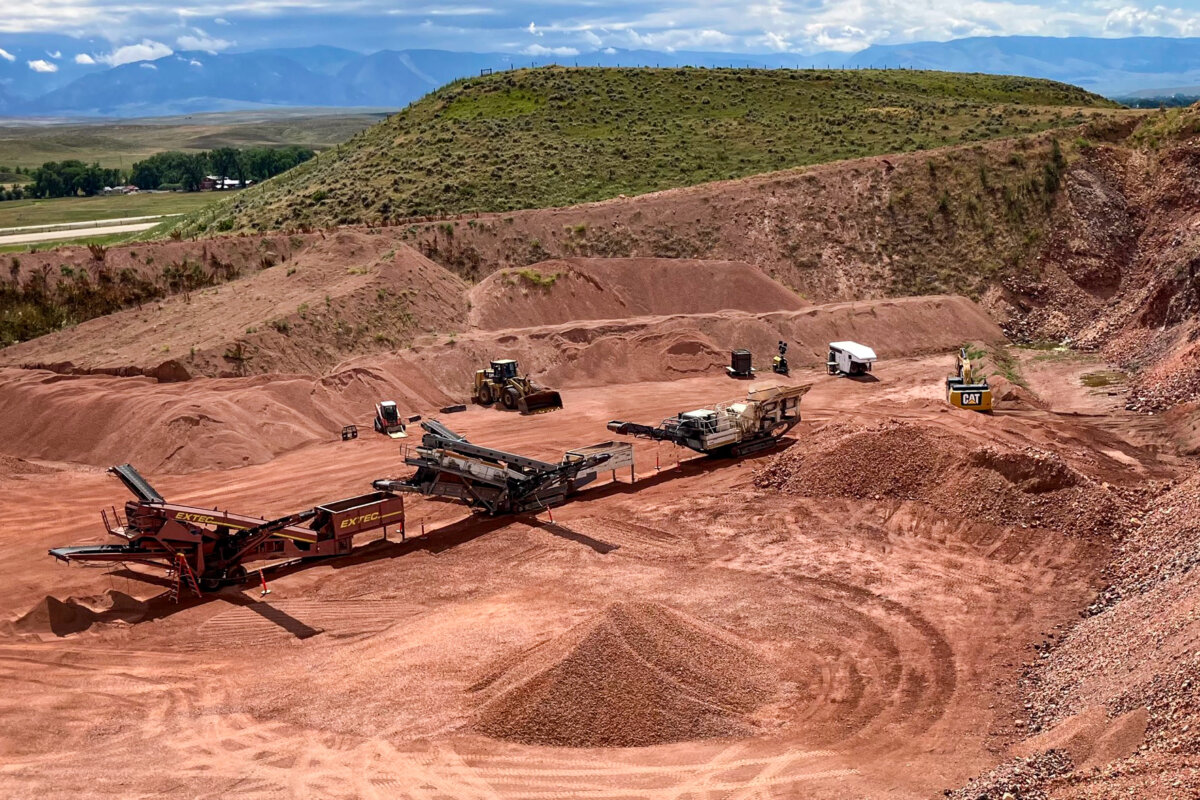
“[The] most crucial pillar [is the] revitalization of a robust, end-to-end domestic supply chain,” Cadenazzi said, citing the Defense Production Act, the Industrial Base Analysis and Sustainment Program, and the Department of War’s Office of Strategic Capital as “primary tools.”
These are the laws, actions, and agencies the administration is using to authorize $1 billion in direct taxpayer investments in private companies, with another $12 billion available in coming years, he said, noting that the Department of War is “actively seeking new opportunities to invest in everything from antimony and tungsten to manganese and beryllium, addressing vulnerabilities across the entire spectrum of needs.”
“[Complete self-sufficiency] is neither achievable nor desirable,” Cadenazzi said. “Our second pillar, therefore, is to build a resilient network of trusted international partners—a concept we refer to as ‘friend-shoring.’”
Australia and Canada are among the cornerstone components, with Australia holding deposits of rare earths, lithium, and cobalt, while Canada is rich in nickel, potash, uranium, and cobalt.
“Downstream manufacturing partners” such as Japan and South Korea are also key partners, Cadenazzi said.
In addition, the Pentagon is pursuing a “two-pronged approach” to reduce reliance by “investing in the development of substitute materials and creating a robust circular economy through advanced recycling,” he said, referring to a $4.2 million grant to a Nebraska company to extract terbium oxide, a rare earth vital in magnets, from used fluorescent light bulbs.
Modernization of the national defense stockpile is the fourth pillar. Frankston said it will require “a fundamental reimagining” to make the program “a more dynamic and effective tool for 21st-century national security.”
“This is a … direct opportunity for our country to build a resilient capability,” he said. “The stockpile is one of the major statutory pieces [for which] … we have taken the funding to … address a direct challenge.”
Equity Stakes
Wicker, noting that he has been on the committee since 2008 and bears responsibility for allowing the CCP to dominate critical mineral markets, said that the administration’s efforts have garnered bipartisan support but that “the idea of equity investments” in private businesses “is something there are going to be questions about on both sides of the dais.”
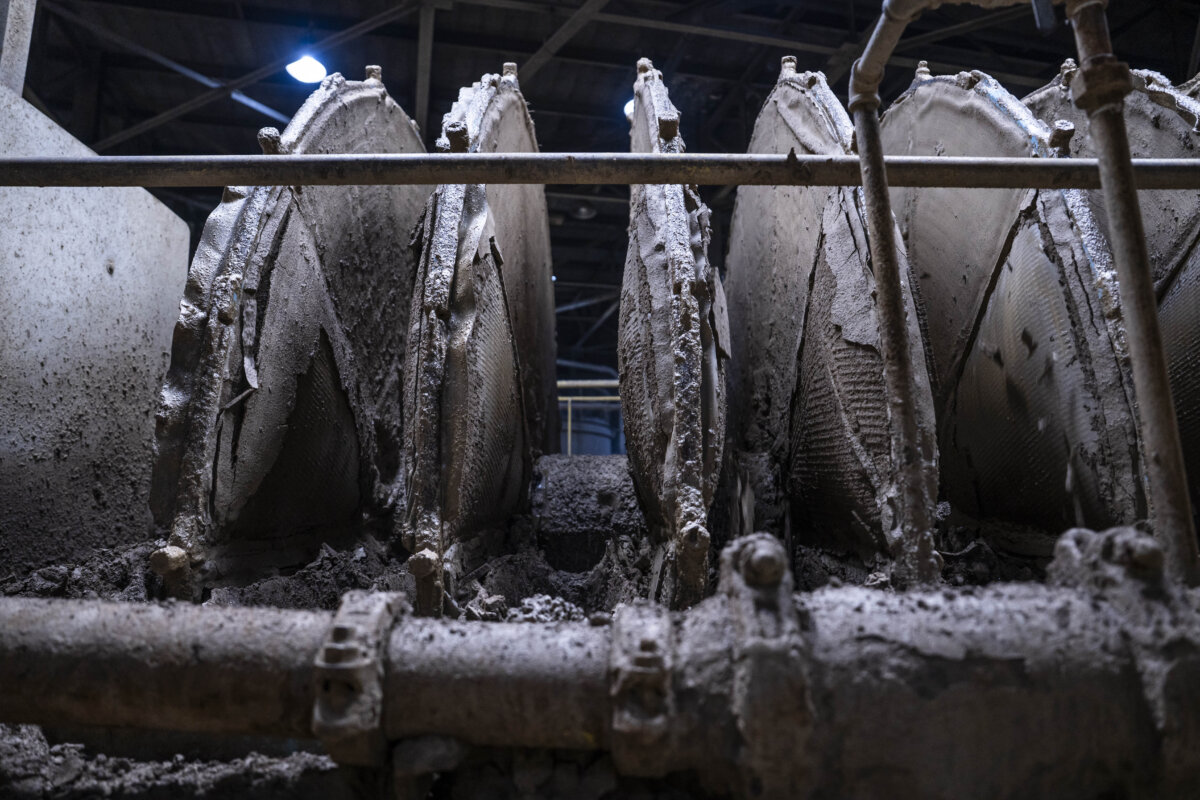
As of Feb. 24, the Trump administration has invested $1 billion in taxpayer money in private companies and $12 billion in the critical minerals stockpile initiative. Taxpayers now own a 15 percent stake, purchased for $400 million, in MP Materials; a 10 percent stake in USA Rare Earth; a 5 percent stake in Lithium Americas; a 40 percent stake in a Korea Zinc smelter project in Tennessee; and a 10 percent stake in Trilogy Metals.
Such public involvement provides “a catalyst for private investment and an aggressive way to [repair] what has been a failed market-based approach,” Cadenazzi said, noting that limited investments made since the Obama administration, such as in MP Materials, “have not met [U.S.] needs” and that a new tact is needed.
“Things that have been done in the past led to dependence on China,” he said. “We believe that, given the frailty of many of our minerals markets … equity is a necessary component to drive alignment of the companies, [and] make a clear commitment from government that we’re interested and committed to not just the market, but the company in question.”
Augmenting a demand signal to encourage private investment should not lead to the federal government, or an administration, investing public monies, Sen. Jack Reed (D-R.I.) said, noting that Trump appears to be replicating the CCP in creating state-supported companies that are disrupting free trade.
He said he has heard from other companies that the stake in MP Materials essentially ensures “a 10-year price war for critical minerals [in which] the government is literally picking winners and losers,” which “puts other companies at a competitive disadvantage.”
Reed said the CCP would “triangulate” the supply chain and crash market prices to diminish whatever investments the administration makes.
Have faith, Cadenazzi said, noting that federal seed money “will immediately stimulate investment and demand.”
“We’ve seen additional companies committed to invest in this space,” he said. He called on Congress to support “a more aggressive model that would lock in equity and create offtake agreements and price floors” needed to be independent of CCP manipulation.
“We think we’ve successfully created the mechanism to generate more transparent and market-based pricing that’s to everyone’s benefit,” Cadenazzi said.
 Friends Read Free
Copy
Facebook
Tweet
Friends Read Free
Copy
Facebook
Tweet