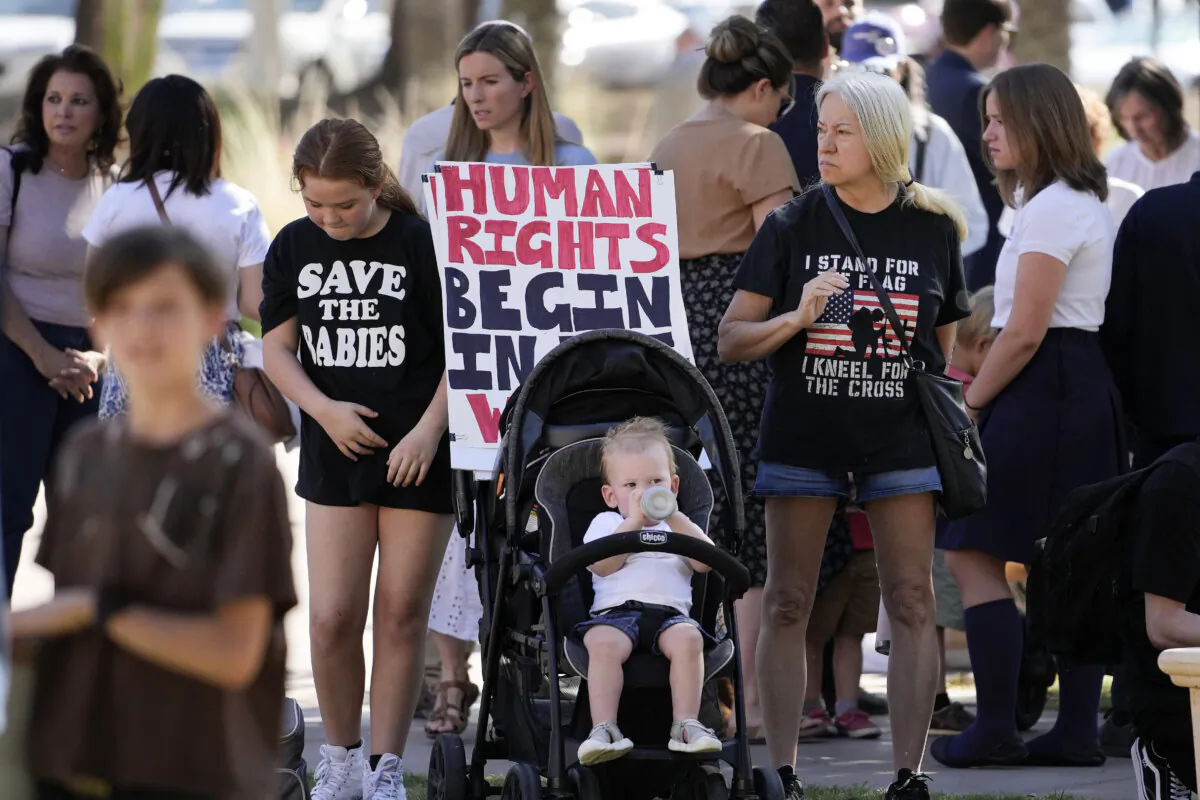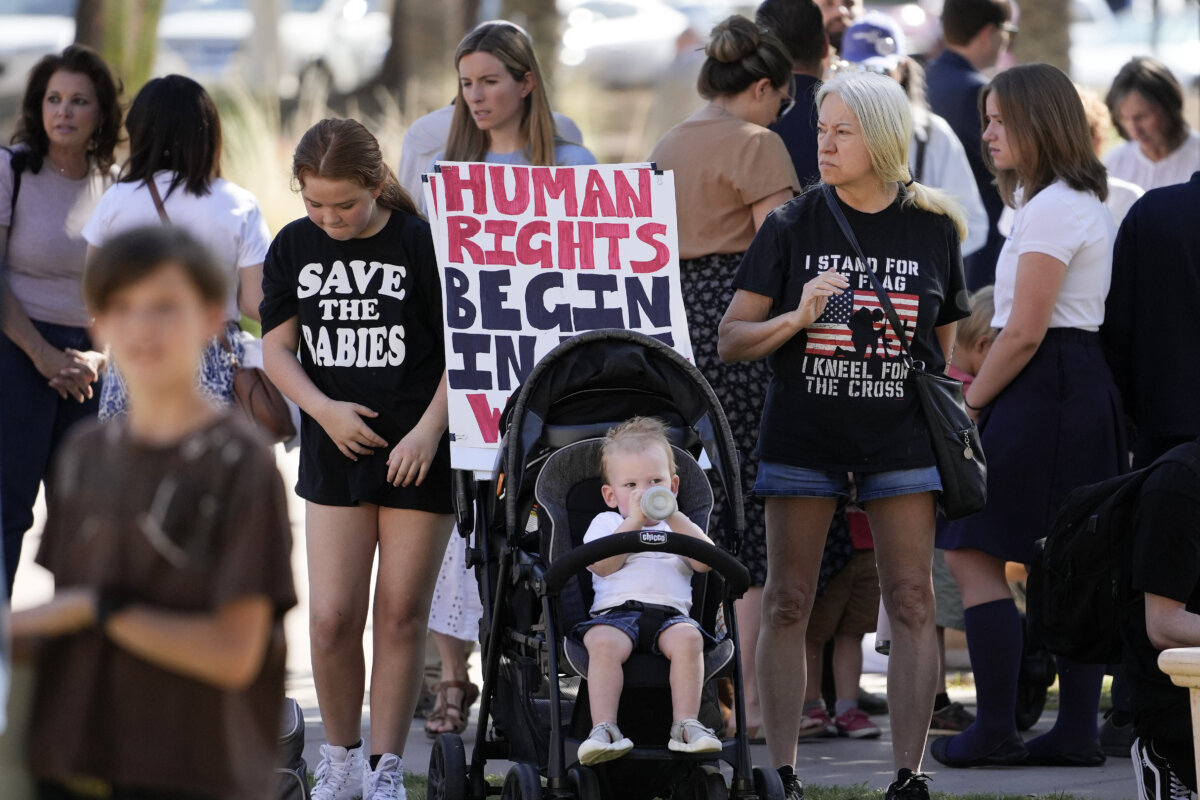

Planned Parenthood and other advocates for abortion access filed a lawsuit on Dec. 3 challenging Arizona’s abortion restrictions, with plaintiffs arguing that these regulations violate the state’s constitution.
In 2022, the Arizona Legislature passed SB 1164, which criminalized abortions after 15 weeks, with the law coming into effect in September of that year. In the recent Nov. 5 election, Arizona voters approved an amendment that would grant a constitutional right to abortion up to fetal viability.
The amendment came into effect on Nov. 25. On Tuesday, Planned Parenthood and two obstetrician-gynecologists filed a lawsuit at the Arizona Superior Court, Maricopa County, challenging the constitutionality of the 15-week abortion ban.
The amendment added a new provision to the Arizona Constitution, Article 2 Section 8.1, which establishes and protects “a fundamental right to abortion,” the lawsuit said.
The terms of the amendment make it clear that the state shall not enforce any policy that restricts abortion “before fetal viability unless justified by a compelling state interest that is achieved by the least restrictive means.”
In a typical pregnancy, viability occurs at around 23 to 24 weeks. As such, the 15-week ban would contradict the abortion protections granted under the amendment.
“By prohibiting pre-viability abortion after 15 weeks LMP [last menstrual period], the Ban by definition infringes on an individual’s autonomous decision making,” the lawsuit stated.
“The Ban does not improve or maintain the health of an individual seeking abortion care,” and “therefore cannot be justified by a compelling state interest as defined by the Amendment, let alone one that is achieved by the least restrictive means,” the plaintiffs said in the filing.
They claimed that the 15-week ban forces them to either turn away patients seeking an abortion after 15 weeks or risk criminal prosecution if services are provided.
The lawsuit asked the court to issue a declaratory judgment stating that the 15-week ban is unconstitutional as it violates Article 2 Section 8.1 of the Arizona constitution. It also sought a permanent injunction preventing the state of Arizona from enforcing the ban.
Cathi Herrod, president of the Center for Arizona Policy, said in a Dec. 4 social media post that the lawsuit reveals the “true pro-abortion agenda that denies the reality of an unborn child’s life.”
Herrod said that at 15 weeks, the unborn child feels pain. As such, the child will suffer when subjected to any abortion activity at this point. The unborn infant has distinct facial features, kidneys producing urine, the ability to hear sounds, and blood running through the circulatory system, and can also swallow.
Women who undergo abortion after 15 weeks face the risk of “significant complications,” including heavy bleeding, infection, and uterus injury.
“The intent of the 15-week limit was to not only protect the life of the unborn child but also to spare women the risks of having an abortion later in their pregnancy,” Herrod said.
Conflicting Abortion Laws
While the Nov. 5 amendment to the state constitution expands abortion access, “it will take time to determine how the new constitutional right to abortion impacts other abortion laws currently on the books,” according to a statement from Arizona Attorney General Kris Mayes’s office.
“Arizona has numerous laws regulating abortion, some of which are no longer enforceable now that the Arizona Constitution protects abortion rights. Whether an existing law continues to be enforceable will be determined by the courts,” his office said.
Mayes also signed a “stipulation of non-enforcement” with the plaintiffs in the case. The stipulation, filed with the Arizona Superior Court on Dec. 3, says that both parties agree that the 15-week abortion ban is unconstitutional under Article 2 Section 8.1.
Neither the state, its officers, agents, nor successors will enforce the ban in any way as long as the litigation remains unresolved, according to the stipulation.
If the court decides to keep the 15-week ban in effect, the prohibition won’t be enforced for a period of 30 days after all appeals are concluded or the deadline to file appeals has passed, the stipulation stated.
Arizona had an 1864 law that banned abortion except in situations where the woman’s life was in danger. The law came into effect following the U.S. Supreme Court overturning Roe v. Wade in 2022.
An appeals court subsequently ruled that the 15-week abortion ban regulations superseded the 1864 law. However, in April this year, the Supreme Court of Arizona overturned the appeals court decision and reinstated the 1864 abortion rules.
On May 2, Democrat Gov. Katie Hobbs signed HB 2677 into law, repealing the 1864 abortion ban.
 Friends Read Free
Copy
Facebook
Tweet
Friends Read Free
Copy
Facebook
Tweet