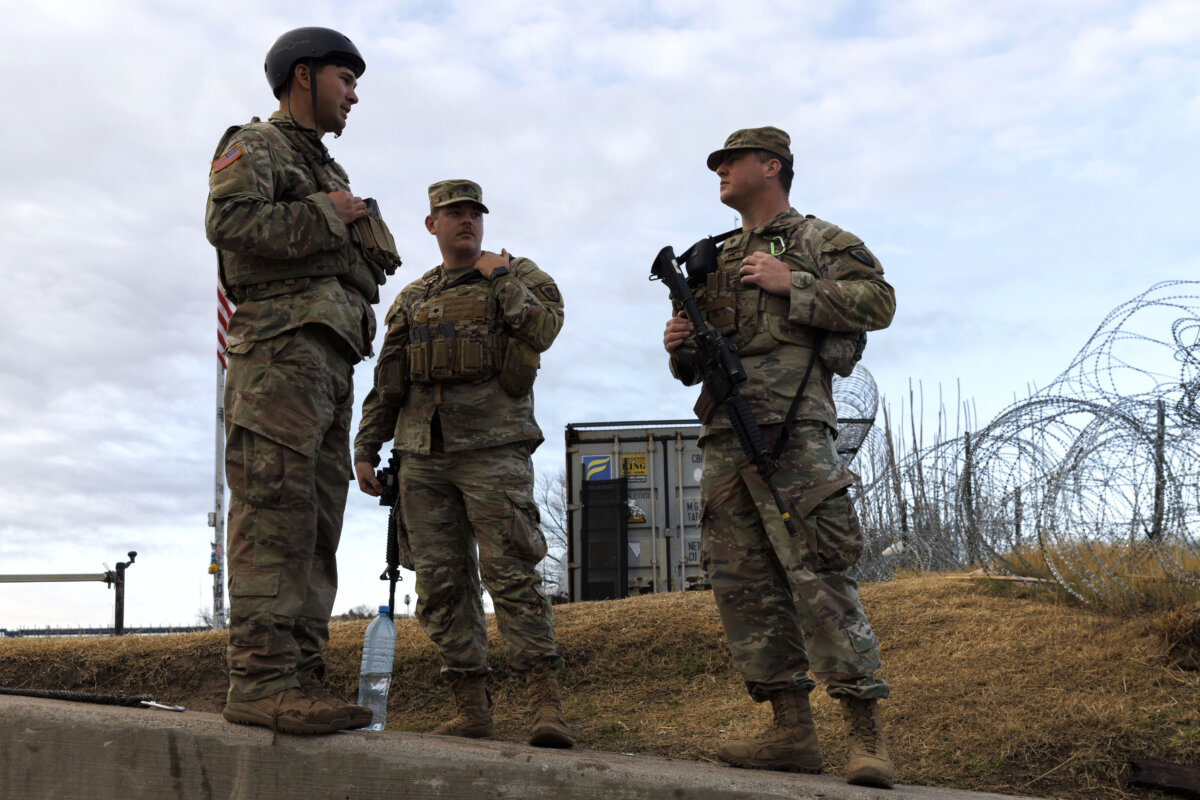

Illinois Gov. JB Pritzker said on Oct. 5 that President Donald Trump is ordering the deployment of 400 Texas National Guard members to Illinois, Oregon, and other states amid federal immigration operations.
In a statement, Pritzker said the deployment was being made against his wishes and that no officials from the Trump administration had called him directly to discuss or coordinate it.
“We must now start calling this what it is: Trump’s Invasion,” the governor stated. “It started with federal agents, it will soon include deploying federalized members of the Illinois National Guard against our wishes, and it will now involve sending in another state’s military troops.”
Pritzker also called on Texas Gov. Greg Abbott to reject the troop deployment and to refrain from coordinating it.
“There is no reason a President should send military troops into a sovereign state without their knowledge, consent, or cooperation,” he added.
Texas Gov. Greg Abbott stated on X that he has “fully authorized” the deployment of his state’s National Guard troops to help protect federal officials in other states.
“You can either fully enforce protection for federal employees or get out of the way and let Texas Guard do it,” the governor said.
White House spokeswoman Abigail Jackson said that Trump has authorized the deployment of 300 National Guard soldiers to Illinois to protect federal officers and assets. She did not give further details.
“President Trump will not turn a blind eye to the lawlessness plaguing American cities,” Jackson said in an emailed statement to The Epoch Times.
Prior to the announcement, Pritzker said on Oct. 4 that the Pentagon had given him an ultimatum to either mobilize the Illinois National Guard himself or the administration will do it directly.
“This morning, the Trump Administration’s Department of War gave me an ultimatum: call up your troops, or we will,” he stated. “I want to be clear: there is no need for military troops on the ground in the State of Illinois.”
Pritzker said that state and local law enforcement have coordinated to ensure public safety around the Broadview ICE facility, where protests have erupted over the federal immigration enforcement initiative called “Operation Midway Blitz,” which was launched on Sept. 8.
The White House said Oct. 4 that Trump authorized the deployment of the National Guard troops to Illinois amid “ongoing violent riots and lawlessness” in the state. According to a leaked memo obtained by CBS News, the federalization was done under section 12406 of Title 10, U.S. Code. The Epoch Times has contacted the Pentagon for comment.
Department of Homeland Security (DHS) assistant secretary Tricia McLaughlin stated on Oct. 4 that law enforcement officers were rammed by vehicles and boxed in by 10 cars during a patrol in Broadview, prompting agents to “fire defensive shots” at an armed driver.
No law enforcement officers were seriously injured in the incident, according to the DHS spokesperson.
McLaughlin also alleged that the Chicago Police Department has refused to assist federal agents in securing the area, prompting the DHS to deploy “special operations to control the scene” as the crowd grew.
Pritzker has accused federal agents of causing “chaos and mayhem” in the community. During a press conference last week, the governor said that federal agents used tear gas, pepper spray, rubber bullets, and flashbangs against protesters exercising their First Amendment right in Broadview.
“It was about creating a pretext to send armed military troops into our communities,” he said.
The immigration operation in Illinois resulted in more than 800 arrests as of Oct. 1, targeting individuals with criminal records, including sexual offenses and gang ties, according to the DHS.
Tom Ozimek contributed to this report.
 Friends Read Free
Copy
Facebook
Tweet
Friends Read Free
Copy
Facebook
Tweet