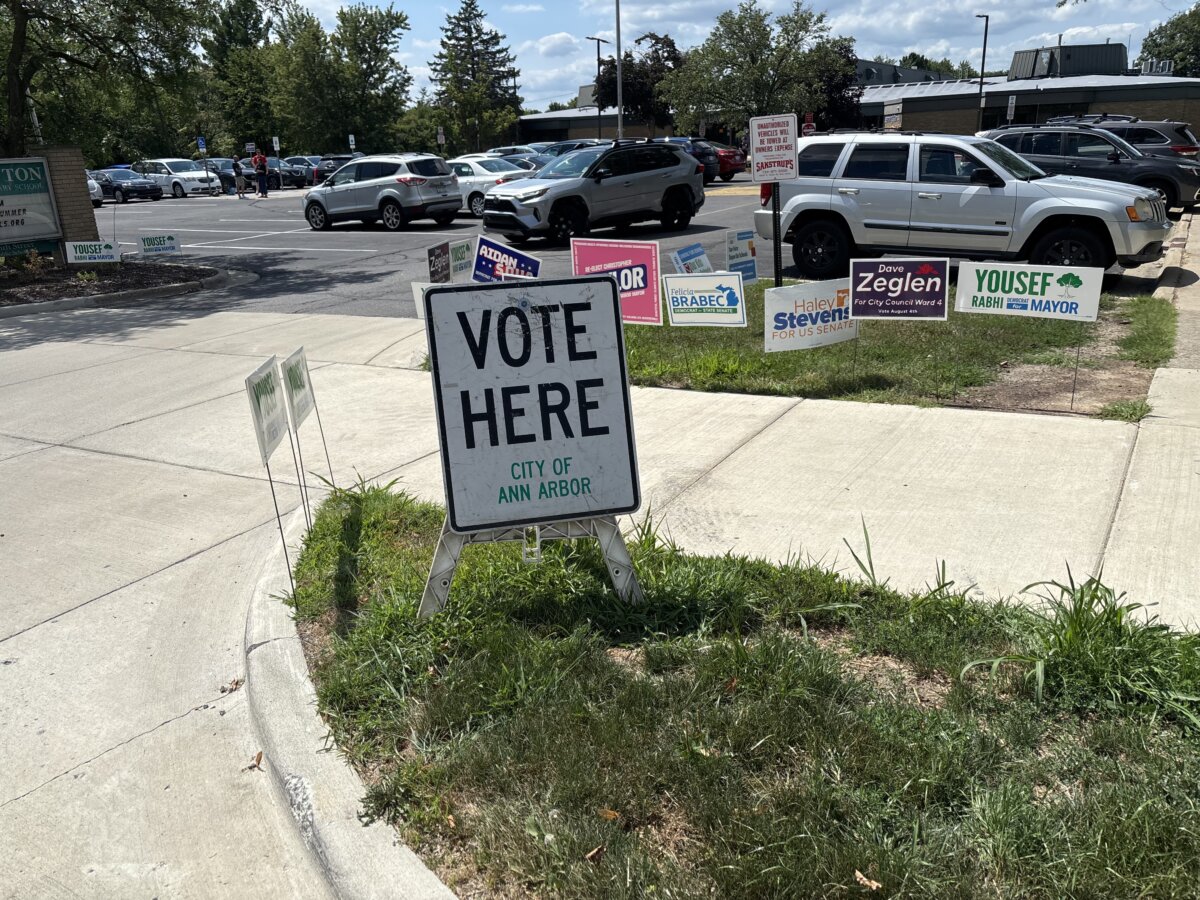

Michigan Democrats in the district of the state capital and its surrounding cities locked in their primary candidate on Aug. 4 to take on incumbent U.S. Rep. Tom Barrett (R-Mich.) in the November election.
Progressive Democrat William Lawrence clinched the party’s nomination in a field of three candidates, along with Bridget Brink and Matt Maasdam. Barrett, the Republican incumbent, ran unopposed in his primary.
The Associated Press called the race at 11:23 p.m. ET, with Lawrence leading with 42.7 percent of the vote. Brink came in second with 29.5 percent, and Maasdam received 27.8 percent of the vote.
The district, which Gov. Gretchen Whitmer, a Democrat, described as “a microcosm within a microcosm of the country” in 2024, has turned into a bellwether in recent years.
Before it was redrawn in 2022 following the previous census, District 7 had elected a Republican in almost every election since the early 1990s.
Lawrence’s win adds another to a string of victories for progressive candidates in the 2026 midterm election cycle, which has led to an ideological battle within the larger Democratic Party. Lawrence co-founded the Sunrise Movement, which advocates for climate action and has backed the Green New Deal.
He also co-founded the Michigan Rent Is Too Damn High Coalition and the Mid-Michigan Tenant Resource Center. Lawrence ran on a populist platform emphasizing the need to lower the cost of living and stop “endless wars.” He also promised to support a 12-month moratorium on new data centers in the United States.
Sen. Bernie Sanders (I-Vt.) and the progressive Working Family Party both endorsed Lawrence ahead of Tuesday’s race.
Brink was a member of President Barack Obama’s National Security Council before serving as the U.S. ambassador to Slovakia and then Ukraine. She ran on a broad liberal platform, expanding healthcare access, protecting entitlement programs, and defending against what she called “unaccountable, unelected billionaires.”
Brink was endorsed by EMILY’s List, the PAC that backs female Democratic candidates who support abortion access.
The third contender, Matt Maasdam, is a retired Navy SEAL who served as a military aide for Obama. He highlighted his bipartisan pedigree serving in the executive branch and military across presidential administrations, and promised to bridge party divides with “a different kind of leadership.”
Maasdam was endorsed by VoteVets.org, a Democratic veterans group.
Following the redistricting, then-Rep. Elissa Slotkin (D-Mich.) shifted from the 8th to the 7th District, where she beat Barrett in one of the most expensive House races of the 2022 midterms.
Slotkin ran for the Senate two years later, winning by less than 20,000 votes over Republican Mike Rogers in a state that President Donald Trump clinched that year. Barrett defeated Democrat Curtis Hertel by a nearly 4-point margin to represent the 7th District.
Democrats are hopeful of flipping the seat this year, especially with Slotkin prevailing four years ago during a much less ideal political climate for the party two years into President Joe Biden’s presidency.
A range of polls have given Democrats an increasing generic ballot advantage over Republicans this year, particularly as Trump’s approval rating continues to dip, according to major polls.
An SSRS/CNN poll released on July 30 gave Democrats an 8-point generic ballot advantage over Republicans, despite a slim majority of respondents holding an unfavorable view of both parties overall: 51 percent unfavorable toward Democrats and 52 percent unfavorable toward the GOP.
Most political forecasters, including the Cook Political Report, Sabato’s Crystal Ball, and Inside Elections, have rated District 7 as a “toss-up” in November.
Decision Desk HQ rated the race as 66 percent “Lean Democratic,” giving Democrats a 5.3 percent generic ballot advantage nationwide.
 Friends Read Free
Copy
Facebook
Tweet
Friends Read Free
Copy
Facebook
Tweet