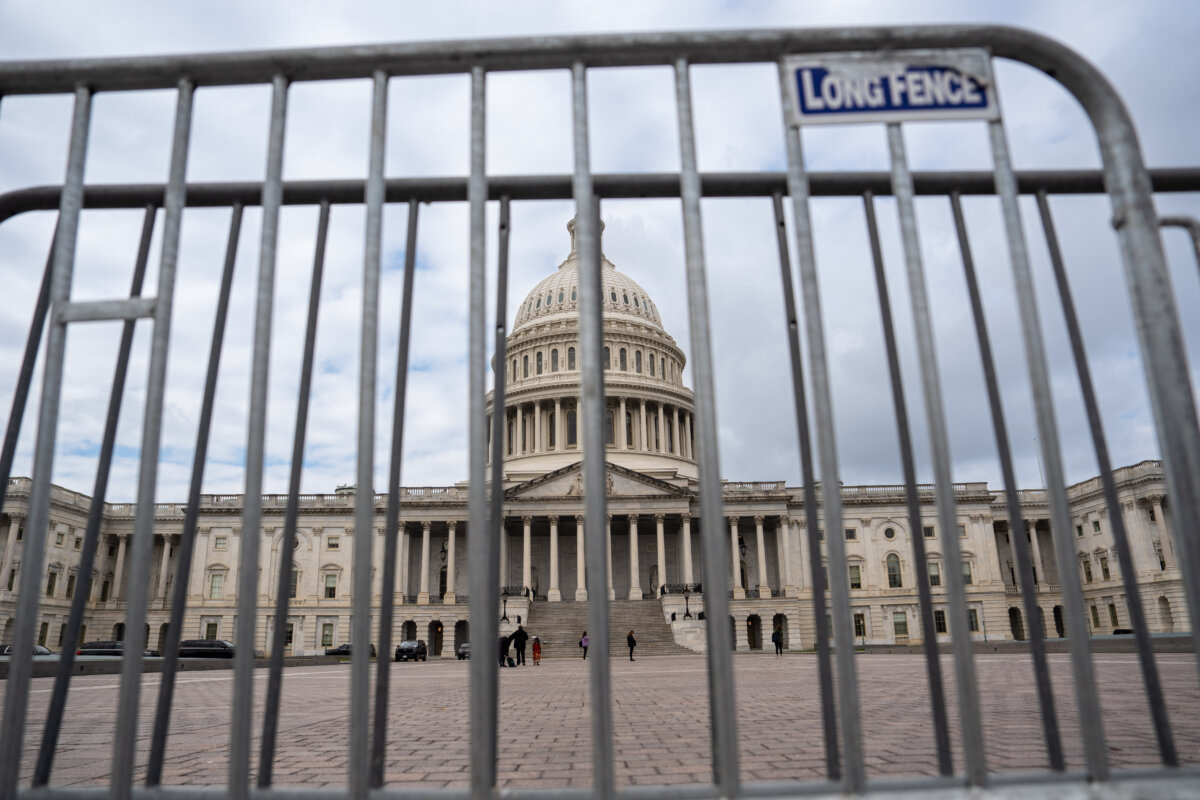

The government shutdown, now in its sixth week, is beginning to take a toll on consumer confidence, according to new survey data from the University of Michigan released on Nov. 7.
U.S. consumer sentiment declined for a fourth straight month in November, with the preliminary index dropping 6 percent, to 50.3 from October’s 53.6, the widely watched monthly survey found. That is the lowest level since June 2022.
This month’s slide was fueled by a 17 percent drop in current personal finances and an 11 percent decrease in year-ahead business conditions.
“With the federal government shutdown dragging on for over a month, consumers are now expressing worries about potential negative consequences for the economy,” Joanne Hsu, the university’s director of consumer surveys, said in a statement.
“This month’s decline in sentiment was widespread throughout the population, seen across age, income, and political affiliation.”
However, respondents with the largest percentile of stock holdings registered an 11 percent increase in sentiment amid “continued strength in the stock market.”
Meanwhile, earlier this week, the government shutdown, now at 38 days, shattered the previous record of 34 days set in 2019 during President Donald Trump’s first term.
The Senate has failed 14 times to pass a clean continuing resolution, with the last vote again falling short of the 60-vote threshold.
Concurrently, Republicans in the upper chamber are pushing through a revised bill on Nov. 7 to fund some federal agencies through Thanksgiving and provide long-term appropriations.
But the shutdown could start to harm the broader economy.
White House officials estimate the closure could cost the economy $15 billion a week. The Congressional Budget Office, a nonpartisan budget watchdog, recently forecast that an eight-week shutdown may harm the economy by up to $14 billion.
The ripple effects may also be starting to appear.
U.S. airlines, for example, began canceling hundreds of flights on Nov. 7, shortly after the Federal Aviation Administration ordered the cuts amid the government shutdown. Forty airports were impacted.
Measuring Inflation
Inflation expectations were mixed in the preliminary survey, which was conducted prior to the Nov. 4 elections.
The one-year inflation outlook edged up to 4.7 percent from 4.6 percent. Long-run inflation projections fell to 3.6 percent from 3.9 percent.
“These expectations are now below the midpoint between the readings seen a year ago and the 2025 peak reading from April,” Hsu said.

Both readings remained well below the highs registered in the spring following Trump’s introduction of sweeping worldwide sectoral and reciprocal tariffs.
As a result of the prolonged government shutdown, key economic figures have not been released. This has forced economists and Federal Reserve policymakers to pursue alternatives, placing a heightened focus on reports such as the University of Michigan Consumer Sentiment Index.
What We Know About the Economy
The U.S. services sector remained robust last month, with business activity and new orders expanding, according to the Institute for Supply Management. Price pressures ticked up, while employment improved.
“Business sentiment at service-providing companies rose in October and was stronger than expected,” Bill Adams, chief economist at Comerica Bank, said in a note emailed to The Epoch Times.
“The survey provides a reassuring sign that economic growth persisted in October despite the government shutdown.”
While the Department of Commerce did not release retail sales data, the Federal Reserve Bank of Chicago’s estimates suggest consumers were still opening their wallets amid economic uncertainty.
October retail and food services sales excluding motor vehicles and parts likely rose by 0.3 percent—or 0.2 percent when adjusted for inflation.
The manufacturing sector started the fourth quarter on a mixed note.
The Institute for Supply Management’s survey contracted for the eighth consecutive month. The S&P Global Manufacturing index, however, expanded for the third straight month.
“U.S. manufacturers reported a solid start to the fourth quarter with production rising at an increased rate in response to an encouragingly robust jump in new orders. However, lift the hood and the picture is not so healthy,” Chris Williamson, chief business economist at S&P Global Market Intelligence, said in the report.
 Friends Read Free
Copy
Facebook
Tweet
Friends Read Free
Copy
Facebook
Tweet