
WASHINGTON—Midterm elections are often a problem for the party in the White House.
For the GOP in 2026—a party reliant on a base animated by President Donald Trump—the absence of the name “Trump” from ballots could make retaining the House and Senate even harder.
Republicans hope to overcome those obstacles with the help of a midterm convention in Dallas on Sept. 9 and 10. While Democrats held several midterm gatherings during the 1970s and 1980s, the event marks the first such convention on the GOP side.
Previews from the Republican National Committee (RNC) promise 109 talks and speakers, including discussions of tax and healthcare reform under Republican leadership, showcases of key candidates, and a program honoring the late Charlie Kirk on the anniversary of his assassination.
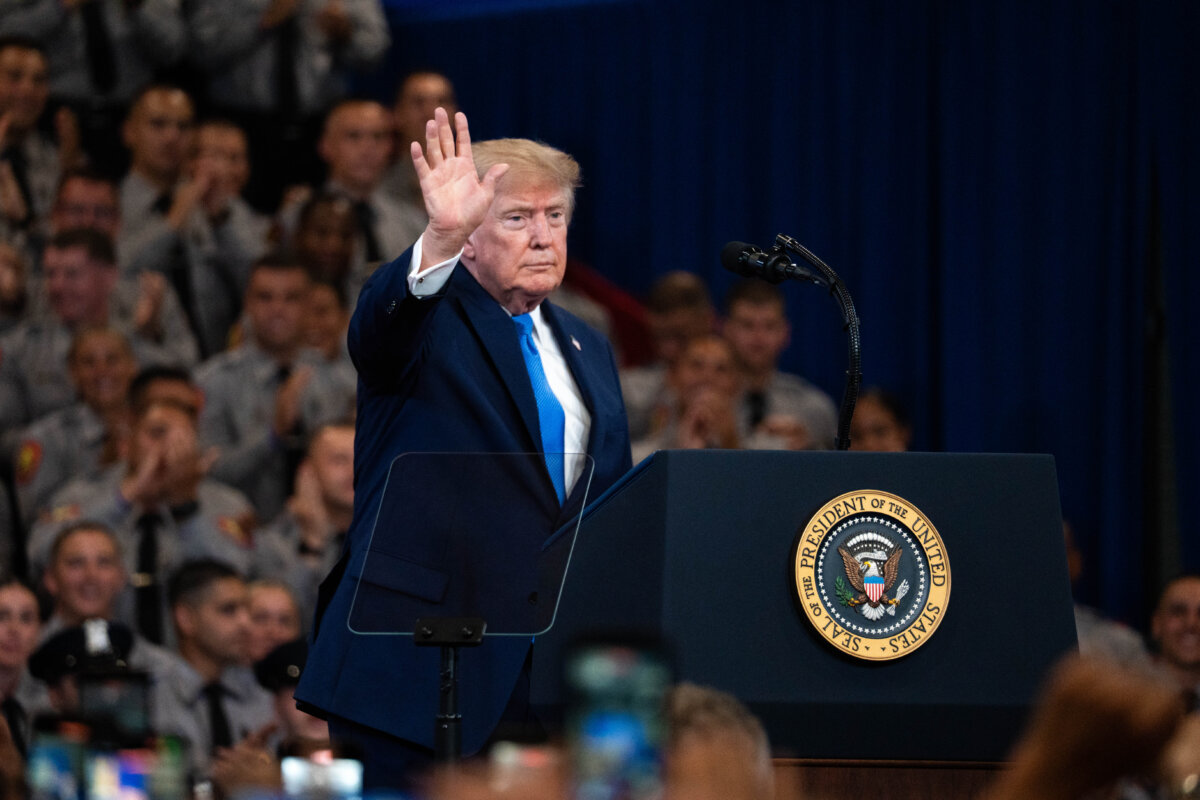
Trump will deliver the keynote address on the first night and closing remarks on the second. Vice President JD Vance will deliver the keynote address on the second night.
Trump administration officials are set to dominate the other keynotes. Health Secretary Robert F. Kennedy, Jr., Attorney General Todd Blanche, and Treasury Secretary Scott Bessent will be among those top attractions, as will former White House press secretary Karoline Leavitt and the president’s eldest son, Donald Trump, Jr.
Republican leaders in the House and Senate—not including Senate Majority Leader John Thune (R-S.D.)—are slated to address the convention, too. So are various elected officials and candidates, including those running in competitive districts.
The big names include Sen. Ted Cruz (R-Texas), Georgia Senate hopeful Rep. Mike Collins (R-Ga.), Rep. Mike Lawler (R-N.Y.), Rep. Derrick Van Orden (R-Wisc.), and Michigan Senate hopeful Mike Rogers, among many others.
While some Republican lawmakers plan to attend, others will miss the event.
Rep. Ralph Norman (R-S.C.), who just lost a special Senate primary to Trump-backed Sen. Darline Graham (R-S.C.), told reporters he did not plan to go, saying, “I’ve been campaigning for a year and a half.”
The gathering comes amid internal debates among Republicans and conservatives over the Iran War, data centers, and other important issues. Those divisions, alongside relatively strong polling for Democrats and low approval ratings for Trump, could spell trouble for the party in November.
“We believe Republicans are walking into a bloodbath because they are taking so many Republican constituencies, like gun owners, for granted,” Chris McNutt, the president of Texas Gun Rights, told The Epoch Times.
At least one concurrent gathering nearby—FORUM’s “Beyond the Midterms: The American Future”—will reckon with the internal divisions while also seeking to rally GOP voters.
Matthew Peterson, the founder of FORUM, told The Epoch Times that the GOP midterm convention was “a fantastic idea,” reflecting Trump’s political genius.
“That being said, the reason for having an off-site alongside it is that one thing that needs to happen is these coalitions that are fighting need to come together,” the former editor-in-chief of Blaze Media said of his event, which will include a debate over artificial intelligence regulations and data centers between venture capitalist Joe Lonsdale and AI skeptic Joe Allen.
Other insiders who spoke with The Epoch Times see a mixture of opportunities and threats for the GOP as it aims to defy historic midterm trends, starting with an unprecedented rally.
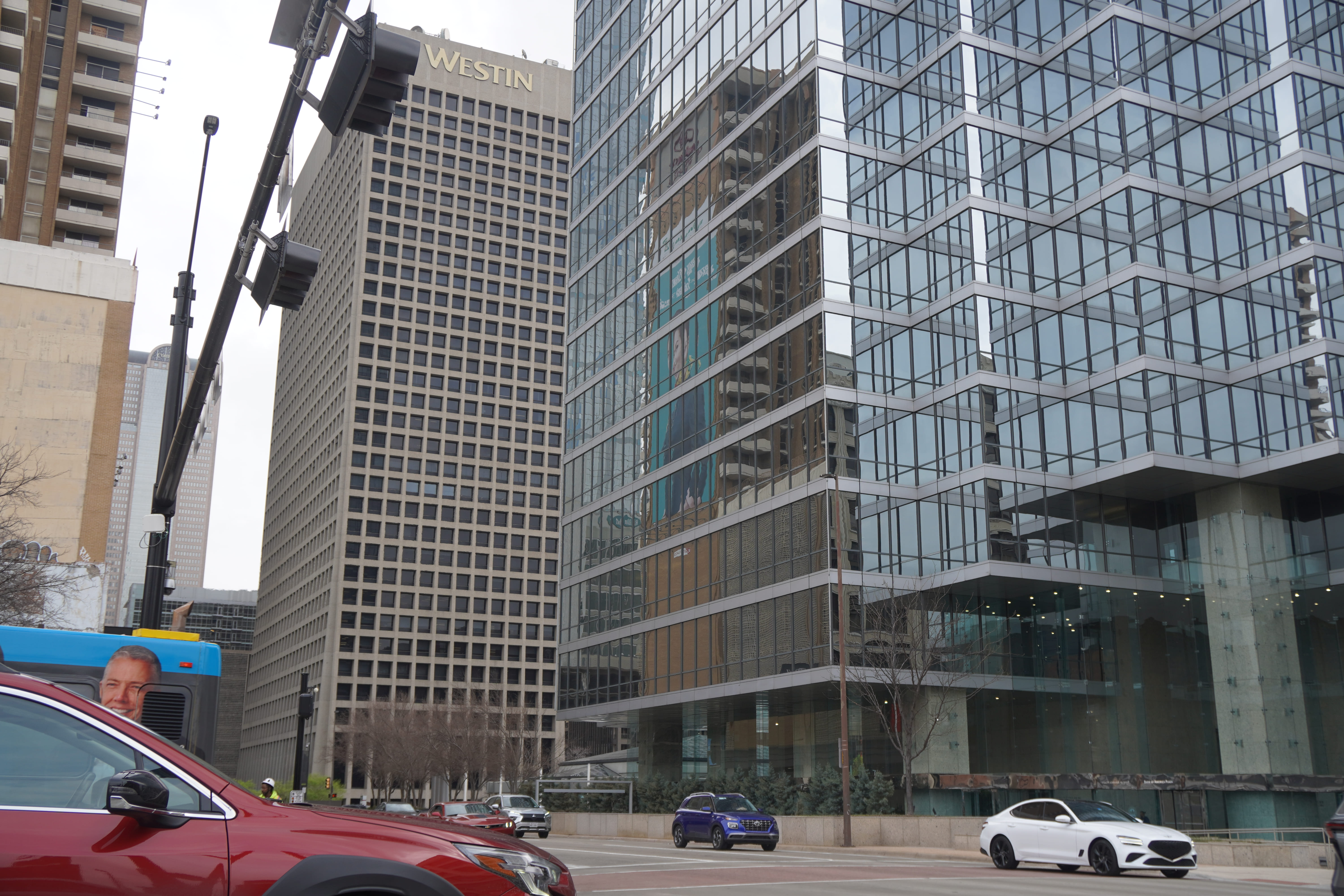 Downtown Dallas on March 4, 2026. (Nathan Worcester /The Epoch Times)
Steve Adler, the former mayor of Austin, Texas, told The Epoch Times that the scope of what the convention achieves will ultimately be judged based on what unfolds afterwards.
“Success looks like something durable: volunteer sign-ups, voter registration, sustained energy in the districts and counties that decide close races,” said Adler, who led the city as a Democrat. “Failure looks like a two-day sugar high with big applause in the arena, no movement in the precincts.”
Republicans Prepare to Rally
During the week ahead of the convention, some Republicans in Congress signaled they would attend.
Reps. Aaron Bean (R-Fla.) and Pete Sessions (R-Texas) told The Epoch Times they would be there, with Sessions indicating he would not be among the speakers. The politician, who is a white male, said the Republican Party wanted to highlight female and Hispanic politicians.
Others, like Norman, revealed that they had different plans.
Rep. Don Bacon (R-Neb.), who has clashed with Trump on foreign policy and other issues, told The Epoch Times he will be in Ukraine during the convention.
Rep. Tim Burchett (R-Tenn.) voiced concern about the price of admission for members of Congress like him, telling reporters he was informed that his campaign committee would have to pay $25,000.
A spokesman for Burchett confirmed via email that the congressman will not attend the convention.
In an email to The Epoch Times, the RNC did not address how much, if anything, lawmakers would need to spend to participate in the Dallas convention.
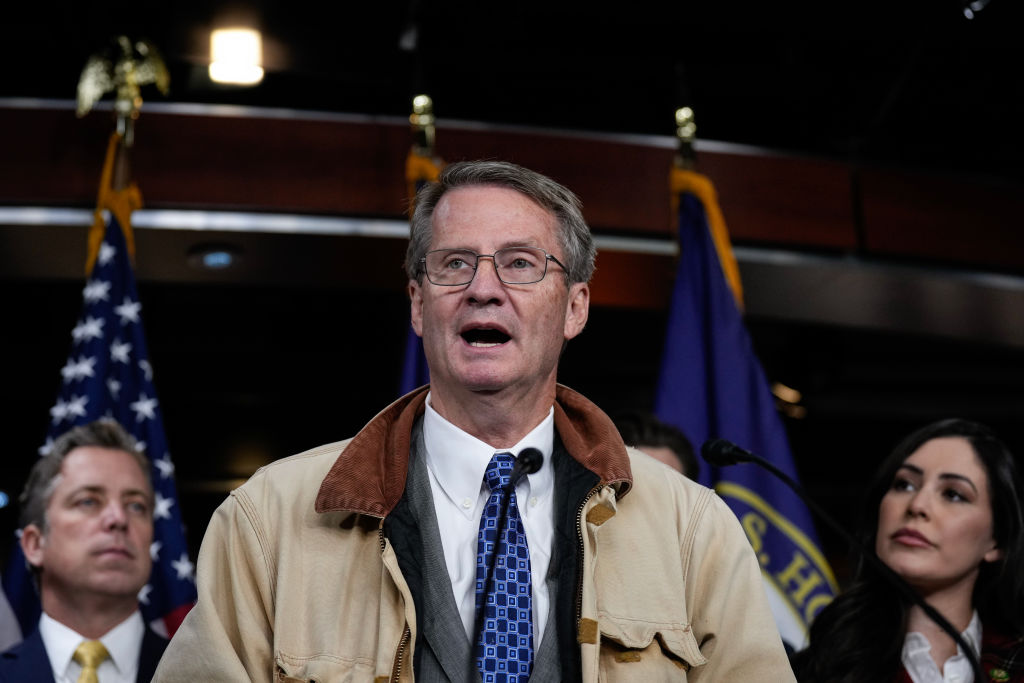 Rep. Tim Burchett (R-Tenn.) speaks during a news conference about unidentified aerial phenomena (UAP) transparency in Washington on Nov. 30, 2023. (Drew Angerer /Getty Images)
“Parties used to invest in their candidates. Charging them $25,000 for a seat in the very cycle they need every dollar is a questionable theory of how you win a midterm,” he said.
Political commentator Dave Spencer told The Epoch Times that charging Republican lawmakers to enter the convention is “a dreadful idea.”
“Corporate sponsors can help pay for the event, and Trump has plenty of money in his campaign war chest,” he added.
On Sept. 4, Trump told reporters that his Super PAC, MAGA Inc., was preparing to spend up to roughly $500 million in the midterms, half of the $1 billion he said it has amassed.
Rep. Bill Huizenga (R-Mich.), who is running for reelection in a competitive district, told The Epoch Times he would be in Dallas but not necessarily for the convention.
“We’ve got constituents [who] are going to be down there. I’ve got people that want to do events for me down there,” he said. His district has been named on a target list drafted by the Democratic Congressional Campaign Committee.
During his Sept. 3 briefing with reporters, Vance said that some expected absences were not a big deal.
“We don’t need a congressman in a tight race to be there in all cases,” he said.
The Dallas rally will likely shine a spotlight on one key candidate in the Lone Star State—Texas Attorney General Ken Paxton who is hoping to defeat Democratic candidate Texas state Rep. James Talarico after ousting incumbent Sen. John Cornyn (R-Texas) in the GOP primary.
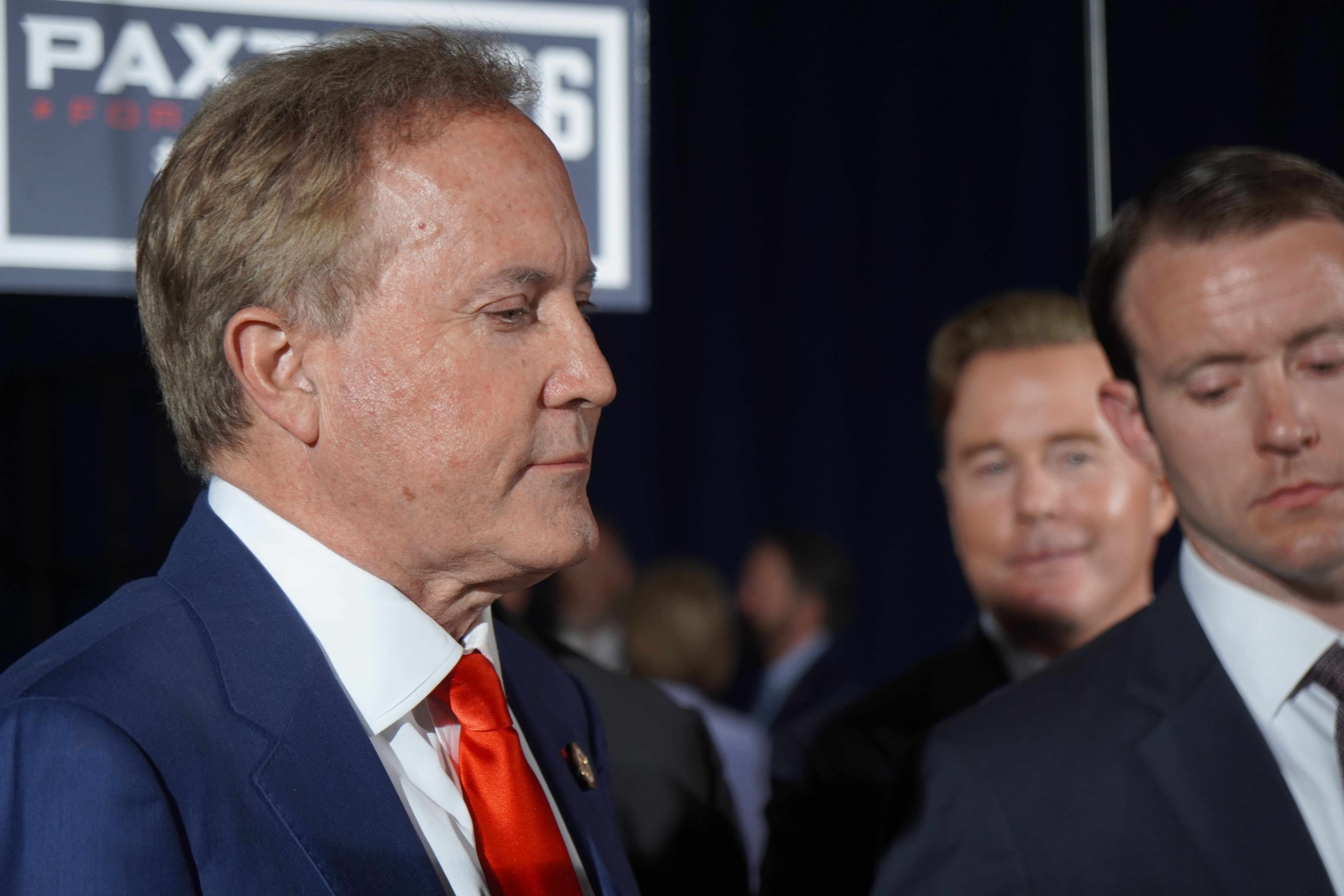 Texas Attorney General Ken Paxton at a rally for his Republican Senate primary run in Dallas on March 3, 2026. (Nathan Worcester/The Epoch Times)
Gregg Keller, spokesman for pro-Paxton Super PAC Lone Star Liberty, told The Epoch Times that the attorney general will be “a big presence” in Dallas. He is among the candidates slated to address the gathering.
Federal elections records show that Paxton is gaining ground financially, including through support from Elon Musk’s America PAC.
Division and Unity
Spencer said a Paxton loss, if it occurs, would be due in part to attacks on the attorney general from Cornyn and his allies during the primary.
The dynamics and outcome of that primary, in which Trump ultimately endorsed Paxton after flirting with both Republican frontrunners, have reverberated through Texas and the country as a whole. The contest has also triggered new conflicts.
Cornyn, previously an ally of the president, has morphed into an occasional obstacle to the Trump agenda in the Senate.
In a highly unusual move, a former member of Cornyn’s campaign staff, Jacob Smith, jumped ship to work for Paxton’s Democratic opponent.
Texas Republican Nichols said that while he backed Cornyn during the primary, “we are way beyond that.”
“My fear is that hard feelings make heavy feet that don’t walk to the polls,” he said, stressing the need for Texas Republicans to unify behind Paxton.
McNutt, of Texas Gun Rights, said he has heard frustrations from what he described as grassroots conservatives directed at those currently in Congress, saying they have fallen short of what he sees as a pro-gun rights Trump administration.
The activist described a gap between the grassroots and the party elite on firearms, along with several other issues—in particular, the proliferation of Flock Safety cameras and the spread of data centers.
While multiple Republicans in competitive races have leveled criticisms at data centers, Trump defended them in a recent Truth Social post, writing, “The only reason that communities throughout the U.S.A. should not want data centers is if they want to end up being backwards and poor.”
The convention’s programming includes talks on trade, the border, school choice, reindustrialization, chronic disease, and many other issues central to the second Trump administration.
For now, firearm rights, public surveillance, and data centers seem to be missing.
So too with another defining feature of the second Trump administration—the ongoing Iran War, launched alongside Israel earlier this year.
While the schedule includes many speeches from administration officials and Congressional leaders, cabinet secretaries and committee chairmen charged with foreign policy and defense—including Secretary of State Marco Rubio and Secretary of War Pete Hegseth—are missing from the program.
Huizenga told The Epoch Times he was not sure whether convention speakers would make the case for the fight against Iran. He said he hopes to hear an explanation of what he calls deficient enforcement of sanctions against Iran under President Joe Biden—part of the conditions that some believe fueled the regime ahead of the conflict.
 People spend time at a beach as commercial vessels are anchored in the Strait of Hormuz off Bandar Abbas, Iran, on Aug. 5, 2026. (Amirhosein Khorgooi/ISNA via AP)
Trump and others in the administration have argued that the war was needed to prevent Iran from obtaining a nuclear weapon and potentially striking the United States. Critics of the conflict disagree, contending that the campaign is sliding into a “forever war” in order to address a risk that is more significant to Israel than the United States.
FORUM, launched earlier this year through in-person events in Washington, is one venue for Republicans in the Trump era to talk through their disagreements. Yet the Iran war will not be among its debate topics in Texas, with Peterson saying that the conflict is a significant enough issue on the right that it “deserves its own event.”
“It’s a central theme going into the midterms,” he said, adding that he also hopes to stage a debate on a related topic that has triggered differences of opinion among Republicans: Israel.
“There’s a way to actually have discussions without this kind of extreme falling into camps,” he said.
As Republicans get ready to gather in Texas, the convention’s likely impact on voters—including those beyond the Make America Great Again (MAGA) movement—remains an open question.
Publicist Grayce McCormick, who has represented nonpartisan voting and elections organizations, warned that an event aimed at building enthusiasm in the base might not resonate with other important voting blocs.
“It may energize die-hard Trump supporters, but the bigger challenge is reaching independents, uncertain voters, and especially people who voted for Trump or once supported him but are reconsidering based on what they’ve experienced over the past two years,” she said of Dallas.
Peterson had a more optimistic view of the upcoming convention.
“I think we’re in a situation where people need to be reminded of the actual divide in the country, which is much deeper, of course, than the divide on the right,” he said.
 Friends Read Free
Copy
Facebook
Tweet
Friends Read Free
Copy
Facebook
Tweet