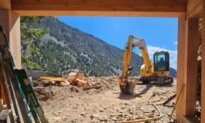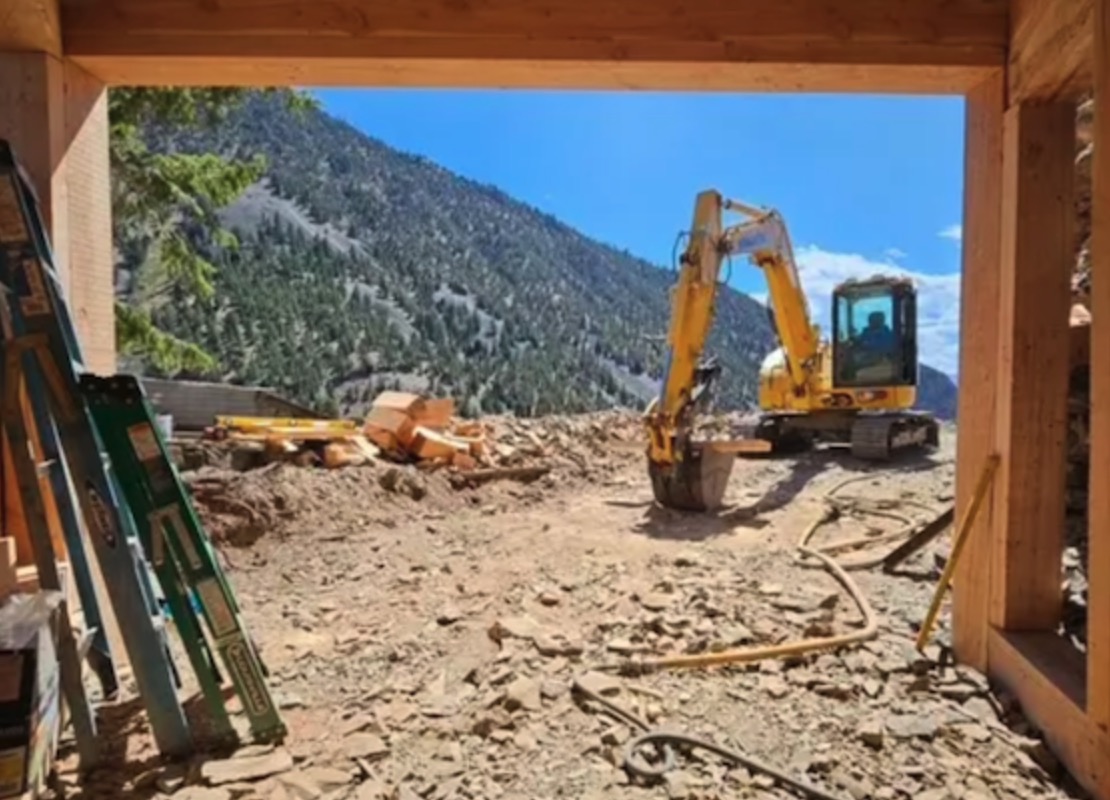

A Canada-based corporation is rehabilitating a mine in east-central Idaho that has been shuttered for nearly 70 years to extract the first domestically produced tungsten in the United States in more than a decade.
American Tungsten Corp. CEO Ali Haji told investors, researchers, and mining executives during a 6ix.com presentation on Aug. 21 that the company’s IMA Mine Project could be fully operational within 18 months once it secures $20 million in capital to proceed beyond the $7 million it has spent in preliminary site upgrades.
Tungsten is among the hardest metals. It is classified by the Defense Department (DOD) as a critical mineral, vital for the production of tank armor, artillery, bullets, hypersonic weapons, submarine hulls, semiconductors, circuit boards, and many other products and applications.
The United States has been totally reliant on imported tungsten since 2015, when China, the world’s dominant producer of processed tungsten, flooded the global market, lowering prices to a point at which domestic mining and milling could not compete.
Since 2023, China has imposed restrictions on strategic materials exported to the United States, including gallium, germanium, antimony, graphite, and tungsten.
To reduce reliance on imports, especially from foreign adversaries, President Donald Trump issued a March executive order requiring federal agencies to help expedite projects by streamlining permitting, opening more public lands for mining, and including critical mineral development under the regulatory auspices of the Defense Production Act.
In the past month, the Energy Department announced that it would shift $1 billion from programs established under 2021’s Bipartisan Infrastructure Law and 2022’s Inflation Reduction Act into funding critical mineral projects. According to Reuters, the Trump administration is also considering reallocating at least $2 billion from the 2022 CHIPS and Science Act into critical mineral mining and processing.
In March, the DOD accepted American Tungsten’s application to join the Defense Industrial Base Consortium, which aims to expand and diversify the domestic defense industrial base, enable private sector businesses to partner with federal agencies, and provide “non-dilutive financing”—early-stage startup capital without equity collateral—for contractors in key industries.
With tungsten prices now at a 12-year high, several North American projects are being developed, including Fireweed Metals Corp.’s mine at Macmillan Pass in Yukon Territory, Canada—boosted by $15.8 million from the United States and $12.9 million from the Canadian government—and a plan from London-based Guardian Metal Resources to mine tungsten at Pilot Mountain in Nevada.
$20 Million Pitch
Haji said American Tungsten, headquartered in Vancouver, Canada, is seeking $11.5 million to $17.5 million in consortium funding from five federal agencies, including the DOD and the Export-Import Bank of the United States, in raising the $20 million in startup costs “to bring 500 tons per day online for 340 days a year” within the next 18 months.
The IMA Mine has several advantages that will bring it into production faster than other North American tungsten projects, he said, noting that its ore has the second-highest grade of any known tungsten deposit in North America.
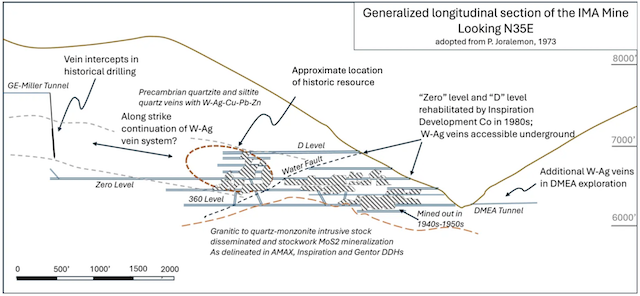
As a preexisting tungsten mine from 1881 to 1957, the 396-acre operation in the Patterson Creek Valley in the Lemhi Mountains is on private land, has existing road grids, is less than 15 miles from a rail line, and comes with more than 20 “patented” claims, meaning that the federal government has passed the title to the subsurface mineral rights to the landowner.
“What that means is we do not require federal permits to come online,” Haji said. “We’ve got paved roads up to the gate of our assets. We have low-cost power supply with a grid on site. We have water rights through Patterson Creek Canyon, and we also have a very mining-oriented local labor force.”
The IMA Mine will also produce silver “to the tune of about 2 pounds per ton” and molybdenum, also classified as a critical mineral essential in fabricating high-strength steels and superalloys for aerospace, industrial machinery, and defense, he said.
“Silver and ‘molly’ would be a significant offset for our operating expenditure once we are in production,” Haji said. “The goal for us is to start with a 500-tons-per-day volume [of tungsten ore]. So nothing significant. But that 500 tons per day, with the grade that we have, will ensure that the United States has 8 percent of its tungsten requirement.”
There is more tungsten and, likely, mineable quantities of other critical minerals in the 2,000 acres surrounding the IMA Mine, according to Haji, particularly on the south side of the valley where surveys have detected untapped deposits.
He said American Tungsten will begin exploratory drilling in September “to prove out the highly probable resource” documented by previous assessments and “to increase the resource potential” to a scale that would allow American Tungsten to increase its production profile and increase the life of mine.
Haji said the company will present investors and federal agencies with an “updated resource definition” in November.
“I’m excited to put out that updated resource statement,” he said. “I’m really hoping on getting some sort of government agency support here that validates what we’re trying to do.”
The tungsten market is now viable for profitable production. That is spurring interest and investment, yet many fear that China could again boost production to crash prices, according to Haji.
“[But this time,] the support from the administration, as well as the infrastructure being planned in North America, will continue to ensure that there is a market for it here and we plan on producing it,” he said. “The Department of Defense, for instance, would more than likely not want Chinese tungsten in a nuclear submarine.”
 Friends Read Free
Copy
Facebook
Tweet
Friends Read Free
Copy
Facebook
Tweet