PHOENIX—From ashes to ashes, thousands of veterans’ remains rest in cremation urns, locked away unclaimed in funeral homes for years, even decades.
Mark Wells, a veteran and the Arizona state coordinator for the Missing In America Project, has become all too familiar with these heartbreaking accounts.
He hears about veterans who lost contact with their families or lost their way, ending up alone when they passed.
In one case, a veteran’s ashes were found in a dumpster.
“There’s nobody to claim them. No family members. No one to come forward,” Wells said.
“Here in Arizona, we did have one person who was identified as a member of the Spanish-American War.”
Wells believes that for a veteran, dying alone is like crossing into the realm of the forgotten.
It stands as a stark reminder of the unpredictable road veterans travel after military service and the fragile bonds between them and their families.
After serving their country, they endure a final indignity as their ashes sit abandoned in ceramic urns, gathering dust on storage shelves in funeral homes, morgues, and mortuaries across the country.
“I’ve been with the Missing In America Project for about 13 years now. It just seems like there’s more and more,” Wells told The Epoch Times.
Since January 2007, volunteers from the Missing In America Project, a national nonprofit, have traveled coast to coast to bring these forgotten and abandoned veterans home.
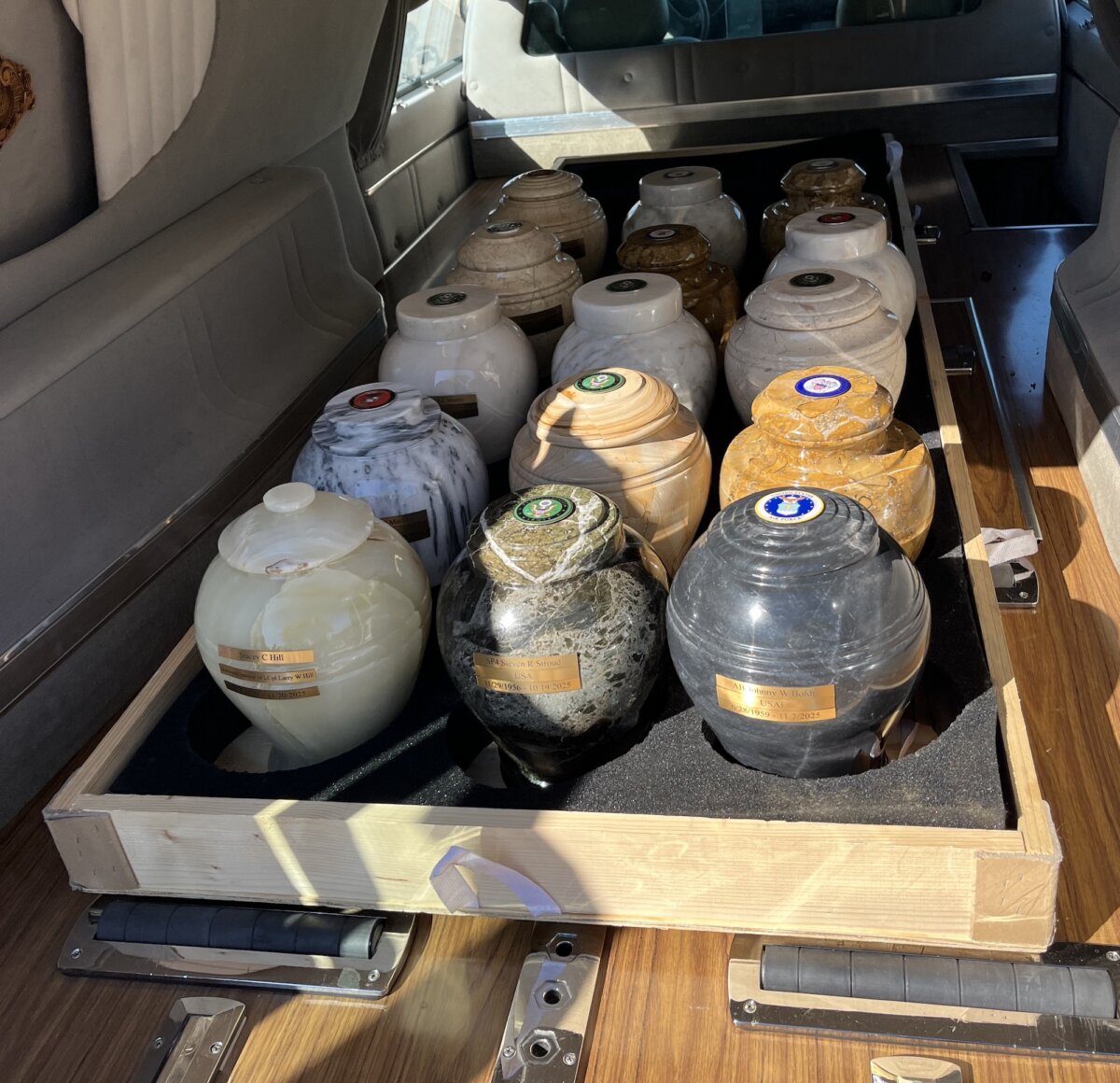
Over nearly two decades, volunteers visited 2,957 funeral homes, located the unclaimed ashes of 39,713 veterans, identified 8,177, and interred 8,038.
“We are their family,” said Patricia Palermo, Northern Arizona assistant state coordinator for the Missing In America Project.
“It’s a hard, daunting world that you step into when you go to inventory unclaimed remains.”
Dust to Dust
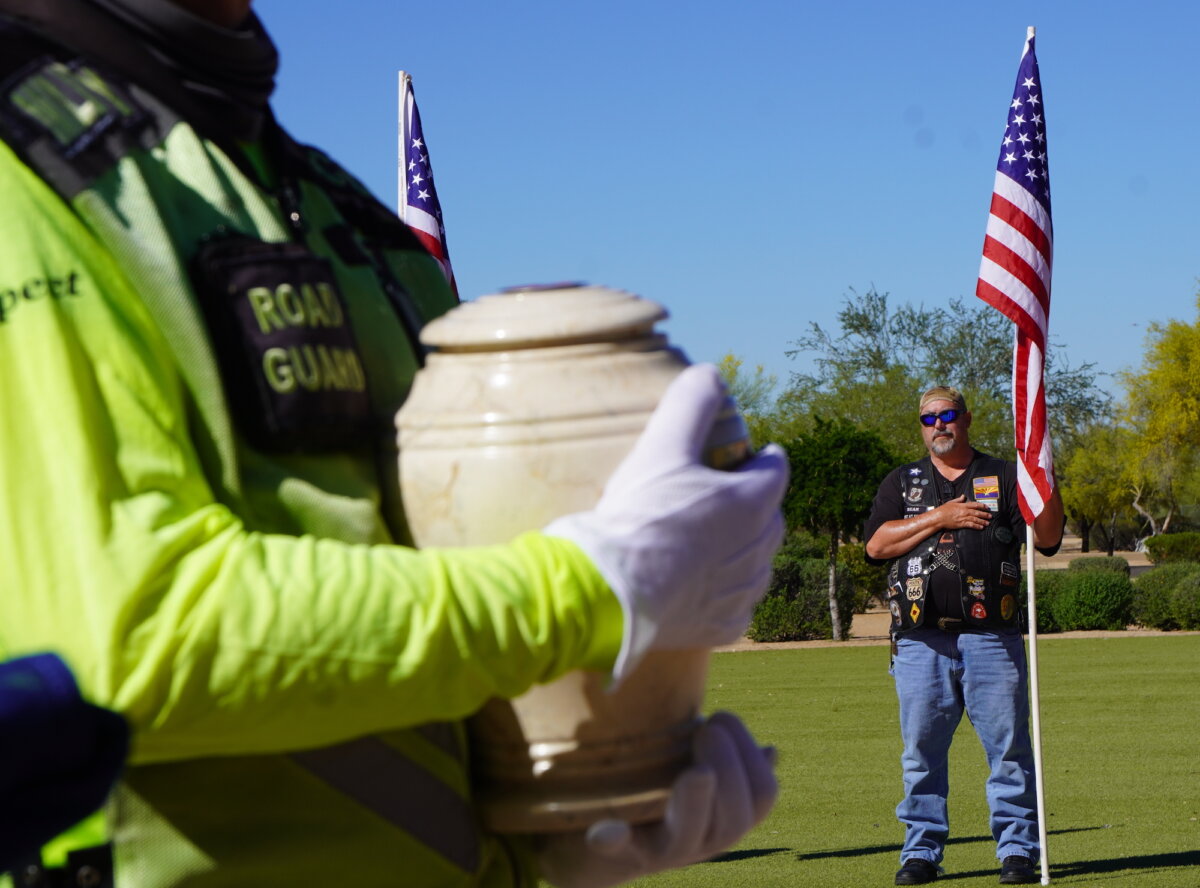
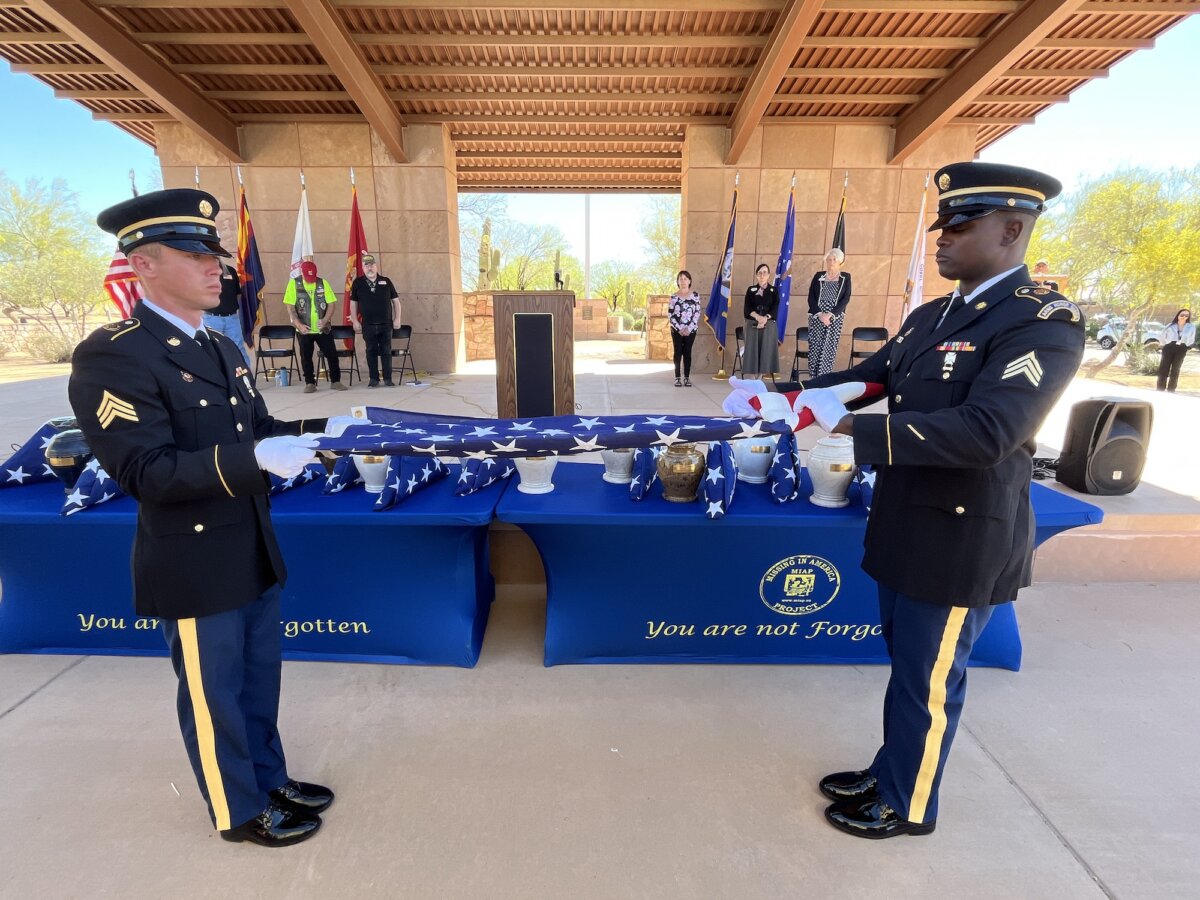
On March 18, 14 veterans and one spouse received full military honors at an interment ceremony held at the National Memorial Cemetery of Arizona in Phoenix.
Like thousands of other veterans, their ashes languished for years before they were identified and, in one case, reunited with a loved one.
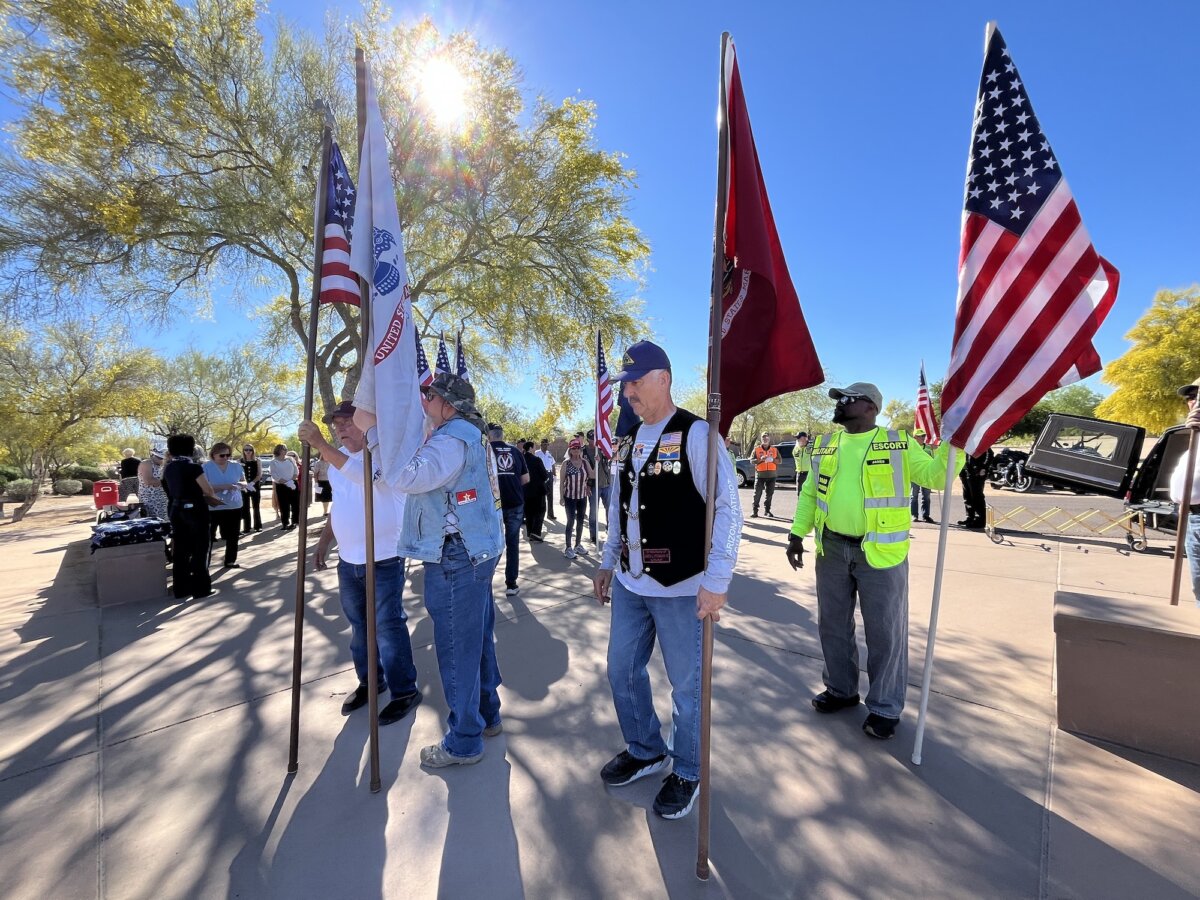
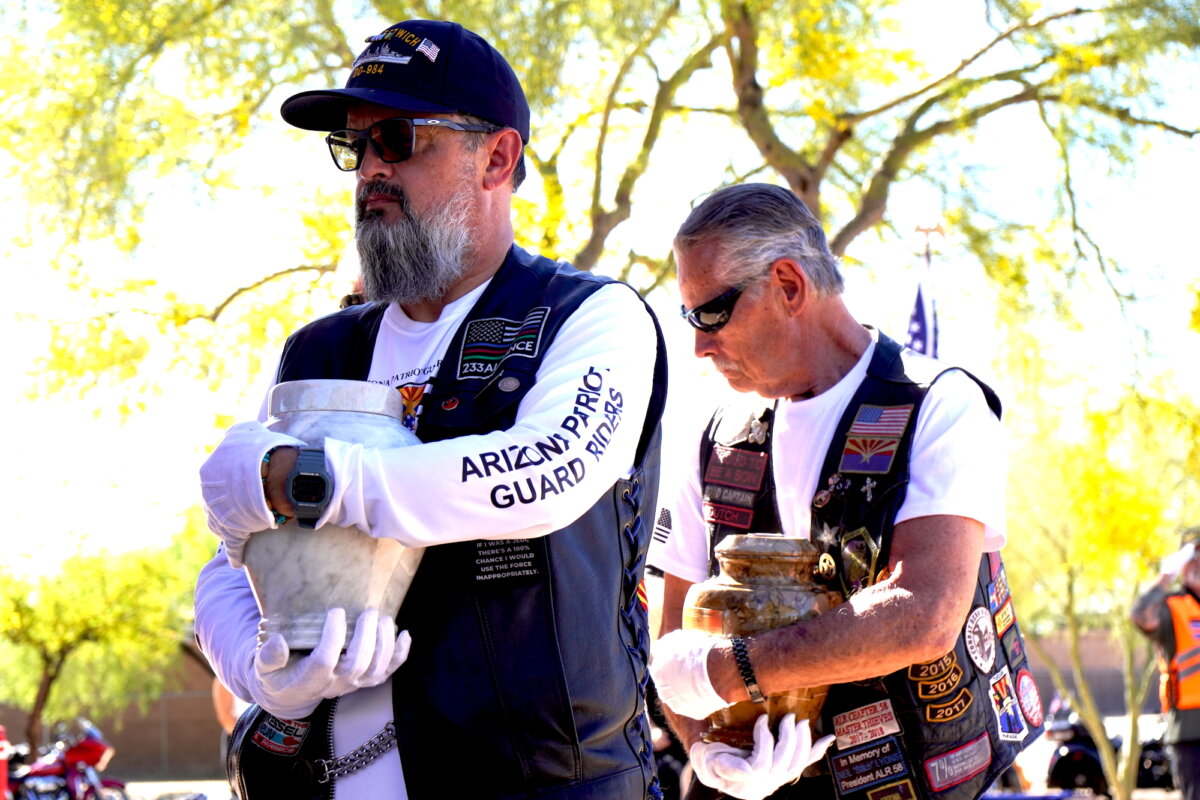
Under a burning Arizona sky, the hearse moved forward carrying the remains, flanked by motorcycle riders in leather vests and medals, their banners listing names such as the Arizona Patriot Guard Riders and American Legion Riders.
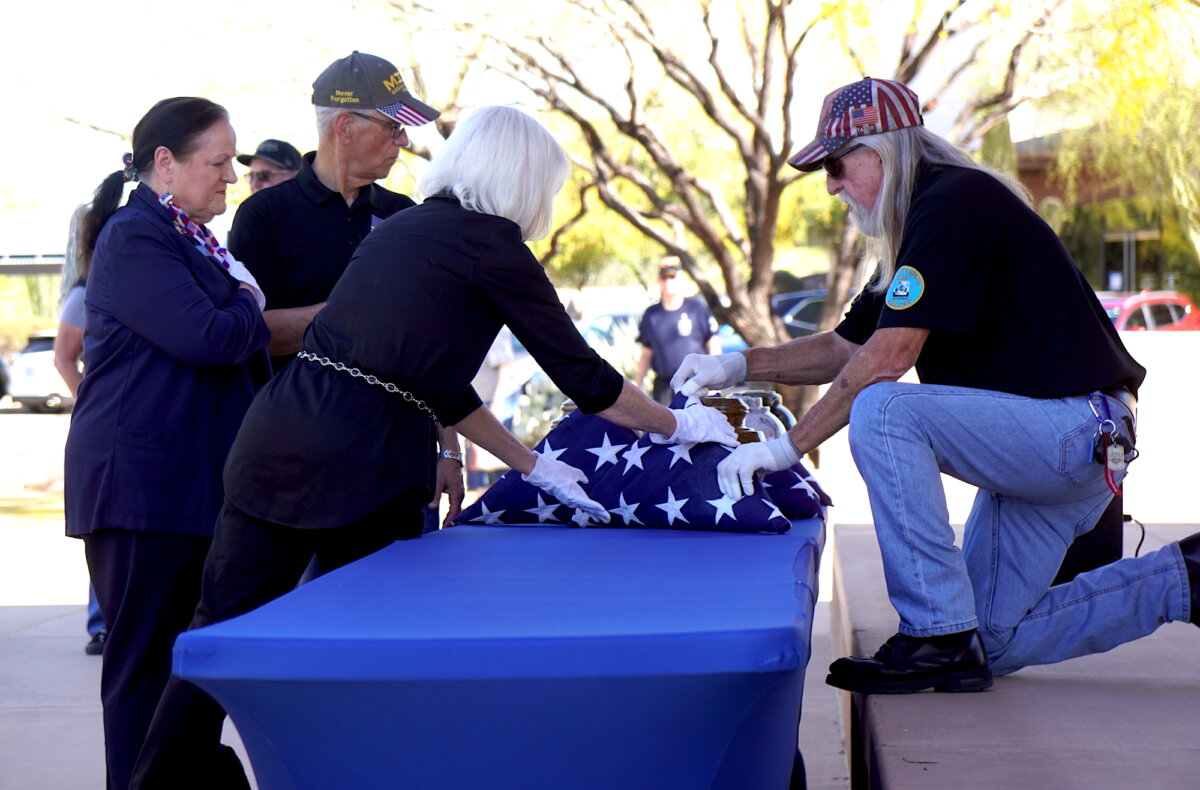
Prayers were read, and solemn proclamations followed. Rifles fired in salute, and a bugler from the Arizona Army National Guard played Taps before the urns were laid to rest in the cemetery columbarium.
Palermo said it was the least these volunteers could do for the veterans and the most loving final act they could offer.
“They will be placed in a field of honor where their graves will be taken care of,” Palermo told those gathered.
“The impact of our presence today is profound and sends the world a message that these veterans’ lives mattered to this nation.”
Every other month, as unclaimed remains are discovered, a service is held at the cemetery with full military honors, according to Kitty-Sue Schlink, Arizona state Daughters of the American Revolution vice-chairperson for the Missing In America Project.
“Everybody here is a volunteer; they believe in this,” Schlink told The Epoch Times.
“I think that we’re humbled [as volunteers]. I think that is the best way to say it. This is the little thing that we can do, whereas some of these individuals sacrificed all.”
Darkness and Light
Guest speaker Bill “Wildhorse” Wooster, a Vietnam veteran and state captain of the Patriot Guard Riders, asked everyone to close their eyes and imagine they were ashes in an urn.
“I’m going to describe the place where you’re resting,” Wooster said. “It’s dark. Third shelf up, close to the right side corner. And about every other week, just for a few seconds, a door opens.”
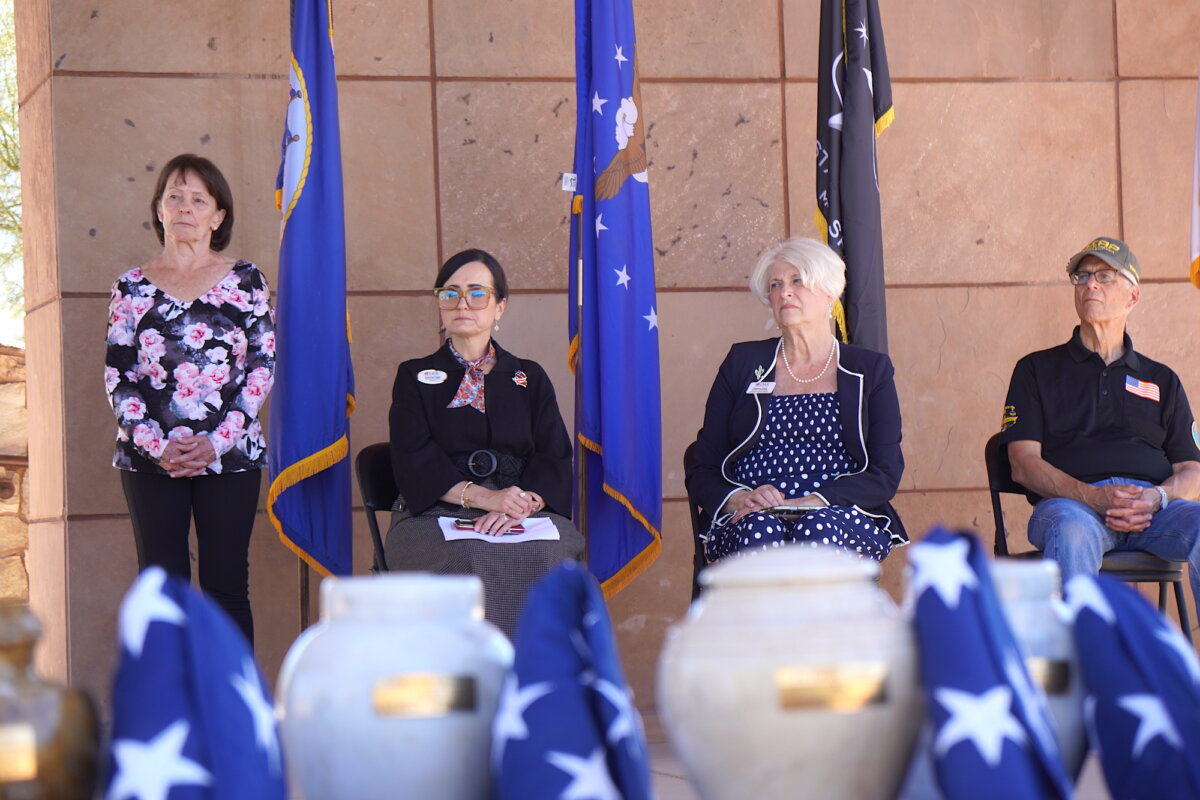
Sunlight streams in as another unclaimed veteran is set beside you, he said.
On the fourth shelf, left side, the door shuts. You stay here for what feels like forever, alone in a closet at the back of the room.
“You see, in that urn, you are one of the estimated 8,000-plus that are hidden, forgotten, stuck away somewhere,” Wooster said.
He said that just as no soldier should be left behind on the battlefield or in a lonely mortuary, we should also remember them in everyday life after they have passed away.
“So we are here for them—all of them—today, tomorrow, and forever,” Wooster said.
Walker Posey is the spokesperson for the National Funeral Directors Association and leads Posey Funeral Directors in North Augusta, South Carolina. He has worked with the Missing In America Project and has spoken highly of its volunteers.
He said funeral homes make every effort to find the next of kin, but many cremated remains are never claimed.
In some cases, there is no next of kin, or the veteran lost touch with loved ones a long time ago, often because of difficult circumstances.
These situations reveal a deeper social problem: Families are drifting apart, their bonds fraying. Arguments go unresolved, wounds stay open, and reconciliation may come too late, he said.
“I’d say a really big change is in the way family relationships are structured. I’m surprised how many folks just don’t know their family,” Posey said.
Each state has its own rules about storage and legal custody of remains, sometimes making it more complex to reunite with next of kin, he said.
Death and the Law
In many states, if no one claims a person after a certain amount of time, the coroner can decide what happens to the body, Posey said.
“There are pauper cemeteries and things like that they can go to,” he said.
“But seeing a veteran go unclaimed is very sad because at some point, they gave their lives to protect us and our freedom. They deserve to be honored.”
Sometimes, a veteran’s remains are not claimed because the funeral service costs too much, Posey said.
He said that when a funeral costs $10,000 to $30,000, families may not be able to say goodbye to their loved one as they want.
In some cases, they simply walk away.
“I personally feel like we have a social responsibility to take care of our neighbors and friends,” Posey said.
“There’s a variety of reasons that remains may go unclaimed, not the least of which is complicated grief associated with death or tragic death. Maybe they have no relatives. There are a number of things that come into play.”
He said locating next of kin is a top priority in funeral homes.
“It’s probably the most important thing we do,” Posey said. “So many things that we do in terms of disposition of remains can’t really happen unless there is a legal next of kin.”
He said he has seen situations where children have not seen their deceased relative in 25 years or where estranged spouses are required to sign cremation papers but may not do so.
“Even when there’s disagreement or discord, our job is to ethically and fairly help everyone understand the implications of decisions and make choices based on accurate information so they can know what needs to happen,” Posey said.
Wells said that thanks to the generosity of funeral homes, volunteers from the 11 regions of the Missing In America Project can connect unclaimed veterans’ remains with their families or restore their identities for proper burial.
“We work with several county fiduciaries [in Arizona]. Pima County is one of them. We visit funeral homes, introduce ourselves, just let them know,” Wells said.
“What we’re trying to do is prevent [unclaimed veterans] from going to a pauper’s grave.”
In the Living Years
The organization uses family genealogical records and other methods to find living relatives or, at the very least, match a name to the veteran, Palermo said.
She recalled a funeral service the organization held in 2015 for a veteran who had been estranged from his daughter since she was 10.
The tension between them lasted even after she got married and had children of her own.
During the service, the woman broke down with grief, Palermo said.
But sometimes, people just “don’t care,” she said.
Regardless of their life paths, the Missing In America Project works to ensure that every veteran receives a final ceremony of honor and closure, Palermo said.
“It’s profound,” she said. “There are no words for the rewards that come out of that. No words whatsoever.”
 Friends Read Free
Copy
Facebook
Tweet
Friends Read Free
Copy
Facebook
Tweet