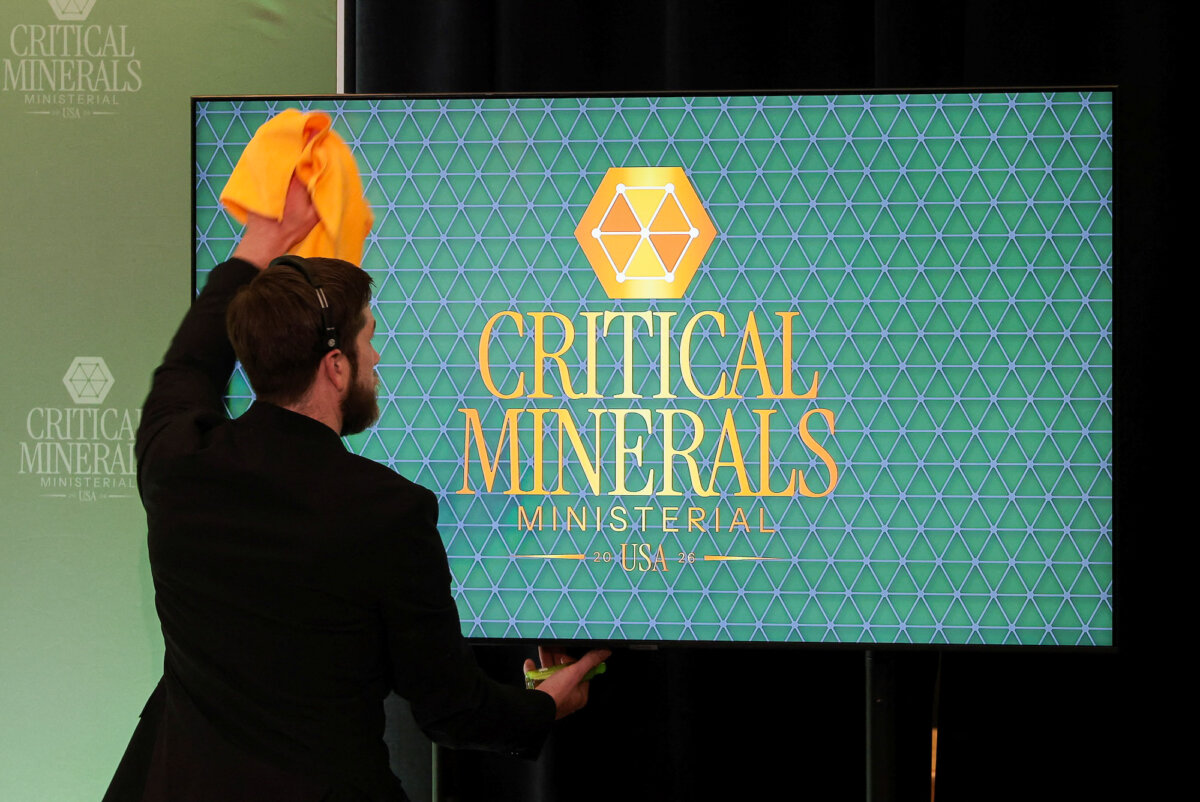

The Trump administration this week is set to press its most ambitious effort yet to rebuild global supply chains for critical minerals outside of China, as senior U.S. officials host foreign ministers and industry leaders in Washington for a new international summit focused on securing critical resources that bolster national security.
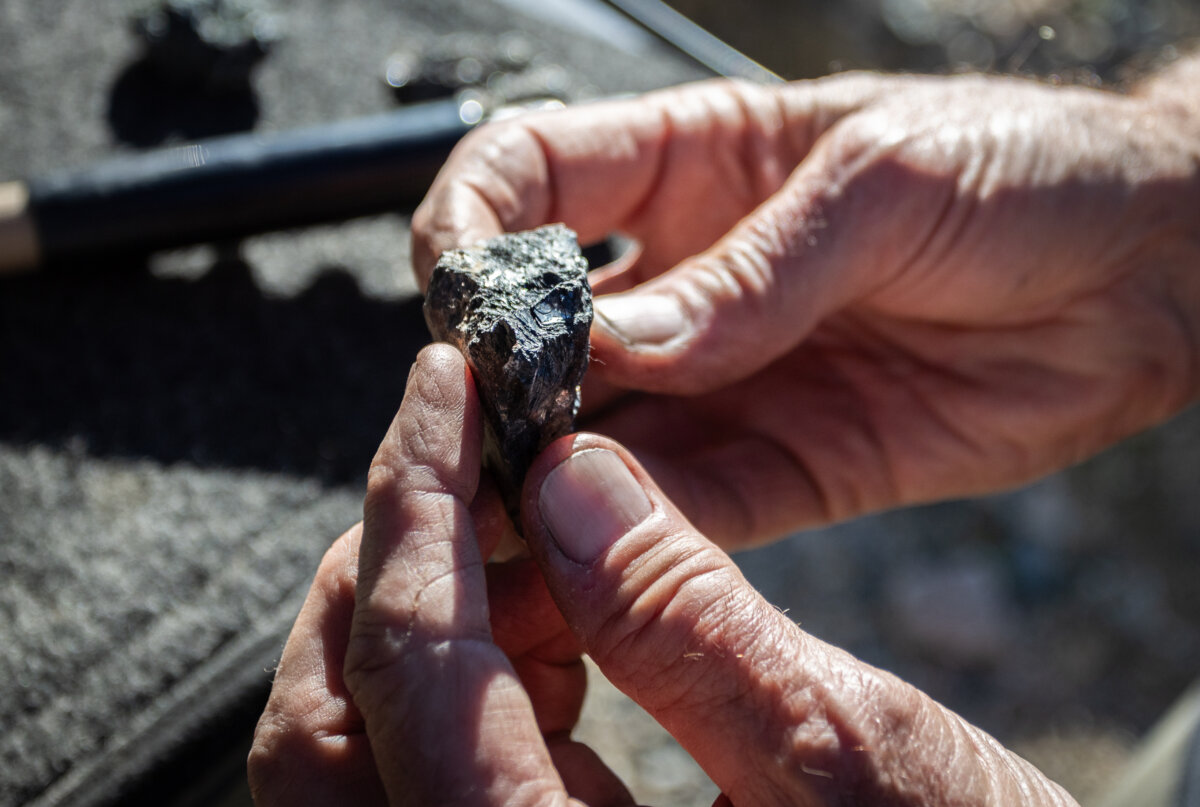
The initiative comes as the United States seeks to reduce its dependence on China for rare earths and other critical minerals used in everything from jet engines and precision weapons to smartphones, electric vehicles, and data storage systems.
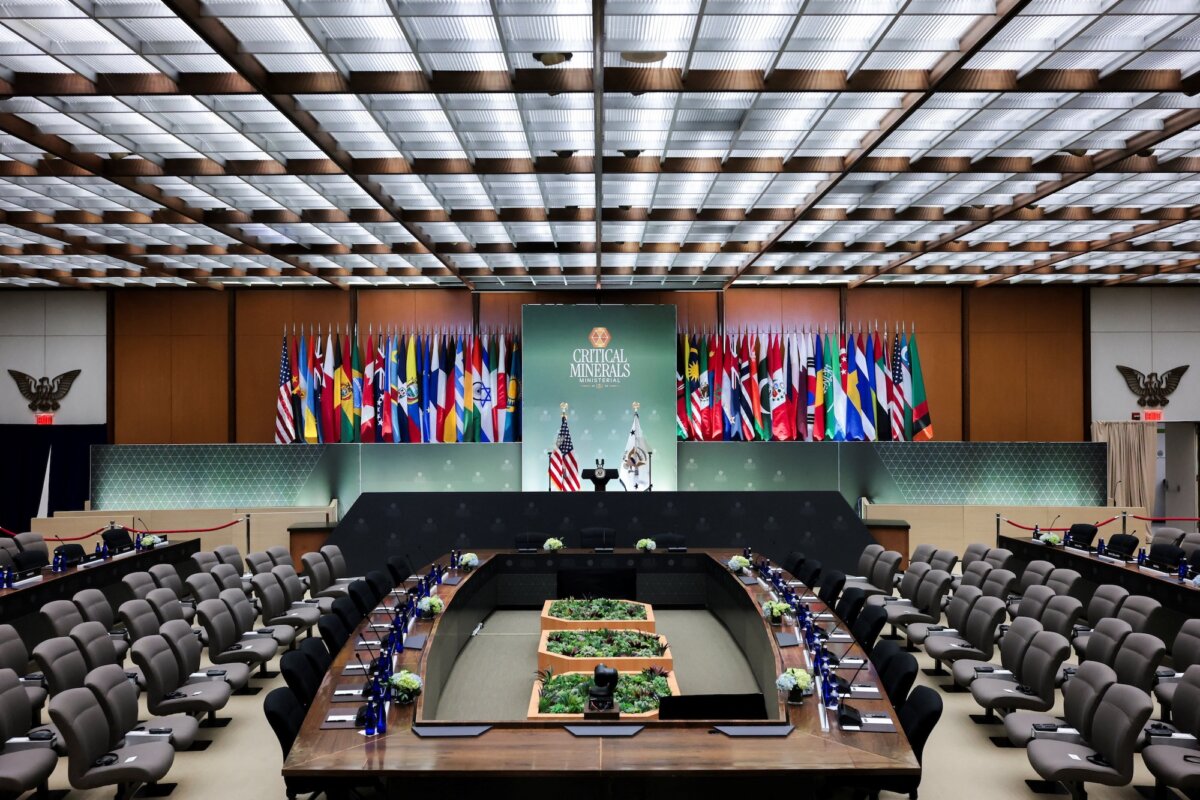
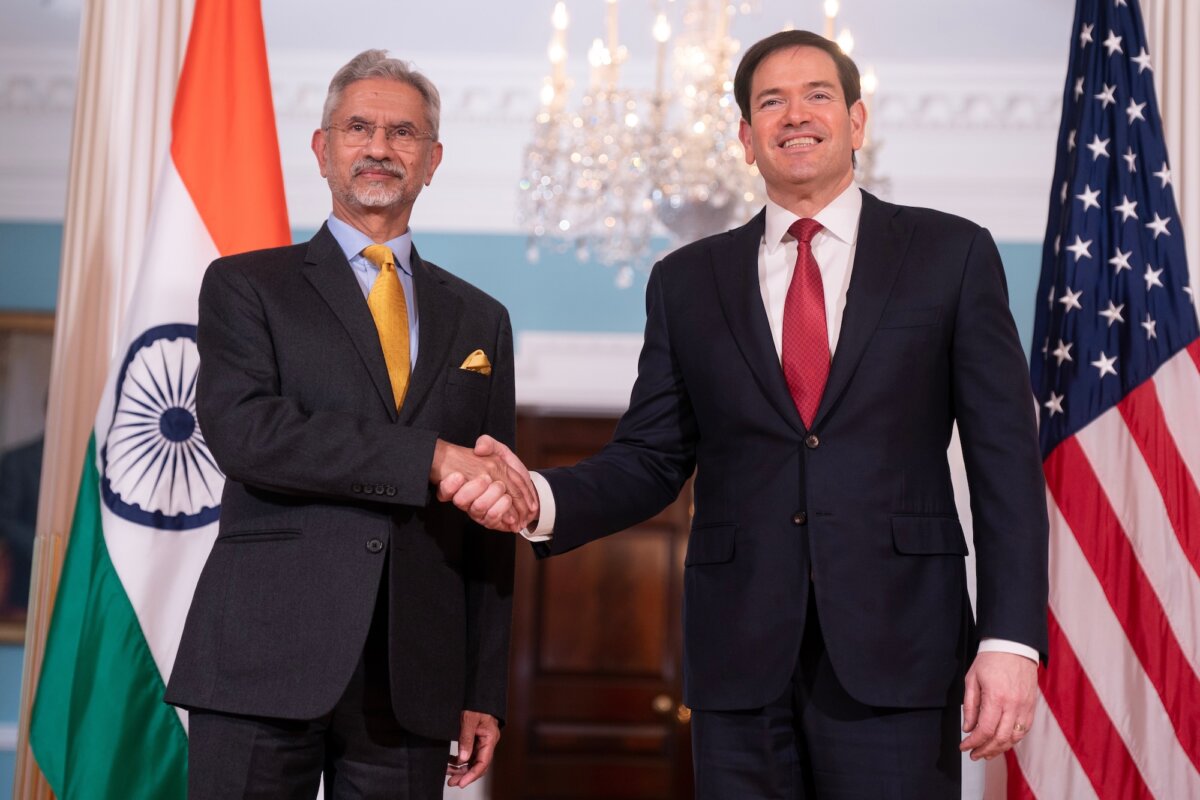
U.S. Secretary of State Marco Rubio will host the inaugural Critical Minerals Ministerial at the State Department on Feb. 4, welcoming delegations from more than 50 countries across Europe, Asia, Africa, and the Indo-Pacific, a State Department spokesperson said in a Feb. 2 statement. U.S. Vice President JD Vance is scheduled to deliver opening remarks, with additional remarks from senior White House and State Department officials overseeing global supply chains.
The meeting follows closely on U.S. President Donald Trump’s announcement this week of “Project Vault,” a new U.S.-backed strategic stockpile of critical minerals designed to shield American manufacturers from supply disruptions tied to geopolitical shocks or export controls.
Project Vault and the Stockpile Strategy
Project Vault will be seeded with $1.67 in private capital and a $10 billion loan from the U.S. Export-Import Bank, making it the largest financing package in the bank’s history. The initiative allows participating companies to secure long-term access to critical minerals at set prices in exchange for upfront payments, ongoing purchasing commitments, and stockpile maintenance fees.
Administration officials say the model is intended to protect U.S. industry without placing the burden on taxpayers, while also creating price stability for producers outside China.
Trump said the stockpile was designed to prevent a repeat of last year’s disruptions, when Beijing imposed licensing and approval requirements on exports of rare earths and other minerals mined or processed in China.
“We don’t want to ever go through what we went through a year ago,” Trump said when announcing the initiative during a Feb. 2 news briefing in the Oval Office.
A report from the House Select Committee on the Chinese Communist Party last year said China-based processors refine 85 to 90 percent of rare earth minerals, produce 90 percent of magnets and 80 percent of batteries, and control at least 75 percent of the global market for at least 30 of 54 commodities deemed “essential to national security” by the U.S. Geological Survey (USGS) in its 2025 Critical Mineral List.
Although Beijing agreed in October to pause its most restrictive licensing regime for one year following talks with Washington, tighter controls remain in place than before Trump returned to office.
Building a Minerals Club With Allies
Trump administration officials have said the Feb. 4 ministerial will serve as a platform to formalize deeper cooperation with allies and partners on securing supply chains of critical minerals—including mining, processing, logistics, and pricing.
U.S. Interior Secretary Doug Burgum said on Feb. 3 that about 30 countries have expressed interest in joining what he described as a club of trusted partners for tariff-free trade in critical minerals, coupled with agreed-upon price floors to counter what U.S. officials view as Chinese market manipulation.
Japan, Australia, and South Korea have already joined, Burgum said, with announcements expected this week involving as many as 11 additional countries. Up to 20 more have signaled strong interest, according to the interior secretary.
“Typically the United States, we’re free market folks, we don’t like messing with markets,” Burgum said this week at the Center for Strategic and International Studies conference. “But if you have someone who is dominant, who can flood the market with particular material, they have the ability to essentially destroy the economic value of a company or a country’s production.”
Officials in the United States and other countries have said that guaranteed minimum prices would encourage long-term private investment in mining and refining projects outside China, helping rebuild capacity that was hollowed out over decades by lower-priced Chinese supply.
Industry, Security Stakes
The strategic push has drawn strong backing from U.S. manufacturers, including General Motors, Boeing, Google, Corning, and Stellantis, which rely heavily on stable access to minerals such as lithium, cobalt, nickel, graphite, and rare earth elements.
The Pentagon has also invested nearly $5 billion over the past year to secure access to critical minerals for defense applications, complementing its existing military stockpile. Lawmakers from both parties have endorsed the administration’s approach, with some proposing new agencies and funding mechanisms to further expand domestic production.
“It’s a clear sign that there is bipartisan support for securing a robust domestic supply of critical minerals that both reduces our reliance on China and stabilizes the market,” Sens. Jeanne Shaheen (D-N.H.) and Todd Young (R-Ind.) said in a Feb.3 joint statement.
The stockpile and allied pricing framework could help establish a more durable global market that excludes China’s ability to undercut competitors through state subsidies, according to Wade Senti, president of U.S. permanent magnet company AML.
Some experts caution that building supply resilience will take time. David Abraham, a longtime rare-earths analyst and author of “The Elements of Power,” said stockpiling can cushion future shocks but does not solve near-term scarcity while Chinese restrictions remain in place.
Catherine Yang, John Haughey, and The Associated Press contributed to this report.
 Friends Read Free
Copy
Facebook
Tweet
Friends Read Free
Copy
Facebook
Tweet