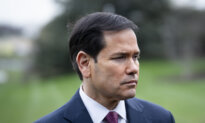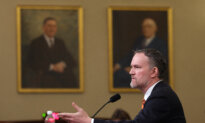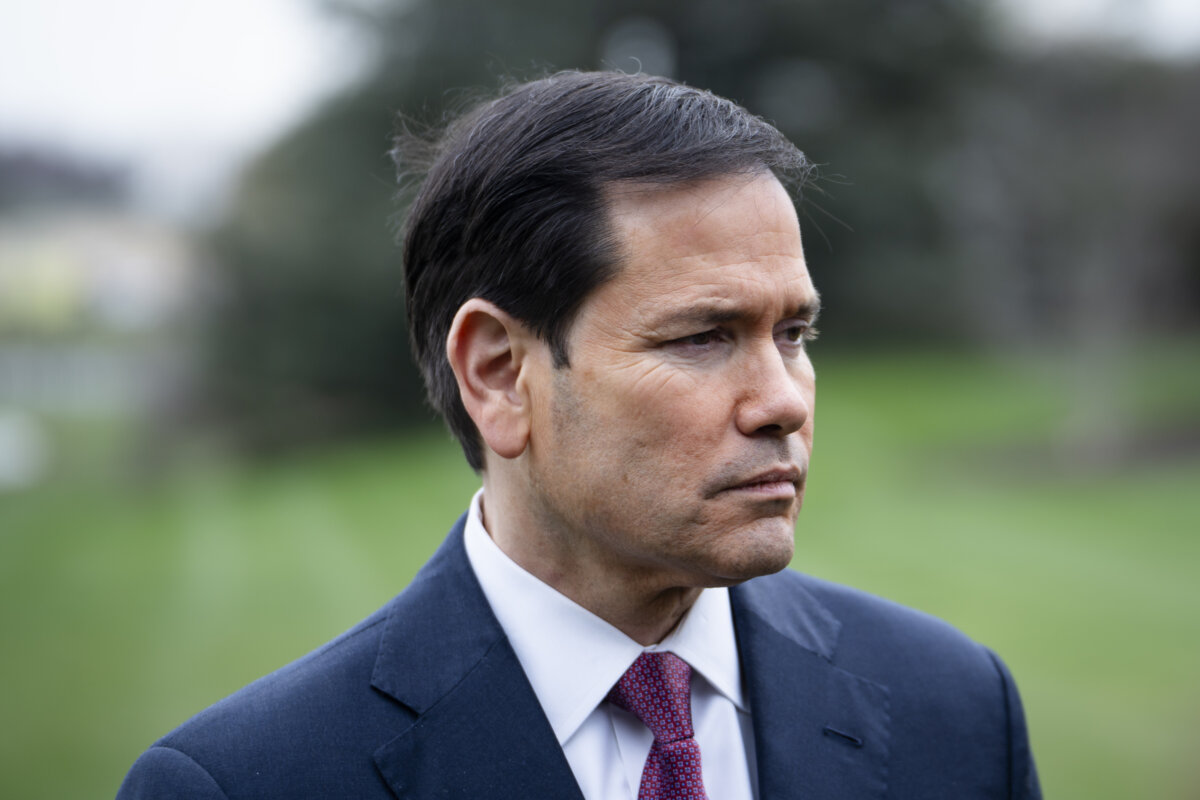

Secretary of State Marco Rubio took the witness stand on March 24 in the federal trial of former U.S. Rep. David Rivera (R-Fla.), a longtime friend of his who is accused of secretly lobbying on behalf of Venezuela’s government.
While Rubio has not been accused of wrongdoing, prosecutors argue that Rivera viewed him as a key way to gain access to the White House—underscoring how personal political relationships may have been leveraged in an alleged foreign influence campaign.
Prosecutors allege that Rivera acted as an unregistered foreign agent for former Venezuelan leader Nicolás Maduro, using his Republican political connections to push the White House toward a more lenient stance on the country’s socialist regime.
At the center of the case is an alleged $50 million lobbying deal. According to prosecutors, the contract was arranged through Venezuelan official Delcy Rodríguez and tied to the state oil company PDVSA. Rivera is also accused of working with U.S. Rep. Pete Sessions (R-Texas) and a convicted drug cartel associate to help arrange meetings with U.S. officials and ExxonMobil. Sessions has not been charged.
Rubio’s appearance is historically notable—marking the first time a sitting Cabinet member has testified in a criminal trial since 1983.
Testifying in a heavily secured Miami courtroom, Rubio described a long and close relationship with Rivera, dating back to their time together in the Florida Legislature in the early 2000s. Their friendship continued in Washington, where Rubio served in the Senate and Rivera in the House, and extended to shared social circles and family gatherings.
Rubio recounted a pivotal moment in July 2017, when Rivera urgently requested a meeting to discuss Venezuela. The following morning, Rivera traveled to Washington and met Rubio at his home, where he claimed to be working with Venezuelan media figure Raúl Gorrín on a plan to persuade Maduro to step down.
Rubio told the court he was doubtful of the proposal, describing the Maduro government as filled with “double-dealers” frequently offering questionable schemes. Still, he said he was willing to listen.
“But if there was even a 1 percent chance it was real, and I had a role in alerting the White House, I was open to it,” Rubio testified.
Within days, Rubio used talking points provided by Rivera to deliver a Senate floor speech signaling that the United States would not retaliate against Venezuelan officials who helped remove Maduro from power.
“He gave me insight into the kind of language regime insiders would need to hear,” Rubio said. “No vengeance, no retribution.”
On Jan. 3, 2026, U.S. military forces captured Maduro and brought him and his wife to the United States to stand trial for alleged narcoterrorism and other charges.
Rivera was arrested in 2022 and charged with money laundering and failing to register as a foreign agent. Prosecutors say he used encrypted communications to conceal his activities, including participation in a chat group dubbed “MIA.” Within the group, members allegedly used coded language—referring to Maduro as “the bus driver,” Sessions as “Sombrero,” and money as “melons.”
Rivera has denied all allegations. His legal team argues that his firm was hired by a U.S.-based subsidiary of Venezuela’s oil company, not directly by PDVSA, and therefore was not required to register under foreign agent laws.
His attorneys also contend that his work focused on helping the Venezuelan-owned company Citgo operate within the U.S. energy sector, separate from any political efforts. They maintain that his broader goal was to support a transition to leadership in Venezuela more favorable to the United States.
However, a related civil lawsuit paints a different picture, alleging that Rivera performed little of the contracted work and instead used the agreement as a cover for illegal lobbying. Of the roughly $20 million he received, $3.75 million went toward maintaining Gorrín’s luxury yacht, prosecutors say.
The Associated Press contributed to this report.
 Friends Read Free
Copy
Facebook
Tweet
Friends Read Free
Copy
Facebook
Tweet