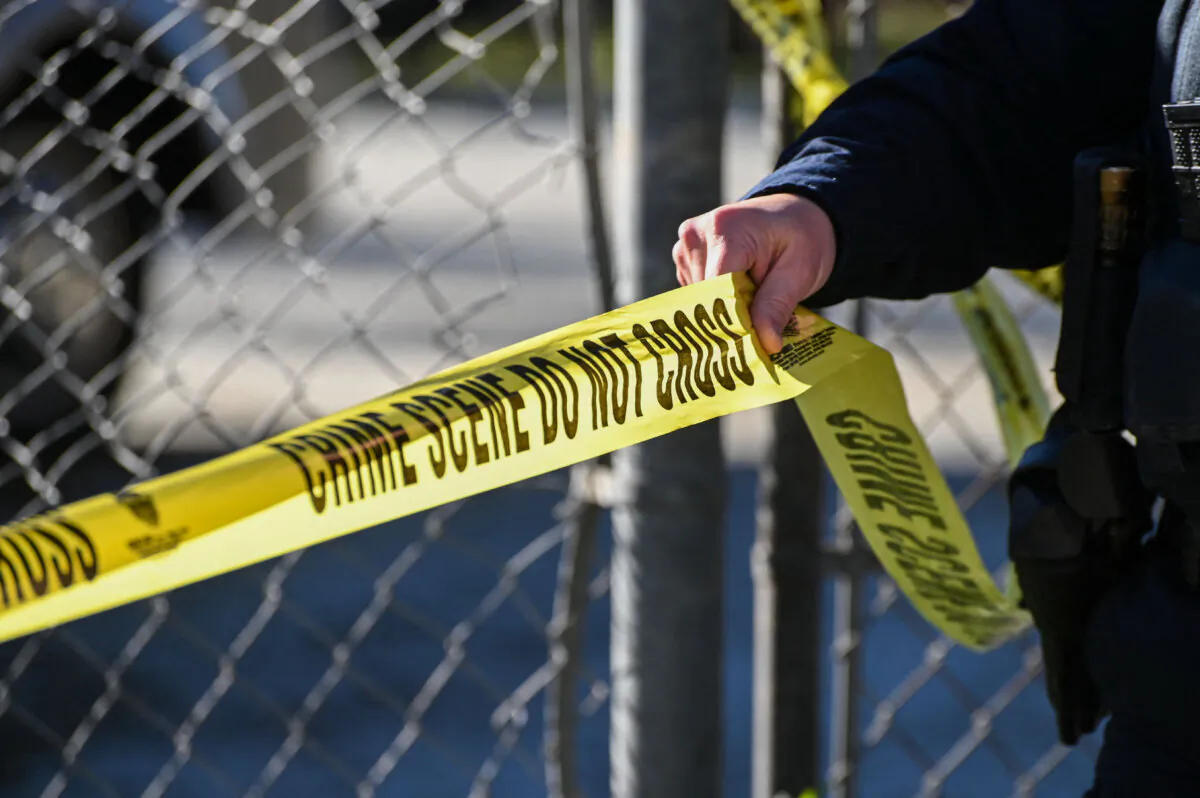

A man who was found dead in an Idaho church decades ago may be linked to a series of 1982 Tylenol poisoning deaths in the United States that officials have described as among the most significant unsolved cases in U.S. history, sheriff’s officials announced on Tuesday.
The Idaho cold case was reopened by Ada County Sheriff’s Office detective Tim Cooper in 2019 and led officials to determine the man found dead in the church was identified as Dr. Mathew Francis Betkouski. Officials said he fatally poisoned himself with cyanide and was buried anonymously.
After Betkouski was identified, sheriff’s officials learned that he may have been linked to the 1982 killings of at least seven people in the Chicago area with Tylenol laced with cyanide, Cooper said. As of 2026, no suspect has been charged in the murders, which spurred a number of federal packaging and tampering regulations around over-the-counter medications.
An engraved key located on the body found in the church led officials to a property in Jacksonville, Florida. They determined that the owner of that property had disappeared in 1982.
Using DNA and photographs, investigators determined that Betkouski was both the missing property owner and the body found in the Idaho church.
Investigators then discovered that Betkouski had worked for two drugstores, which provided him with knowledge on pharmacy operations.
People who knew him said he had “a history of volatility, including a documented fascination with explosives” while colleagues said Betkouski had spoken about the concept of committing the “perfect crime” and cited cyanide as a means to commit murder without being found out, authorities said.
As a result, the sheriff’s office announced a “possible connection” between Betkouski and the Tylenol poisoning deaths, known as the “Tylenol murders” or “Chicago Tylenol murders.”
The news release issued by the sheriff’s office did not provide more details on how Betkouski was linked to the Chicago murders, while Cooper said that he did not live in the Chicago area. It also did not describe Betkouski as a suspect.
“Mathew Betkouski lived in five states over the course of his life—California, Texas, New Mexico, Ohio and Florida,” Cooper said in a statement. “We’re hoping that getting his story out generates new leads, not just for this case, but for others we may not even know about yet. I’m especially interested in learning more about his movements between October 15 and December 4, 1982.”
During a news conference on Wednesday, Cooper said that officials could not place Betkouski during the last week of September 1982, when the murders occurred. However, photos likely taken in 1981 were found that showed Betkouski visited the Chicago area that year. It’s not clear if he returned to the city in 1982.
Cooper also said that Betkouski had a map of Chicago and a bottle of cyanide with a handwritten label that was “likely homemade,” adding that it was sodium cyanide and not the potassium cyanide used in the murders.
Cooper said that when Betkouski visited the church in Idaho where he died, he apparently made a confession to a priest. The priest had never spoken to authorities about the incident.
Noting that he died in the church in December 1982, Cooper added that Betkouski took steps to change his appearance and conceal his identity.
Investigators long believed a man named James Lewis was responsible for the killings, though he was never charged. Lewis died in 2023 after serving more than 12 years in prison for sending an extortion note to Johnson & Johnson, the drug’s manufacturer at the time, demanding $1 million to “stop the killing.”
When Lewis was arrested in 1982, he gave investigators a detailed account of how the killer might have operated. However, he always denied involvement.
More details about the case were not being provided in the case, sheriff’s officials said.
The Associated Press contributed to this report.
 Friends Read Free
Copy
Facebook
Tweet
Friends Read Free
Copy
Facebook
Tweet