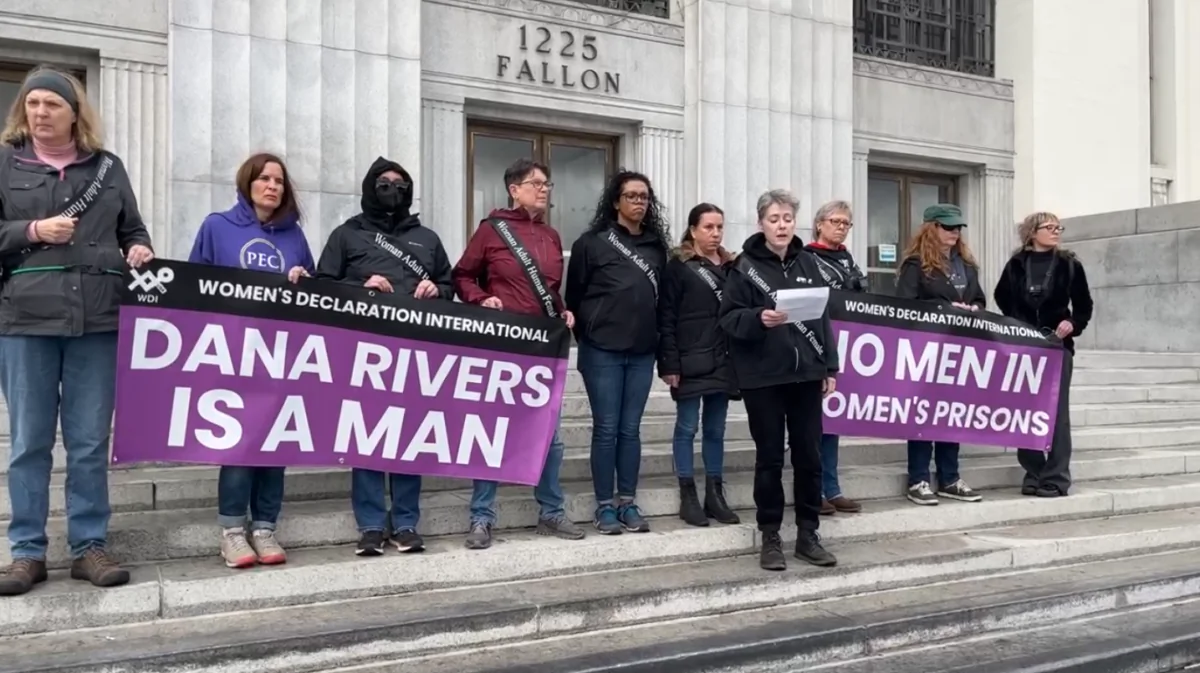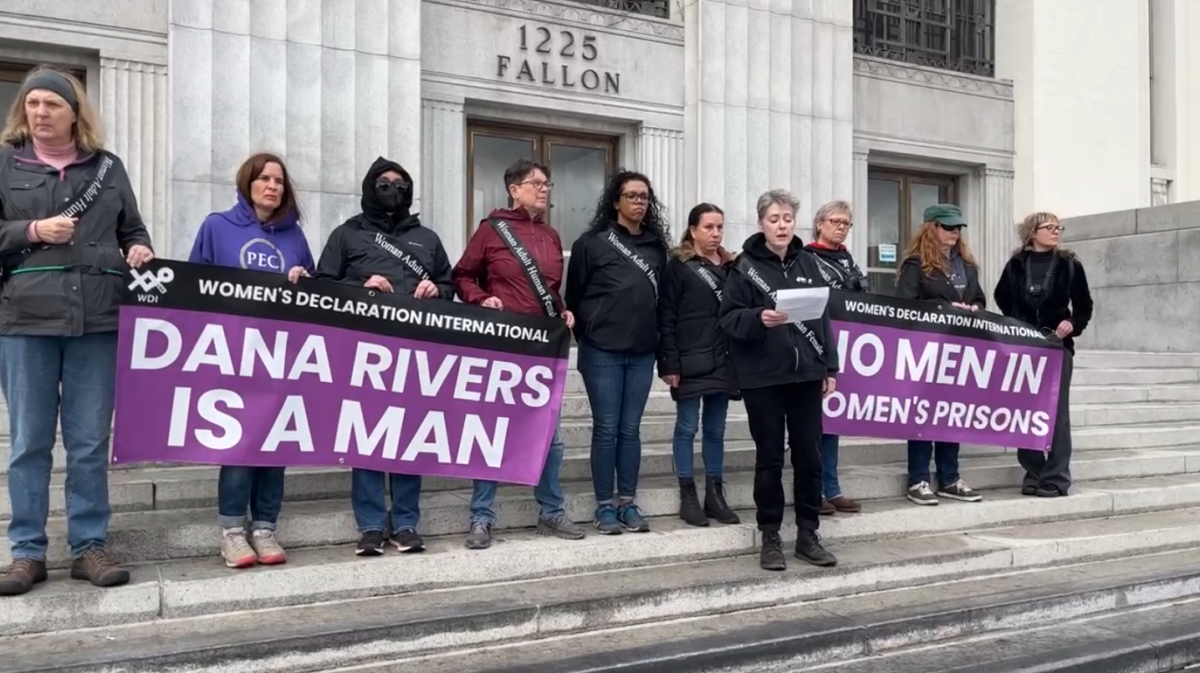


Opponents of a California law allowing transgender-identifying male prisoners to be housed with biological females say it has led to physical and sexual abuse among women’s prison populations.
The Transgender Respect, Agency and Dignity Act took effect in January 2021. Amie Ichikawa—a former prisoner and cofounder of inmate advocacy group Woman II Woman—said the consequences are real and ongoing.
Ichikawa recently told The Epoch Times’ Jan Jekielek that just as she was beginning to get her organization off the ground, the first busloads of male prisoners began to arrive.
“When they started to install the condom machines into the women’s prisons after the transfers started, I thought ‘There’s nothing lower than this. Nothing.’”
A friend encouraged her to start a hotline so the female prisoners, who were “devastated and hysterical” could tell their stories. But the organization is poor, she said, so she just gave them her phone number.
“Women called and they said, ‘What are we supposed to think, that people are going to safely rape us?’”
California’s law allows male prisoners to be housed with women, even if they have not undergone gender surgery or hormone treatments. Staff at the California Department of Corrections and Rehabilitations evaluate each request on a case by case basis, according to the state’s website.
If the prisoner appears to be “faking” their gender dysphoria in order to be housed with vulnerable women, the state can deny the transfer request.
The state can’t just make a separate unit that houses only inmates with gender dysphoria because that would violate the Prison Rape Elimination Act.
“The agency shall not place lesbian, gay, bisexual, transgender, or intersex inmates in dedicated facilities, units, or wings solely on the basis of such identification or status,” that law says.
Ichikawa said that according to women she spoke to, some of the prisoners who have been transferred have no business being housed with women.
“They were advertised as delicate flowers who needed a safe place to do their time, and they sent the exact people that they said they wouldn’t send,” she said.
“They said there would be no sex offenders, there would be no woman-beaters, there would be no one with a long history of violence against women, and that’s exactly who they sent. … These are like football players. … These are men that are tatted from head to toe.”
According to a report by the ACLU, 92 percent of the female prison population in California are survivors of abuse, while 33.8 percent of the men sent to the women’s prisons in that state were registered sex offenders, a 2022 study found.
California’s law was meant to protect male prisoners with gender dysphoria from sexual assault and violence at the hands other prisoners. Ichikawa said she is sympathetic to that—on a case by case basis—even if that doesn’t line up with her personal or political beliefs. Some of the men are “sincere,” she said, and the female prisoners recognize that.
“And they’re OK with vulnerable people who need a safe place to be. They’re OK with them being there.”
But ultimately, she said, “it isn’t women’s responsibility to keep these men safe,” adding that the state’s policy treats women like “emotional support animals.”
California state Sen. Shannon Grove (R) expressed the same mixed feelings last year, when she tried, but failed, to pass legislation that would exclude male prisoners from women’s private spaces.
At the debate for the bill, she read letters from female prisoners begging for lawmakers to intervene and put a stop to the rampant sexual and physical abuse.
But she also referenced a male prisoner, whom she called “Joan,” that “in all appearances and personality and gestures, whatever else you want to describe, looks and appears, [and] acts like a woman.”
The individual had been brutalized since childhood, and was repeatedly assaulted by male prisoners.
“There is no way, even though Joan has male anatomy on bottom, that I would ever want to transfer Joan back to a male prison,” she said. “I know I’m going to offend everybody in the world.”
The legislation Grove introduced kicked off a political firestorm, Ichikawa told The Epoch Times. Protesters from LGBT groups showed up—fueled by an online campaign—with matching protest signage.
“We were highly outnumbered,” she said.
The legislation’s primary opponent, state Sen. Scott Wiener (D), said that he wasn’t aware of a single instance of a prisoner transferred under the 2021 legislation that had raped anyone. Approximately 15 percent of prisoners who applied for the transfer were accepted, he added.
Wiener had pioneered that legislation, and previously spearheaded a California law that reduced knowingly infecting someone with HIV from a felony to a misdemeanor.
He said language in Grove’s bill excluding men listed on the sex-offender registry was “overbroad and discriminatory,” because the registry itself “massively and disproportionately targeted” LGBT individuals.
But he also said that, though he thought many supporters of Grove’s bill were fueled by “a culture war targeting trans people,” he understood that wasn’t the only motivation.
“I do believe that there are a lot of people who just want people to be safe in prison, and I think we all want that.”
New Jersey, Massachusetts and Rhode Island also allow transgender-identifying male prisoners to be housed with biological females. In Connecticut, inmates are automatically housed according to their gender identity, but that may change if “significant safety, management or security problems” are present.
President Donald Trump, shortly after commencing his second term in office, issued an executive order requiring federal prisoners be housed according to their biological sex.
Some male prisoners sued to avoid being transferred out of female prisons, and beginning in February 2025, U.S. District Judge Royce Lamberth repeatedly blocked the Bureau of Prisons from transferring those plaintiffs, at least while their lawsuit plays out.
A federal appeals court in August overturned Lamberth’s latest injunction though, ruling that he issued the block without taking into consideration each of the 18 plaintiffs’ individual circumstances.
 Friends Read Free
Copy
Facebook
Tweet
Friends Read Free
Copy
Facebook
Tweet