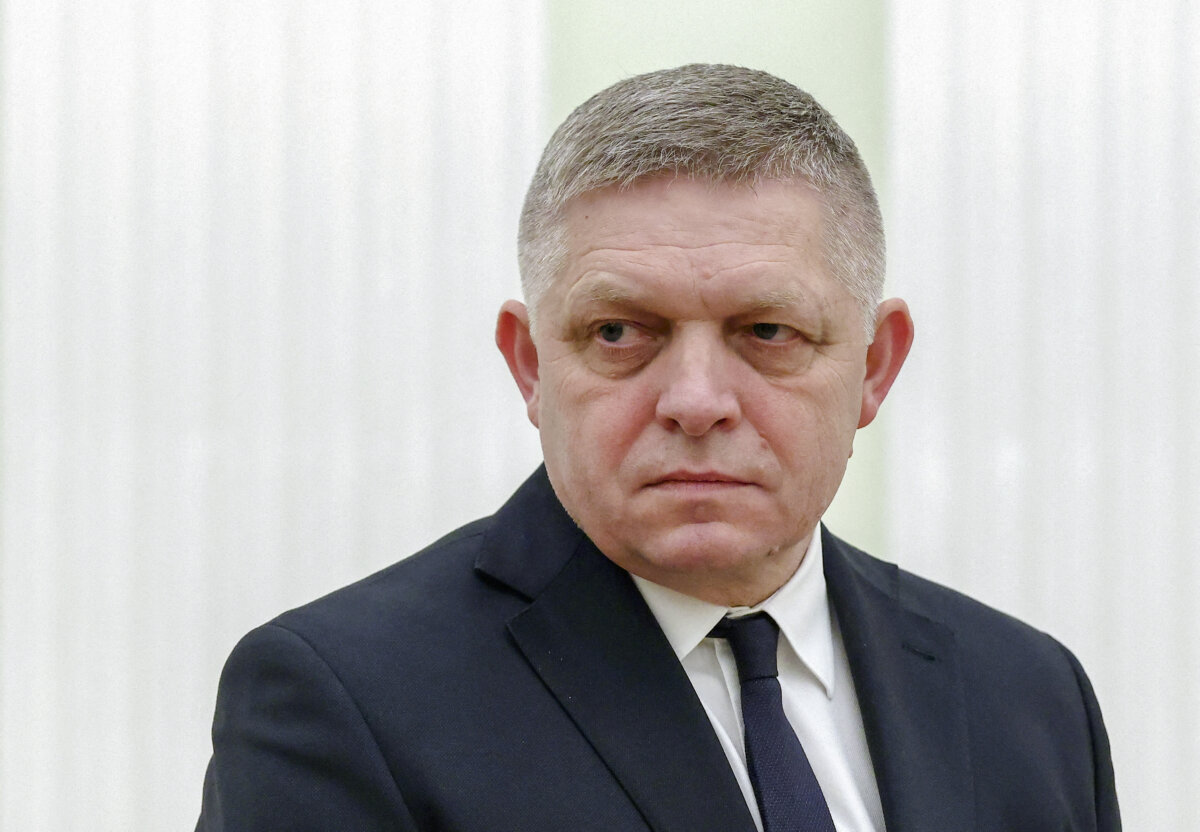
Slovak Prime Minister Robert Fico met with U.S. President Donald Trump at Mar-a-lago in Florida on Jan. 17, where the pair discussed a deal for building a new nuclear reactor.
The first meeting between the two leaders since Trump took office last year was meant to strengthen ties between the countries as well as further discussions on the energy deal. The new plant is projected to cost $17.4 billion, making it one of Slovakia’s largest energy infrastructure investments in history and its first U.S.-designated reactor.
The U.S. Energy Department said in a statement that the deal will help Slovakia shift away from reliance on Russian-designed reactors. The landmark agreement includes the construction of a state-owned U.S. 1,200 megawatt nuclear unit.
Fico was in Washington on Jan. 16, where he met with Energy Secretary Chris Wright for a ceremonial signing of the energy agreement to “advance cooperation on Slovakia’s civil nuclear power program.”
“I see this moment as a significant milestone in our bilateral relations, but also as a clear signal that Slovakia and the United States are united by a common strategic thinking about the future of energy,” Fico said in a Facebook post.
Wright said in the statement: “Today’s civil nuclear agreement reflects our shared commitment to strengthening European energy security and sovereignty for decades to come. By deploying America’s leading nuclear technology, we are creating thousands of good-paying American jobs, expanding global markets for U.S. nuclear companies, and driving economic growth at home.”
Wright referred to Slovakia as a trusted ally as the United States continues expanding its energy sector, noting that this agreement builds on Trump’s promise to unleash U.S. energy.
The Energy Department stated that the plan not only provides thousands of new U.S. jobs but also integrates advanced U.S. nuclear technology into Europe’s infrastructure while strengthening Slovakia’s long-term energy security.
Fico previously referred to the European Union’s shift in focus to alternative forms of energy as “ideological green madness.” He said he won’t allow the international governing body to ruin Slovakia’s future.
“Whoever is self-sufficient in producing electricity and able to balance it at the same time will be a strong and safe international player,” he said in a Facebook post.
Fico reaffirmed this stance in his meeting on Jan. 16 with Wright in Washington, emphasizing the importance of nuclear energy for Slovakia as a reliable, low-carbon, and economically competitive source of power.
Nuclear reactors allow for Slovakia to simultaneously tackle climate goals, price stability, and reliable energy, Fico said, noting that the new U.S. reactor could be operational by 2040.
“Our ambition is for this project to meet the highest standards of safety, economic efficiency and technological maturity, while at the same time to maximize the involvement of Slovak industry, research and workforce,“ Fico previously said on Facebook.
 Friends Read Free
Copy
Facebook
Tweet
Friends Read Free
Copy
Facebook
Tweet