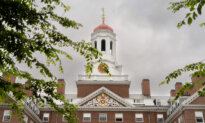

The State Department has opened an investigation into Harvard University’s eligibility as a sponsor of the J visa, a nonimmigrant visa allowing foreign nationals to come to the United States as students, teachers, and researchers.
In a statement on July 23, Secretary of State Marco Rubio emphasized the legal obligations of institutions participating in the J visa program, formally known as the exchange visitor program.
“To maintain their privilege to sponsor exchange visitors, sponsors must comply with all regulations, including conducting their programs in a manner that does not undermine the foreign policy objectives or compromise the national security interests of the United States,” Rubio said.
“The American people have the right to expect their universities to uphold national security, comply with the law, and provide safe environments for all students.
“The investigation will ensure that State Department programs do not run contrary to our nation’s interests.”
In response to a request for comment, a spokesperson for Harvard denounced the probe as a “retaliatory step” in violation of the university’s First Amendment rights.
“Harvard continues to enroll and sponsor international scholars, researchers, and students, and will protect its international community and support them as they apply for U.S. visas and travel to campus this fall,” the spokesperson said in an emailed statement to The Epoch Times.
“The University is committed to continuing to comply with the applicable Exchange Visitor Program regulations.”
The announcement comes as Harvard and the Trump administration fight legal battles over whether the Ivy League school can continue enrolling foreign nationals on J visas, as well as on F and M visas, which are typically issued for academic and vocational students, respectively.
In May and June, a federal judge in Massachusetts issued two separate injunctions that indefinitely blocked both the Department of Homeland Security’s move to revoke Harvard’s Student and Exchange Visitor Program certification and a presidential proclamation that would have suspended new visas for foreign students entering Harvard.
The two court orders, at least for now, allow newly admitted international students to apply for and enter the United States on Harvard-issued visas while the cases proceed. Still, Harvard advises international students who are planning to travel abroad and then reenter the country to “carefully assess their individual situation” before they do so.
In addition to the visa dispute, Harvard is suing to regain access to more than $2 billion in federal grants and contracts.
The Trump administration froze those funds in multiple rounds starting in April, when it accused Harvard of not doing enough to protect Jewish and Israeli students from anti-Semitic harassment following the Oct. 7, 2023, Hamas terrorist attacks on Israel and Israel’s military response in Gaza, which triggered protests on college campuses across the world.
While the tension between Harvard and the Trump administration initially centered on anti-Semitism on campus, it has since broadened to include issues such as ideological bias and Harvard’s commitment to diversity, equity, and inclusion (DEI) goals, which the administration says run afoul of federal anti-discrimination laws.
In a letter dated April 11, the administration said Harvard had failed “to live up to both the intellectual and civil rights conditions that justify federal investment.” The letter outlined sweeping demands, including shutting down all DEI offices, overhauling the international admissions process to screen out applicants deemed “hostile to American values” or “supportive of terrorism or anti-Semitism,” and commissioning an external audit of faculty, students, and leadership to assess “viewpoint diversity.”
The administration also called for an audit of specific programs—most notably Harvard’s Center for Middle Eastern Studies—that allegedly “fuel anti-Semitic harassment or reflect ideological capture.” The audit would need to identify any faculty members who had “discriminated against Jewish or Israeli students” or “incited students to violate Harvard’s rules” in campus protests.
On April 14, Harvard publicized both the administration’s letter and Harvard President Alan Garber’s response, in which he categorically rejected the proposed conditions, stating that the university “will not surrender its independence or relinquish its constitutional rights.”
Harvard has also disputed the accusation that it has inadequately addressed anti-Semitism on campus, saying that it has strengthened its anti-discrimination policies, disciplined those who violated them, and promoted “open, respectful dialogue” on the matter.
“Harvard is far from indifferent on this issue and strongly disagrees with the government’s findings,” a spokesperson for the school said in June.
 Friends Read Free
Copy
Facebook
Tweet
Friends Read Free
Copy
Facebook
Tweet