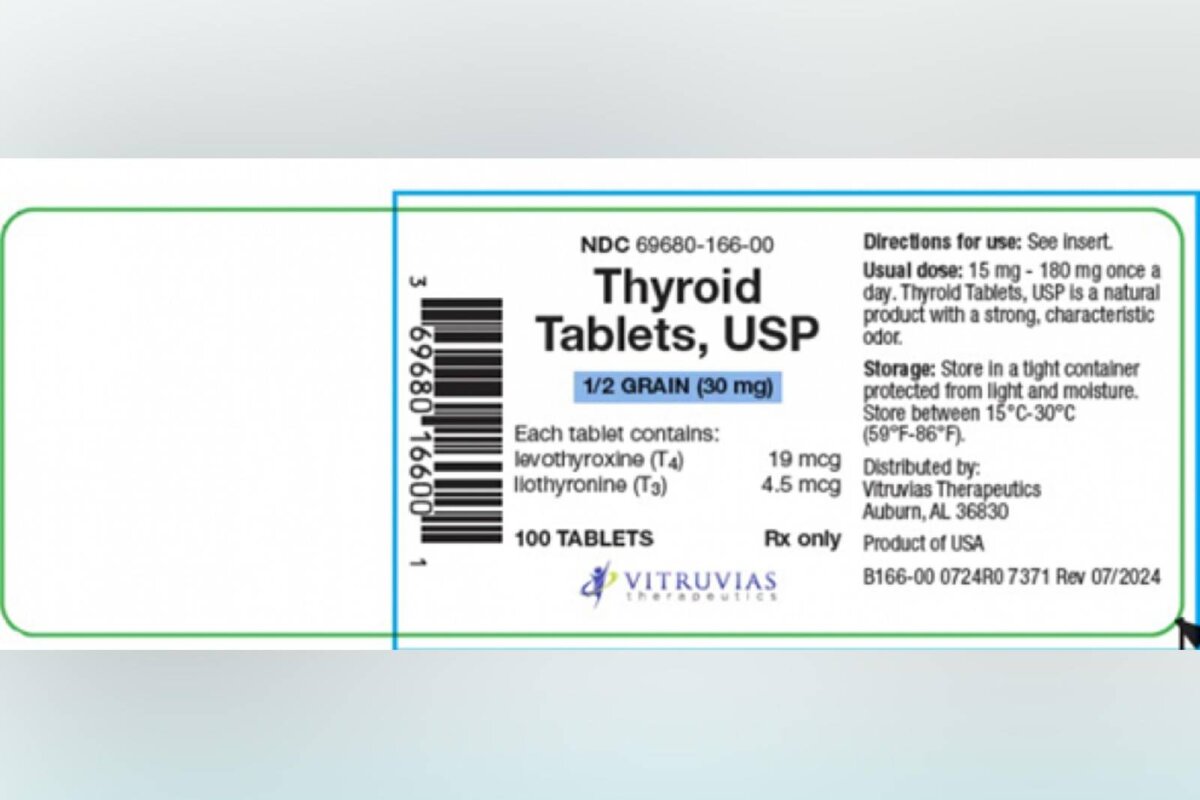

A drug manufacturer is recalling a single lot of thyroid tablets following tests confirming the potential for the medication to be too strong.
The recall is applicable to 3,655 units of Thyroid Tablets, USP 30 mg, lot number 504950, distributed between Jan. 31, 2025, and Sept. 30, 2025, with an expiry date of Sept. 30, 2026, the company said in an announcement published by the Food and Drug Administration on Aug. 24. The items were distributed across the United States.
The drug was found to be superpotent, meaning it has higher potency or effectiveness than normal or accepted.
Thyroid USP is a natural preparation used to treat hypothyroidism, or an underactive thyroid. Consuming superpotent thyroid tablets can result in hyperthyroidism, or an overactive thyroid, which can cause weight loss, nervousness, hypertension, muscle weakness, rapid heart rate, fatigue, heart rhythm disturbances, chest pain, and heat intolerance.
Thyroid hormones control the way the body uses energy and affect almost every organ in the body. As the thyroid glands of individuals with hyperthyroidism make more thyroid hormones than required by the body, higher thyroid hormone levels can speed up several body functions, according to the National Institute of Diabetes and Digestive and Kidney Diseases.
Untreated hyperthyroidism can lead to irregular heartbeats that result in blood clots, stroke, and other heart issues. It can thin the bones, affect fertility and the menstrual cycle, and lead to eye disease.
In its announcement, Alabama-based manufacturer Vitruvias Therapeutics Inc. said that pregnant women, elderly people, and infants face greater risk from ingesting superpotent thyroid medication, especially if they take the drug over long periods of time.
Elderly individuals with excess levels of thyroid hormones may be susceptible to adverse outcomes, especially for cardiac health. Among pregnant women, overtreatment of hypothyroidism is linked to higher rates of maternal and fetal complications, including the baby having low birth weight and even premature delivery, the company warned. Among infants, overtreatment could negatively impact growth and development.
Vitruvias clarified that it has, to date, not received any reports of adverse events linked to the medication affected by the recall. People who bought the medication with the recalled lot number must stop using it and contact their healthcare provider.
The company said it was notifying wholesalers to stop distribution of the recalled product and arranging for its destruction.
Customers can call the company at (256) 239-9373 to clarify any further queries.
The Epoch Times reached out to H2-Pharma, the owner of Vitruvias, for comment but did not receive a response by publication time.
Another thyroid medication is also currently under scrutiny. On Aug. 21, the FDA classified Levothyroxine Sodium Tablets, sold by North Carolina-based Accord Healthcare, as a Class II recall, which is issued when the use of a product can cause temporary or medically reversible adverse health consequences.
Levothyroxine, like Vitruvias’ Thyroid USP tablets, is used to treat hypothyroidism. The recall, issued on Aug. 6, was made due to the drug being subpotent, or not being fully effective as intended.
The FDA had previously sent a letter to the drug’s manufacturer, India-based Intas Pharmaceuticals Limited, raising concerns about its manufacturing. The March 30 letter was sent after the agency conducted an inspection at the company’s facility in India in September 2025.
In the letter, the FDA said that the company’s methods, facilities, or controls for manufacturing, processing, packing, or holding do not comply with the Current Good Manufacturing Practice regulations for finished pharmaceuticals.
Thyroid diseases are a key medical issue in the United States. Around 20 million Americans are estimated to have some kind of thyroid disease, with up to 60 percent unaware of their condition, according to the American Thyroid Association.
More than 12 percent of Americans are expected to develop a thyroid condition in their lifetime. Women have a five- to eight-times higher likelihood of having thyroid issues than men. While most thyroid conditions tend to be lifelong, they can be managed with medical treatment, the association said.
 Friends Read Free
Copy
Facebook
Tweet
Friends Read Free
Copy
Facebook
Tweet