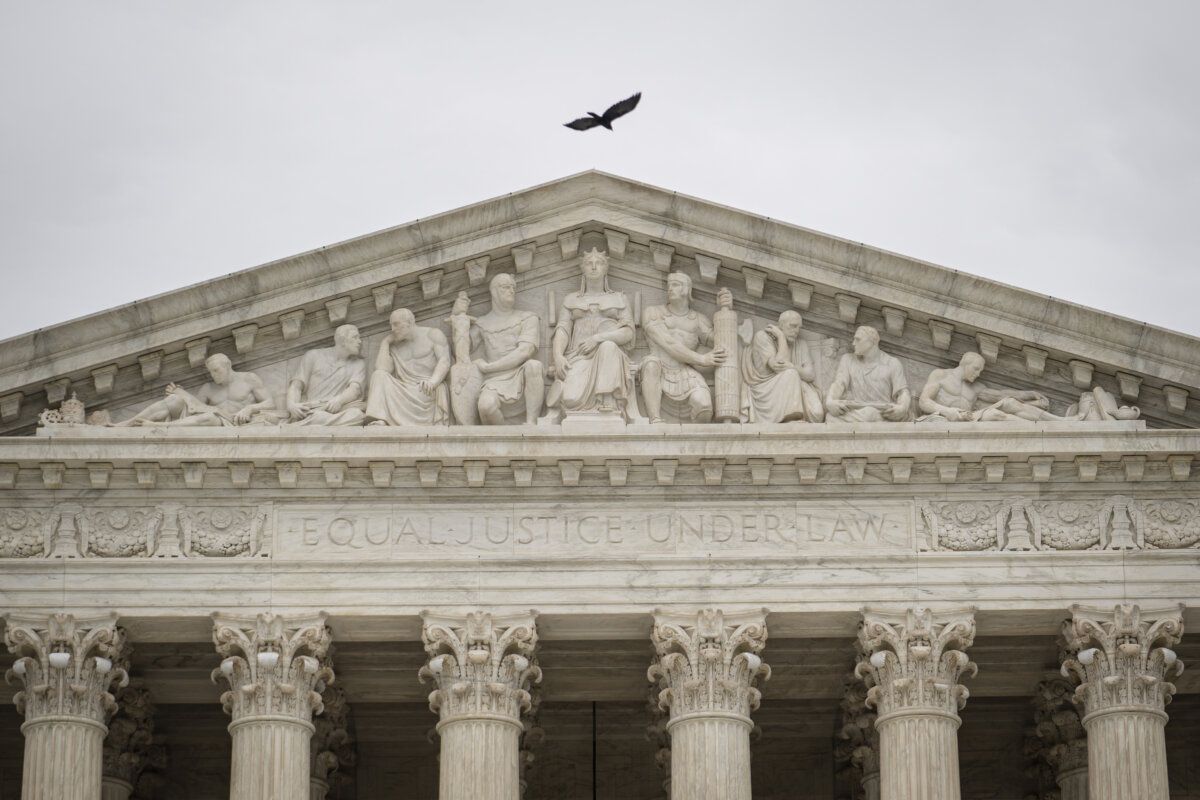

The U.S. Supreme Court ruled 8–1 on May 21 that a U.S. company should be able to sue cruise lines for using its business assets that Cuba’s communist government seized decades ago.
The case is Havana Docks Corp. v. Royal Caribbean Cruises, which the justices heard on Feb. 23.
The case focuses on the 1996 Cuban Liberty and Democratic Solidarity Act, created to pressure Cuba by penalizing companies “trafficking” in property that Cuba seized from U.S. interests. Also known as the Helms-Burton Act, the law allows U.S. citizens and companies to sue any person who traffics in, uses, or profits from the confiscated property.
Cuba’s late dictator Fidel Castro overthrew the former government in 1959 and turned Cuba into a one-party state in which socialist policies were implemented, including nationalization of assets of foreign businesses.
Parties had been unable to sue Cuban government-owned enterprises under the act because U.S. President Bill Clinton suspended Title III, the part of the law allowing compensation lawsuits to be filed. President Donald Trump revoked the suspension on May 2, 2019, and Exxon Mobil, which is involved in a separate case at the Supreme Court, sued on the same day.
In the Havana Docks case, a Delaware-based company argued that cruise lines should have to compensate it for using the docks it built and had a 99-year concession to operate that Cuba’s revolutionary government confiscated without compensation in 1960. The concession had 44 years left to run, according to the company.
The cruise lines used the docks after the Foreign Claims Settlement Commission certified Havana Docks’ claim against Cuba, disembarking almost 1 million tourists on the docks from 2015 to 2019, and paying Cuba at least $130 million and earning more than $1 billion from their Cuban cruises, Havana Docks’ petition said.
In 2024, a divided U.S. Court of Appeals for the 11th Circuit overturned a more than $100 million judgment against several cruise lines for “trafficking” in confiscated property by using expropriated docks in Cuba. That court held the company’s property interest in the docks expired in 2004.
Justice Clarence Thomas wrote the high court’s May 21 majority opinion.
The lower court erred when it ruled that the cruise lines were not liable because Havana Docks’ property interest in the docks would have expired before 2016 if the Cuban government had not confiscated the docks, Thomas said.
“Havana Docks had to prove only that the cruise lines used confiscated property—such as the docks—to which Havana Docks owns a claim,” Thomas wrote, adding that the Supreme Court is vacating the 11th Circuit’s decision.
“We hold that the cruise lines’ use of the docks is sufficient to establish that they used ‘property which was confiscated by the Cuban Government.’”
Justice Sonia Sotomayor filed an opinion concurring with the majority. Justice Brett Kavanaugh joined her opinion.
Sotomayor said that Havana Docks’ interpretation of Title III, if adopted, “could allow it to recover a potentially unlimited amount of money from an unlimited number of people who use the confiscated docks at issue.”
The justice said in this case, the Foreign Claims Settlement Commission certified that, as of 1960, the company had lost about $9 million from the confiscation of the docks. The district court, whose ruling was reversed by the 11th Circuit, had held that under Title III, each of the four cruise lines that used the docks owed the company $110 million under a legal formula that tripled the certified loss and incorporated a half-century of interest, plus legal fees and costs.
If the company is correct, then it could potentially “recover $110 million from every person who uses the docks in any way,” Sotomayor said.
“It is unlikely that Congress intended for someone who suffered a finite loss to reap infinite recoveries,” she said.
The Supreme Court did not rule on this and related issues, but Sotomayor said the 11th Circuit should address them when it revisits the case.
Justice Elena Kagan dissented.
She said the cruise lines had not trafficked in confiscated property because the company possessed only a temporary right to use the docks, and that right had lapsed years before the cruises got underway.
Kagan said that the majority has misconstrued the Helms-Burton Act “to allow plaintiffs to recover for trafficking in property that was not theirs.”
Cuba did not confiscate the docks, because they already belonged to Cuba, she said.
“Havana Docks’ claim should fail, because the cruise lines did not traffic in Havana Docks’ time-limited—and long-ago expired—concession,” Kagan wrote.
 Friends Read Free
Copy
Facebook
Tweet
Friends Read Free
Copy
Facebook
Tweet